
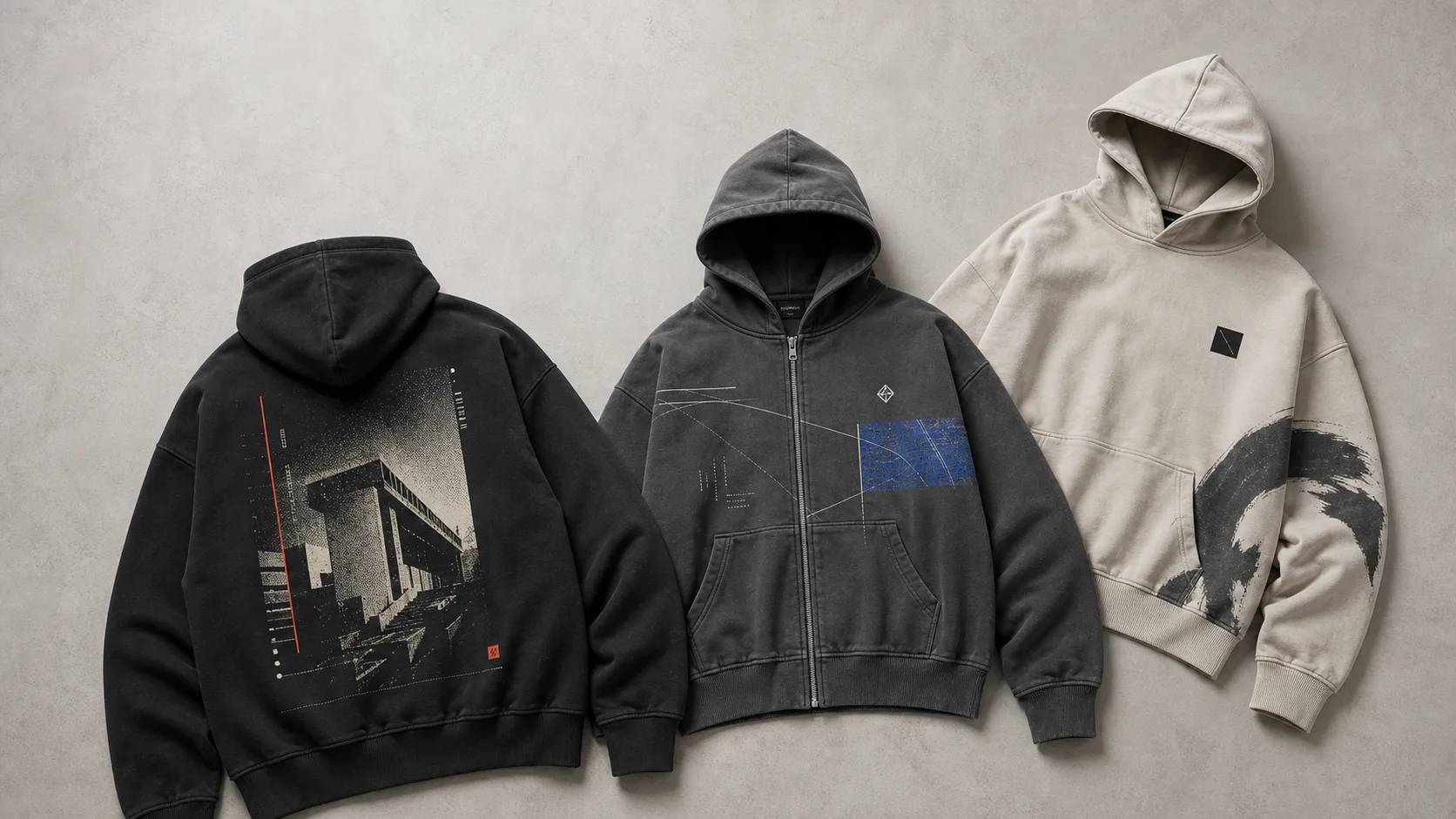
Streetwear hoodie design ideas provide practical concepts for creating personalized garments through graphics, typography, illustrations, colors, textures, and garment details. These ideas cover different visual directions, including large back prints, logo placements, character artwork, vintage styles, subculture influences, and unique graphic treatments. Each concept allows users to customize elements such as wording, imagery, color combinations, graphic scale, and placement to match their preferred streetwear style.
From bold graphic compositions to minimal logo concepts and textured garment details, streetwear hoodie designs help transform creative ideas into wearable visual statements. Users can refine their concepts by selecting themes, adjusting artwork arrangements, comparing variations, and reviewing the final appearance through different garment views. These approaches help develop distinctive hoodie designs with balanced composition, strong identity, and personal expression while considering originality, visual clarity, and overall design consistency.
26 streetwear hoodie graphic and style concepts are:
- Large Back Prints
- Split Zip-Up Graphics
- Coordinated Front-and-Back Graphics
- Photo Collage Prints
- All-Over Patterns
- Blackletter Slogans
- Sleeve Text
- Subtle Chest Logos
- Black-on-Black Monograms
- Flame and Thorn Wordmarks
- Illustration and Character Streetwear Hoodie Design Ideas
- Gothic Angel Artwork
- Japanese Tattoo-Inspired Artwork
- Pixel-Art Characters
- Hand-Drawn Mascots
- Tattoo-Flash Compositions
- Distressed Racing Graphics
- Y2K Chrome Graphics
- Graffiti Tag Artwork
- Vintage College Crests
- Punk, Grunge, and Mixtape Collages
- Colour-Gradient Graphics
- Puff-Print Details
- Distressed Washes and Edges
- Contrasting Hood Lining
- Reflective and Holographic Accents
Graphic and Print Streetwear Hoodie Design Ideas
Graphic and print streetwear hoodie design ideas use the front, back, sleeves, hood, and full garment as creative surfaces for visual expression. These hoodie designs ideas focus on artwork composition, graphic placement, typography, and thematic storytelling. Users can personalize these concepts by changing the subject, illustration style, graphic scale, color palette, and layout structure. From oversized back artwork to repeated patterns, each graphic hoodie design creates a unique streetwear identity through intentional visual arrangement and balanced design elements.
Below are some graphic and print streetwear hoodie design ideas:
- Large Back Prints
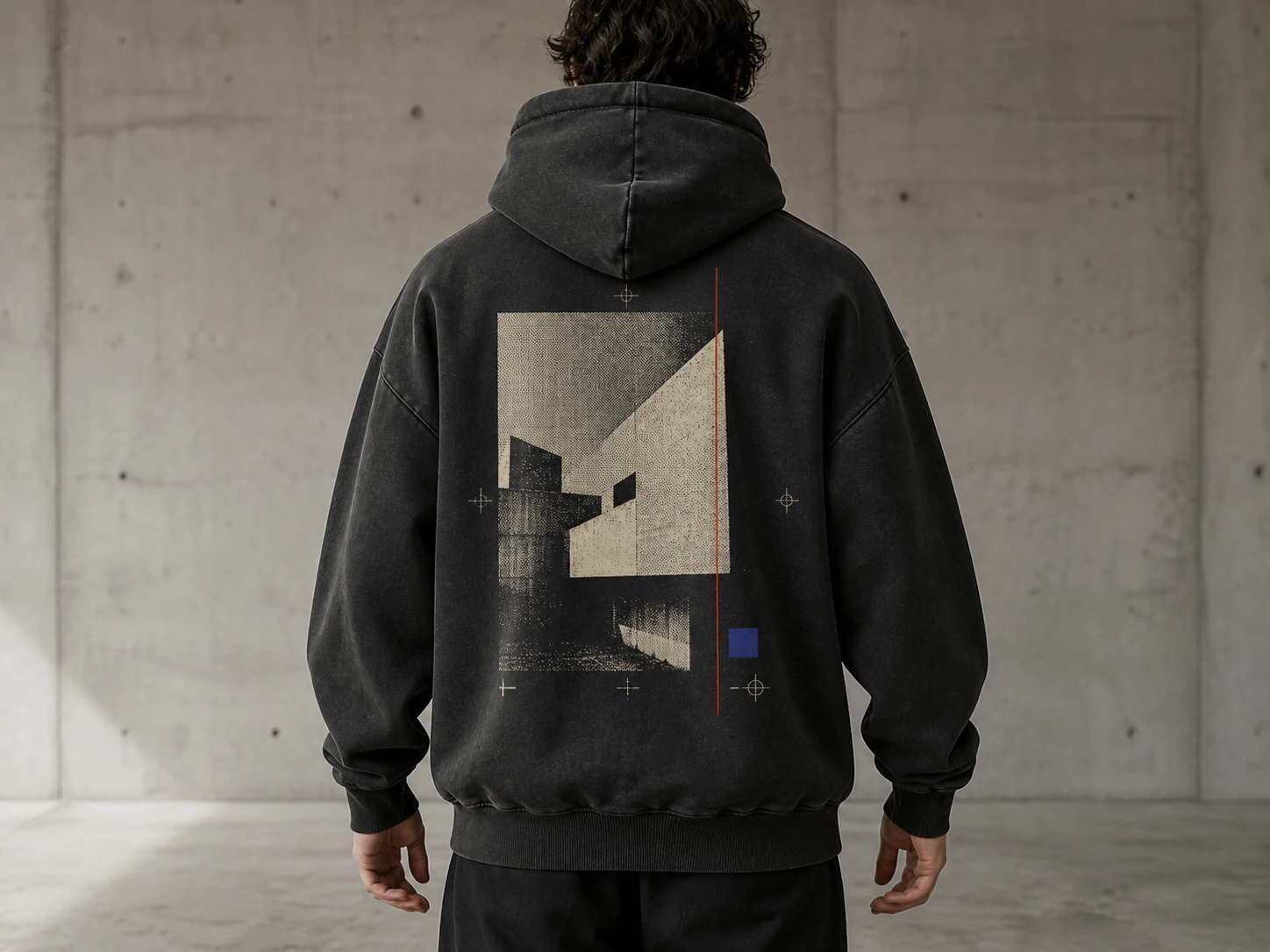
Large back prints create a bold streetwear hoodie design by using the upper back or full back panel as the main visual area. These oversized hoodie design ideas can feature skeletons, gothic angels, cyberpunk cityscapes, racing scenes, fantasy illustrations, or abstract digital artwork. A small chest symbol or short phrase can support the larger back graphic by creating a front-and-back connection. The main artwork should remain readable from a distance while avoiding placement near the hood, seams, or waistband, where details may lose clarity.
- Split Zip-Up Graphics
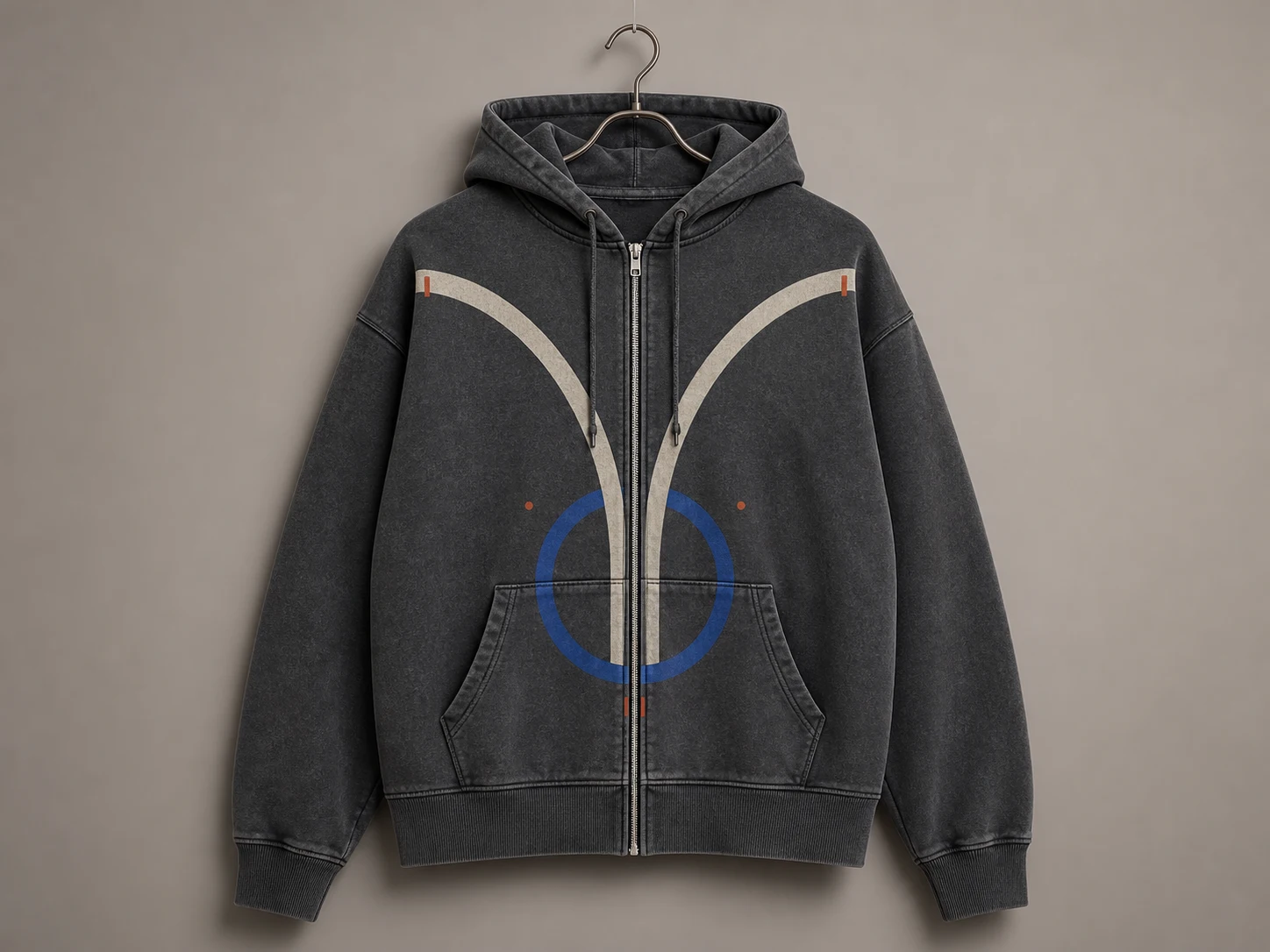
A divided artwork layout creates a unique streetwear hoodie design idea by using both sides of the zipper as connected visual areas. Suitable themes include flames, wings, mirrored symbols, faces, typography, and symmetrical illustrations that align when the hoodie is closed. Each side should maintain visual balance when the garment remains open. Small text, facial details, or important symbols should not sit directly over the zipper, as this can interrupt the overall composition and reduce clarity.
- Coordinated Front-and-Back Graphics
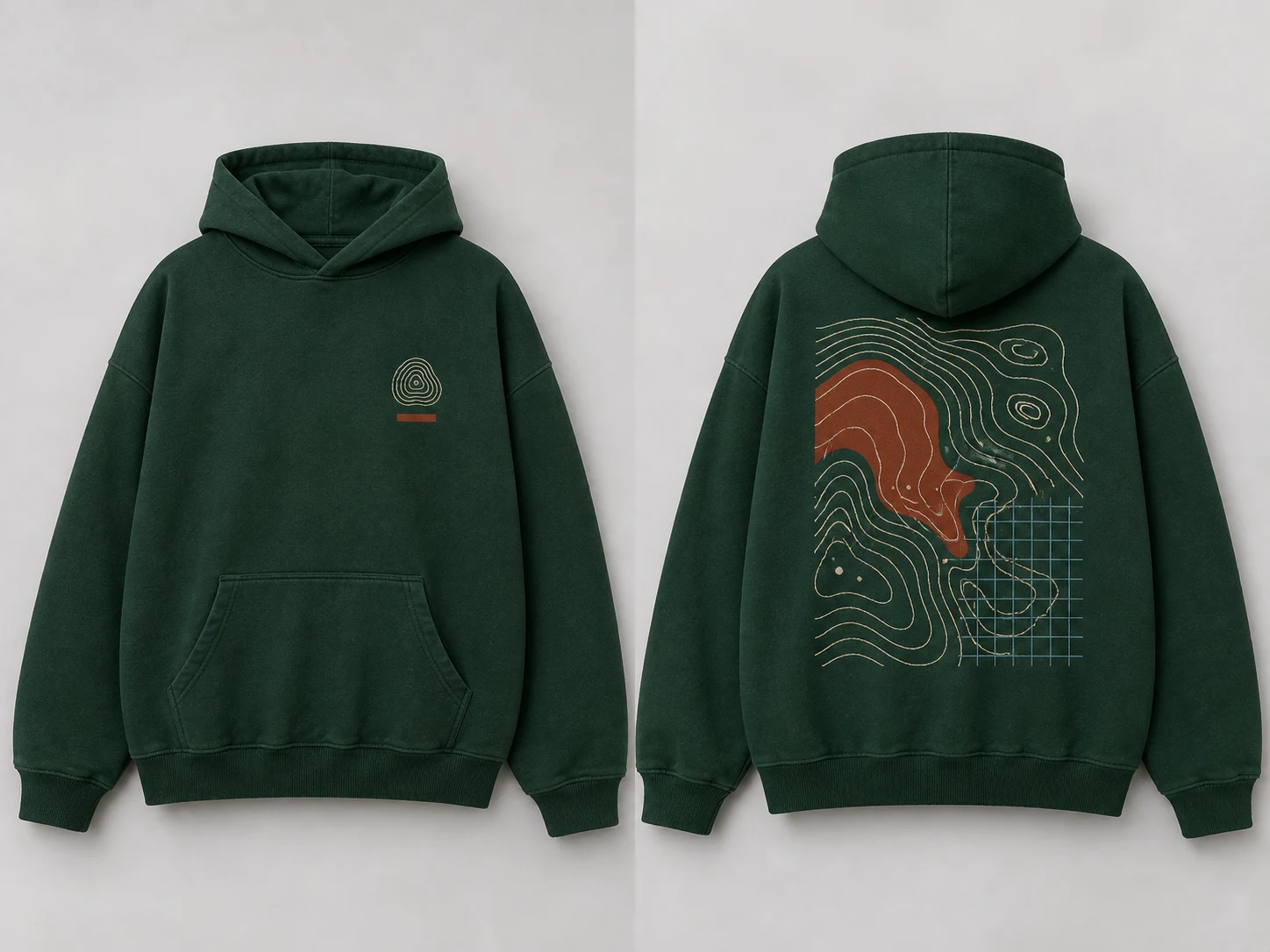
A connected front-and-back layout combines a smaller front element with a larger rear graphic to create a complete streetwear hoodie design idea. A chest symbol can introduce the main theme, while a full illustration, extended phrase, or larger character scene develops the concept on the back. Repeated colors, symbols, lettering styles, and line patterns help both sides feel connected. These streetwear hoodie design ideas create visual harmony by assigning each hoodie section a specific role in the overall composition.
- Photo Collage Prints
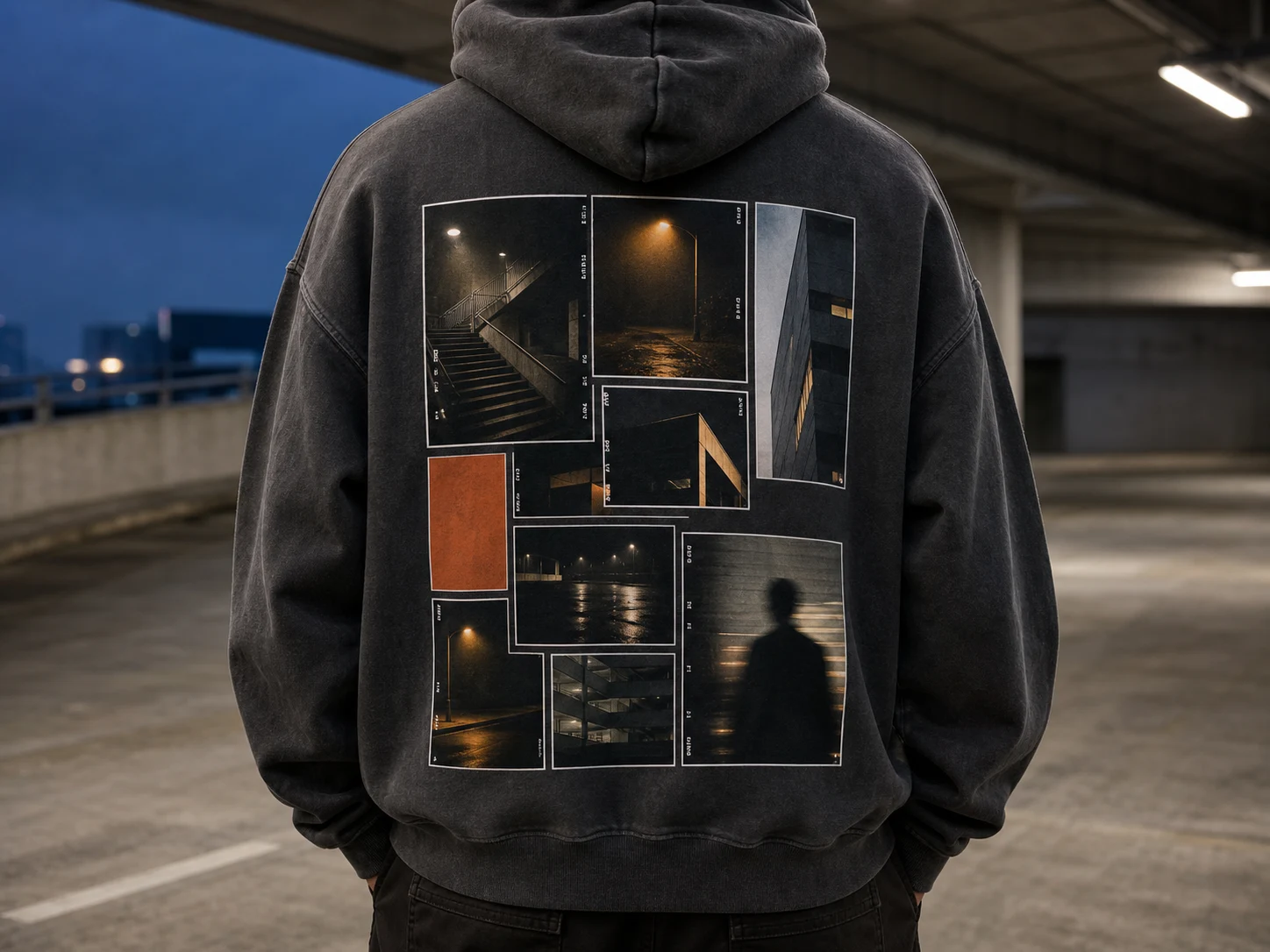
Multiple images can form an artistic hoodie graphic through contact sheets, film strips, cropped portraits, street scenes, Polaroid frames, timestamps, and short captions. A consistent color treatment, border style, or texture connects separate photographs into one unified composition. Original photographs or properly licensed images should be used, especially when recognizable people appear in the artwork. This approach allows personal memories, locations, and visual references to become part of a customized streetwear hoodie design idea.
- All-Over Patterns
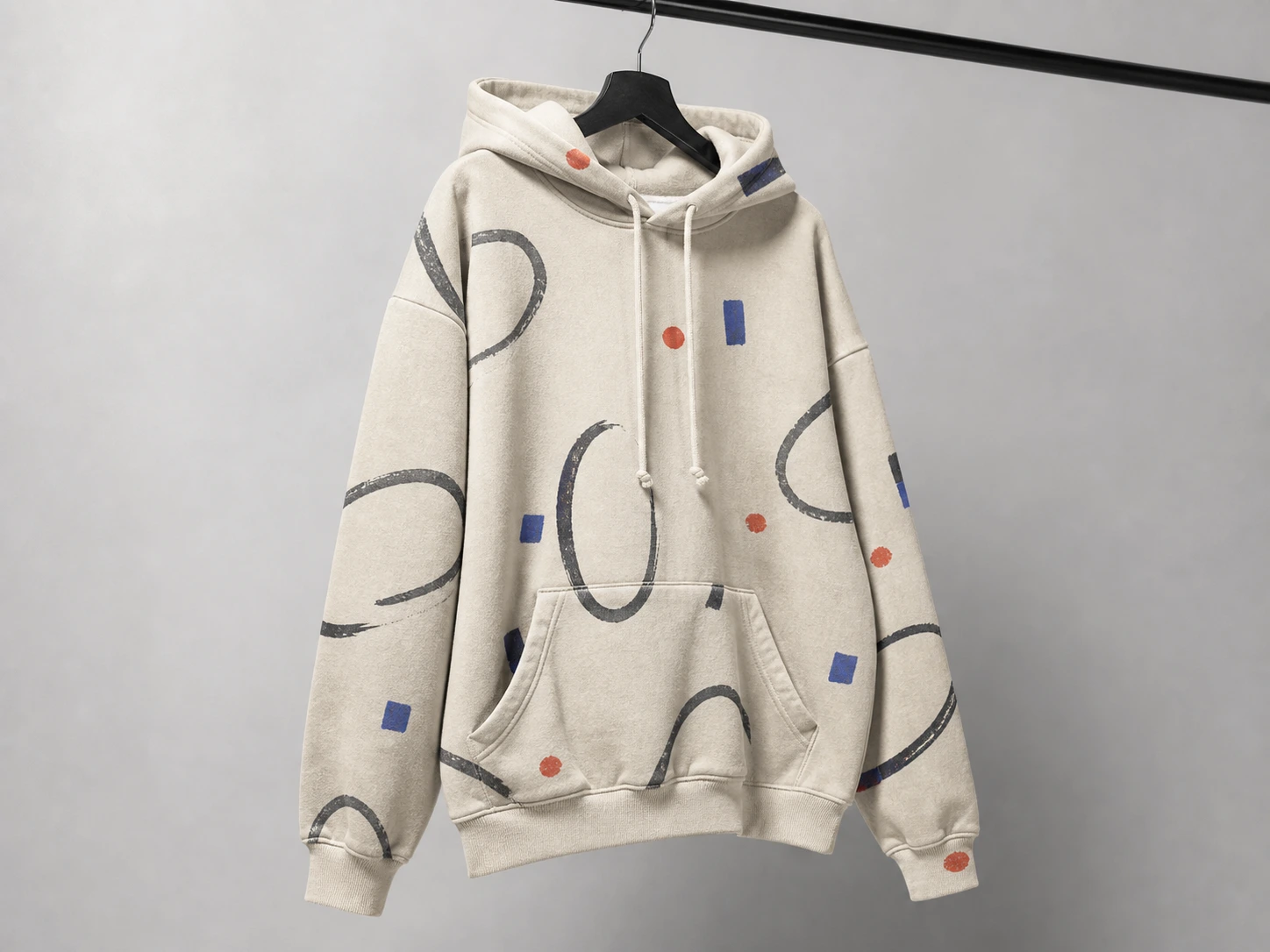
Repeated visual elements create a continuous graphic surface across the body, sleeves, hood, or selected hoodie panels. Pattern ideas include geometric shapes, checkerboards, stars, graffiti marks, symbols, camouflage, and abstract motifs that establish a recognizable streetwear style. Pattern scale, spacing, repetition, and seam alignment determine how balanced the final appearance becomes. A dominant pattern combined with a controlled color palette keeps these streetwear hoodie design ideas visually organized while preventing excessive detail from reducing the impact of the design.
Typography and Logo Streetwear Hoodie Design Ideas
Typography and logo concepts create streetwear hoodie design ideas that use lettering, symbols, and visual marks as the main identity elements. These graphic approaches focus on font style, placement, spacing, and contrast to communicate a clear message. Users can personalize these streetwear hoodie design ideas by adjusting slogans, initials, symbols, letter shapes, and logo arrangements. From bold statement phrases to minimal chest branding, typography-based streetwear hoodies balance visual impact with wearable styling.
Here are several typography and logo ideas to inspire a bold streetwear hoodie:
- Blackletter Slogans
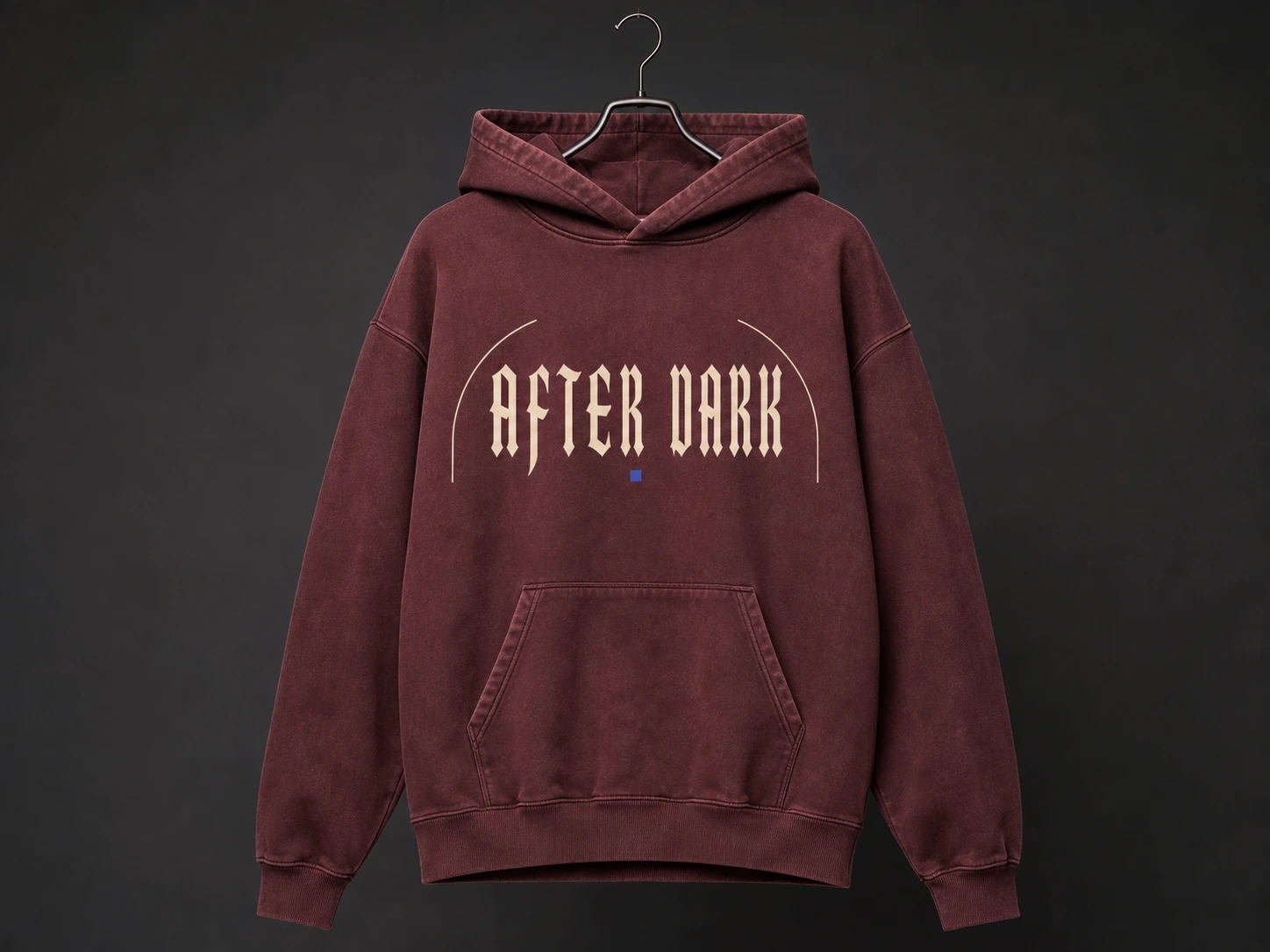
Gothic-inspired lettering delivers a bold streetwear hoodie design by combining dramatic typography with short phrases, initials, dates, or meaningful words. Blackletter fonts work well with ornamental details such as cathedral windows, decorative lines, crosses, halos, or medieval-inspired symbols. Placing the typography across the chest, upper back, or sleeves creates different visual effects while maintaining readability. A black hoodie with a cream blackletter slogan and subtle ornamental artwork represents a strong gothic streetwear graphic concept.
- Sleeve Text
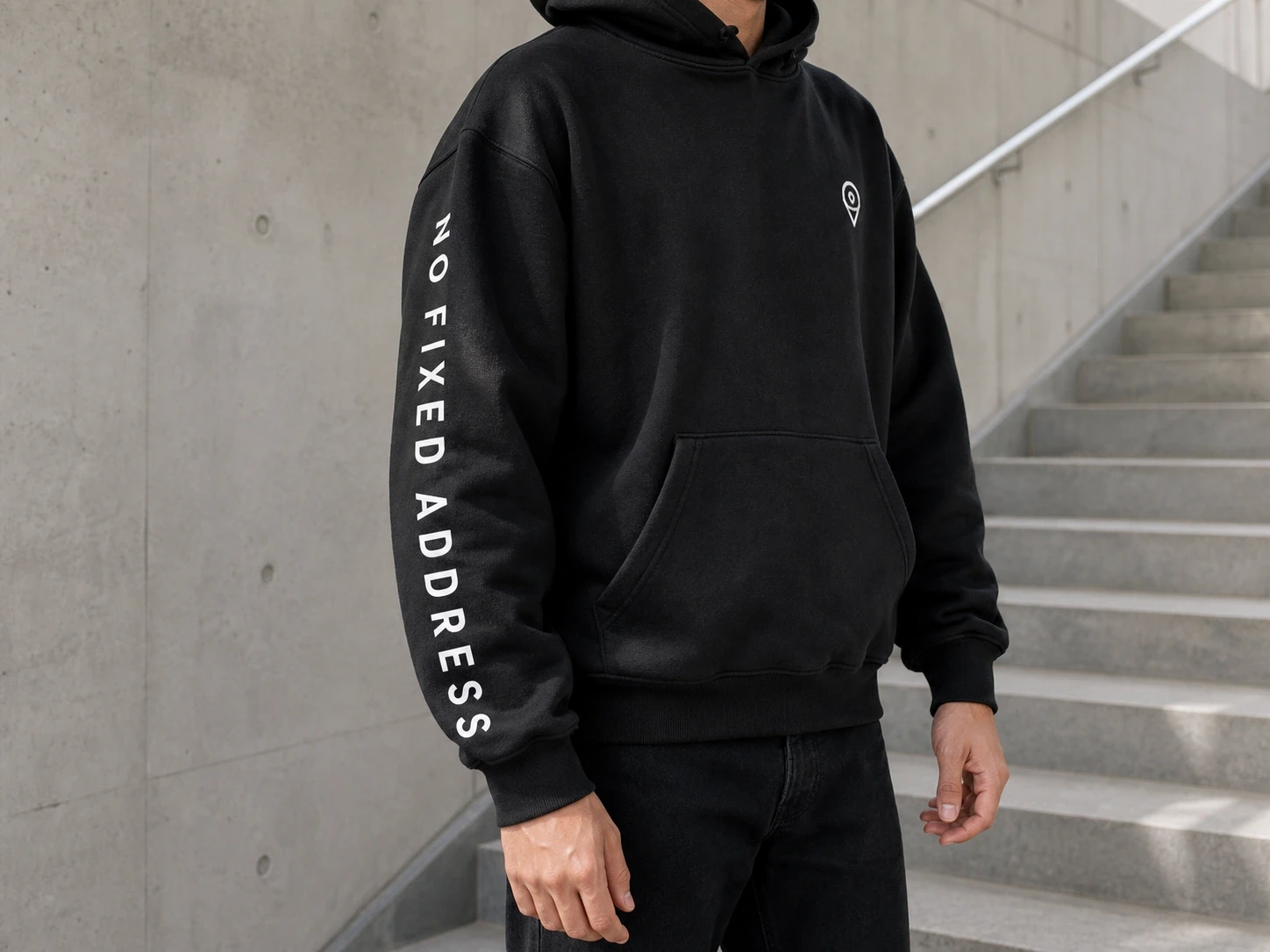
Vertical lettering along the sleeves adds a distinctive detail to a streetwear hoodie design idea without overwhelming the main artwork. Short phrases, coordinates, dates, brand messages, or repeated words can run along one or both sleeves to create a balanced visual flow. Proper spacing and alignment help maintain readability across fabric folds and movement. A black oversized hoodie with white sleeve text paired with a small chest logo creates a clean and modern streetwear appearance.
- Subtle Chest Logos
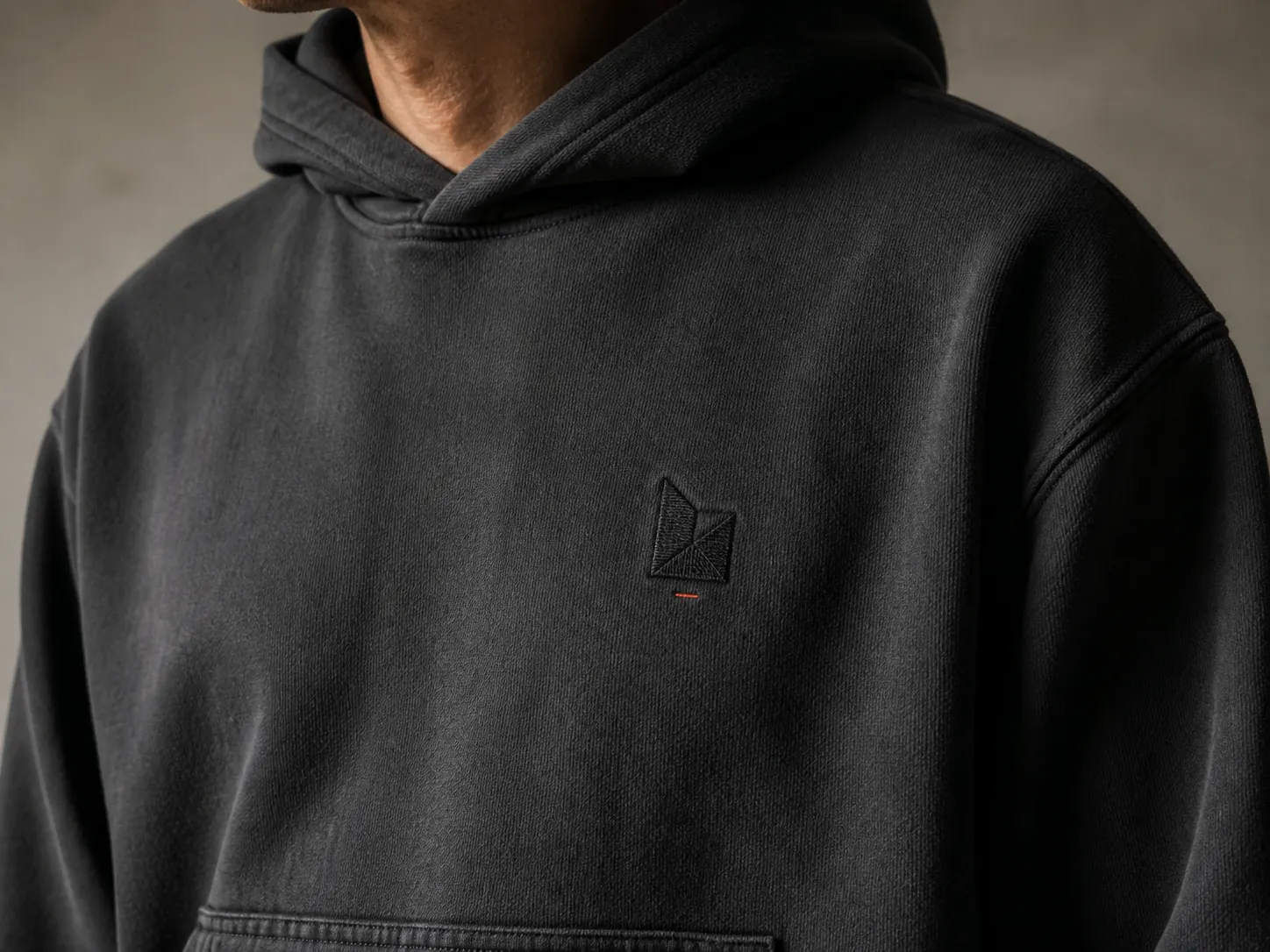
Small logo placements on the chest deliver a minimal streetwear hoodie design that focuses on simplicity and refined branding. A compact symbol, monogram, icon, or short wordmark positioned on the left chest or center chest delivers a clean visual statement. Tonal embroidery, simple line graphics, or muted prints can create an understated appearance. A charcoal hoodie with a small embroidered symbol on the chest represents a minimal hoodie style with a premium streetwear feel.
- Black-on-Black Monograms
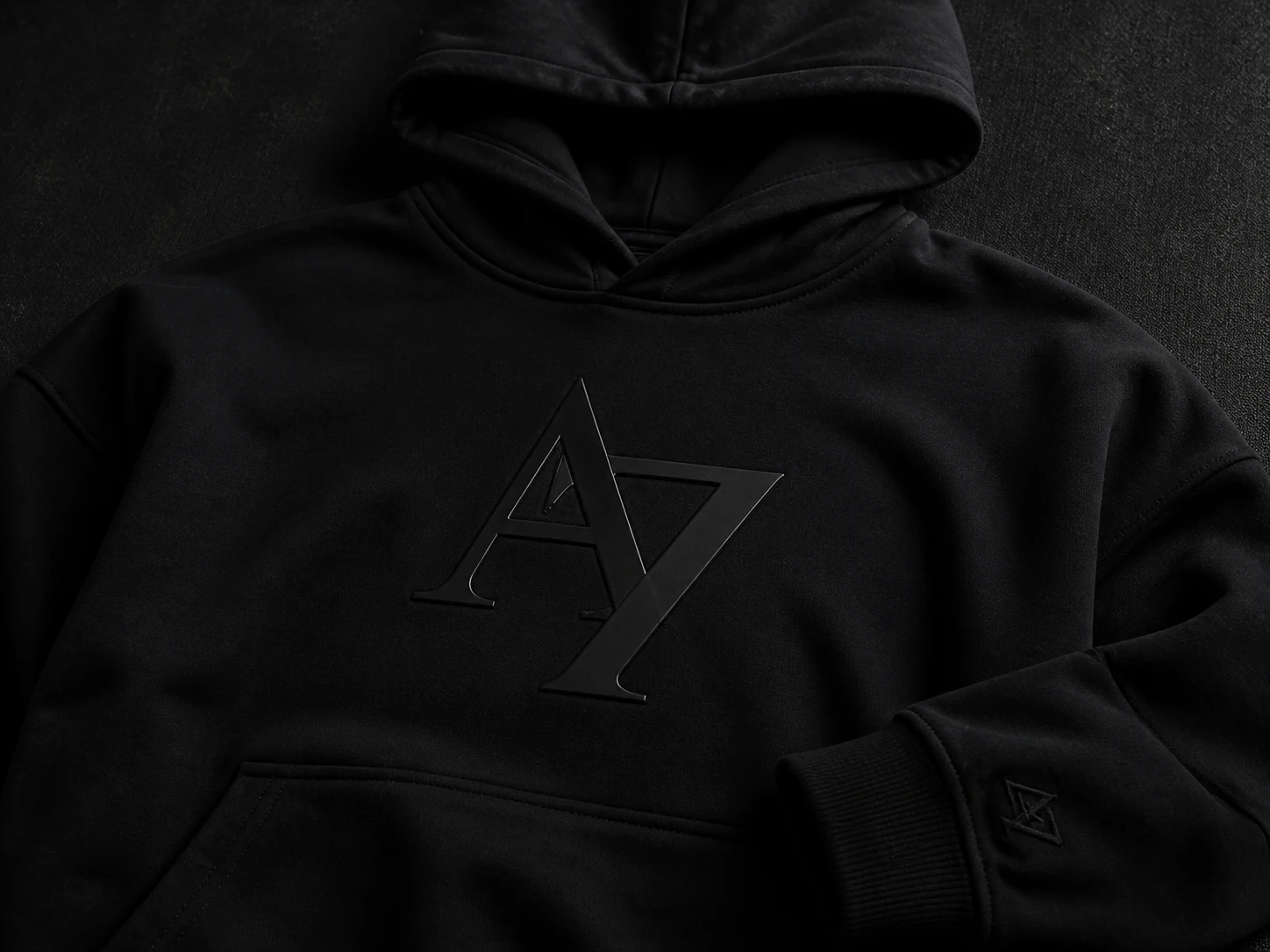
Black-on-black graphics create a dark and refined streetwear hoodie design by using texture and subtle contrast instead of bright colors. Black monograms, stitched logos, matte prints, or raised textures can add depth while keeping the overall appearance minimal. This approach works well with simple initials, symbols, or repeated brand marks. A black hoodie featuring a glossy black monogram across the chest or sleeve creates a monochrome graphic style with a modern streetwear hoodie design idea.
- Flame and Thorn Wordmarks
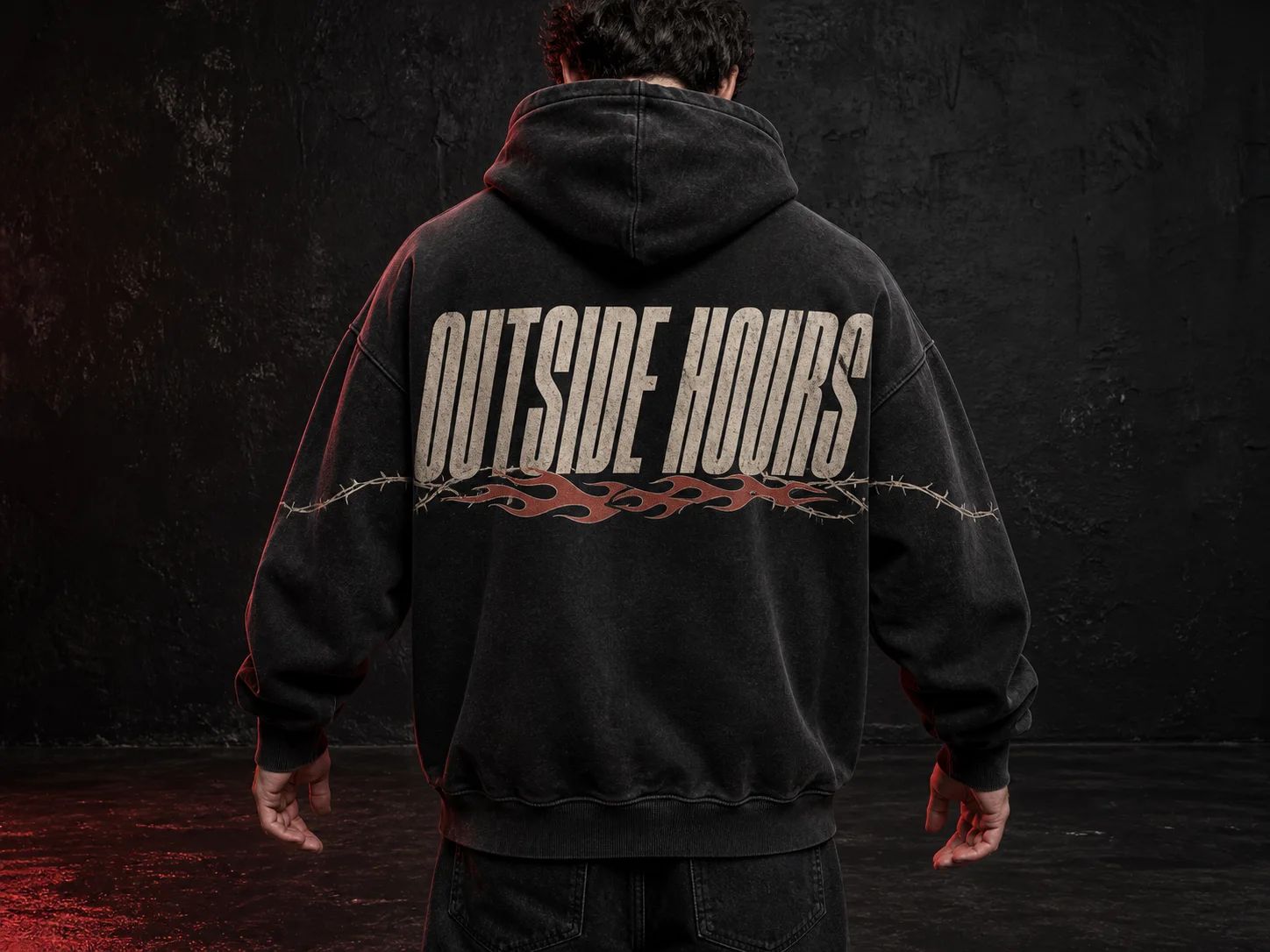
Decorative lettering combined with flames, thorns, vines, or sharp graphic elements defines an edgy streetwear hoodie design with strong visual character. The wordmark can remain as the main focus while surrounding details add movement and personality. Balanced spacing between typography and decorative artwork keeps the message readable across the chest, back, or sleeves. A dark hoodie featuring a bold wordmark surrounded by red flame graphics represents a rebellious graphic hoodie concept.
- Illustration and Character Streetwear Hoodie Design Ideas
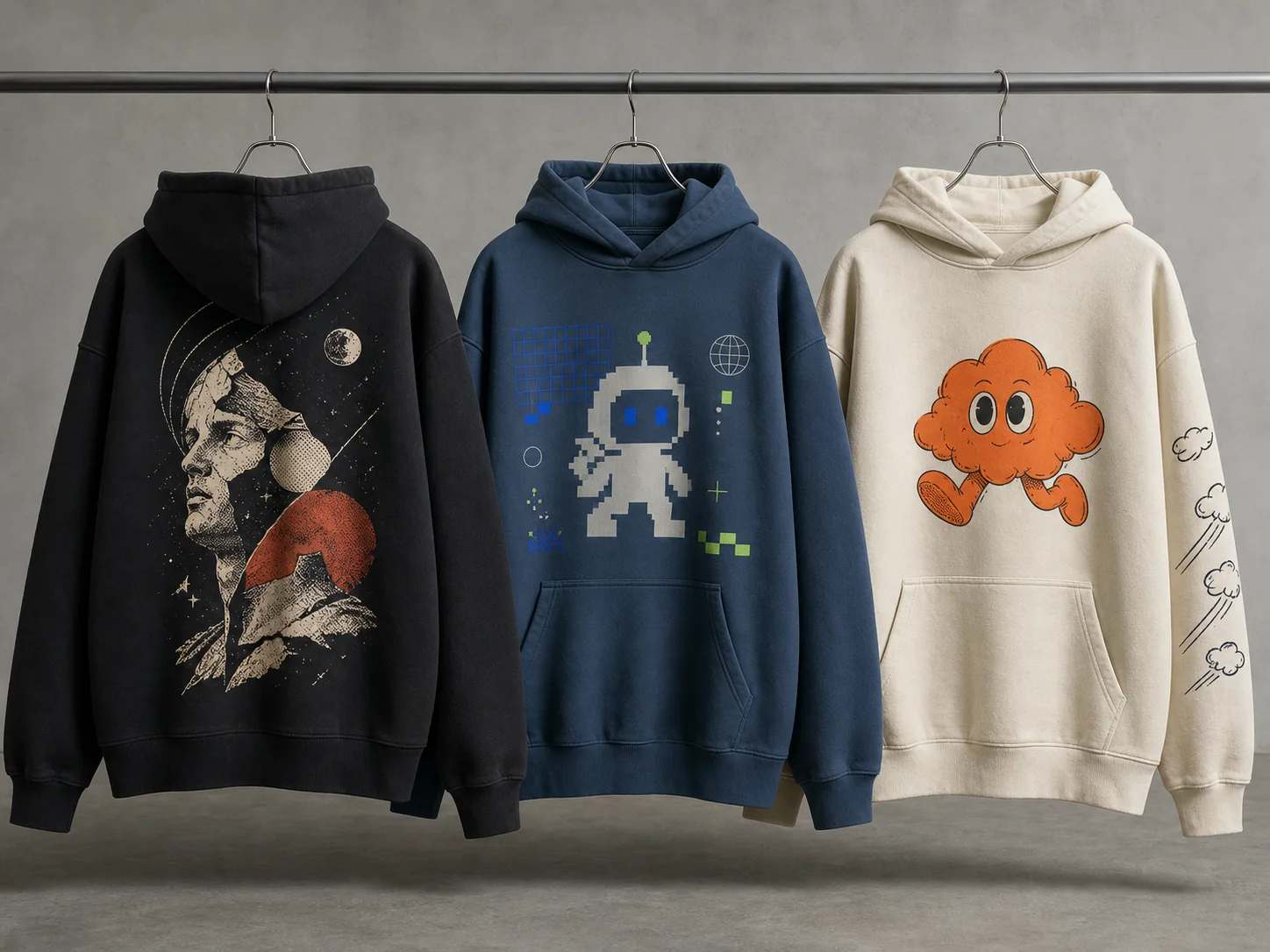
Illustration and character concepts transform streetwear hoodies into visual storytelling pieces through original artwork, symbolic figures, and detailed graphic scenes. These designs focus on character expression, composition, line style, and thematic elements to create recognizable hoodie identities. Users can personalize these streetwear hoodie design ideas by changing characters, poses, colors, symbols, and supporting graphics. From gothic artwork to pixel-inspired visuals, illustration-based hoodie designs create strong connections between fashion, creativity, and personal expression.
- Gothic Angel Artwork
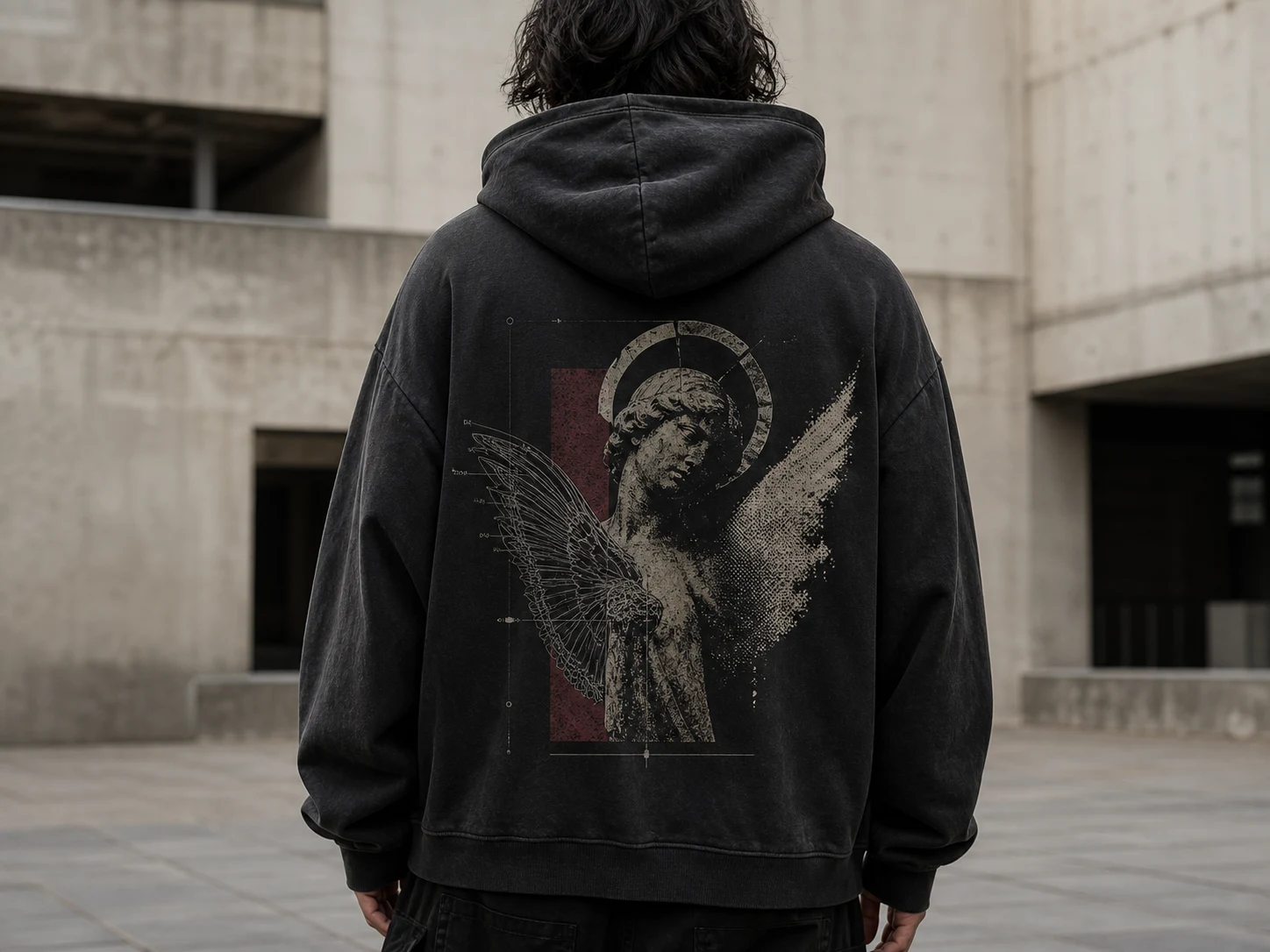
Dark symbolic artwork creates a dramatic streetwear hoodie design through angel figures, wings, halos, statues, clouds, and ornamental frames. Gothic angel graphics often use black, charcoal, cream, burgundy, or washed-gray color palettes to create a vintage, mysterious appearance. Large back placements can feature a detailed figure, while smaller chest symbols can support the main artwork. A black oversized hoodie with a winged angel illustration and gothic typography creates a bold artistic streetwear concept.
- Japanese Tattoo-Inspired Artwork
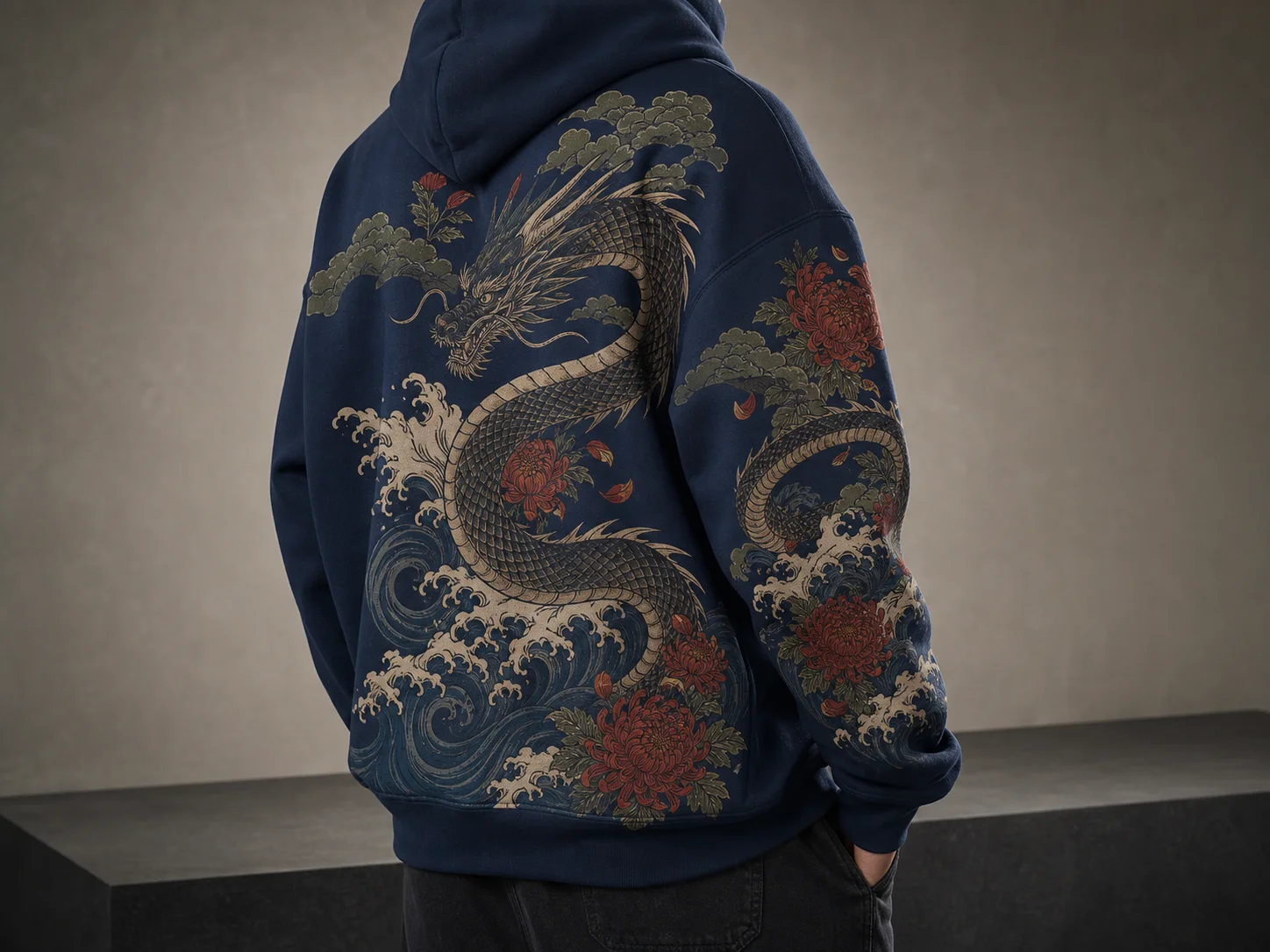
Flowing illustrations inspired by traditional Japanese tattoo aesthetics create a detailed streetwear hoodie design featuring dragons, koi fish, waves, snakes, flowers, and clouds. Curved compositions allow artwork to move naturally across the back, sleeves, and shoulders while maintaining visual balance. Original illustrations should focus on respectful references rather than copying existing tattoo artwork. A black hoodie featuring a large dragon illustration that extends across the back and sleeve embodies a detailed graphic streetwear style.
- Pixel-Art Characters
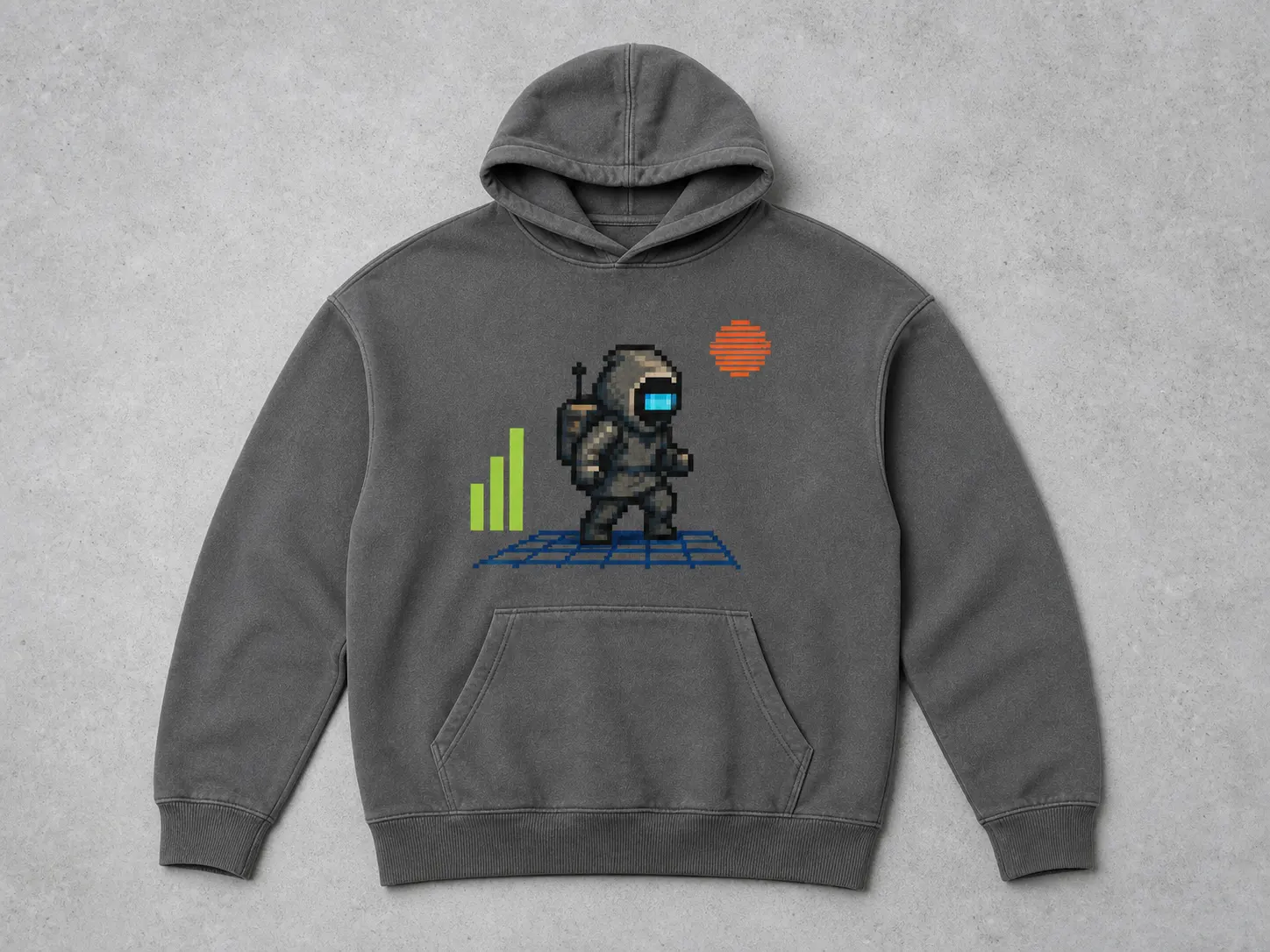
Block-style graphics represent a playful streetwear hoodie design idea by using pixel characters, game-inspired icons, digital symbols, and retro interface elements. These concepts rely on limited color palettes, sharp edges, and structured shapes to preserve the pixel effect. Small characters can appear on the chest, while larger digital scenes can fill the back panel. A gray hoodie featuring a pixel character with retro game graphics creates a nostalgic and creative streetwear look.
- Hand-Drawn Mascots
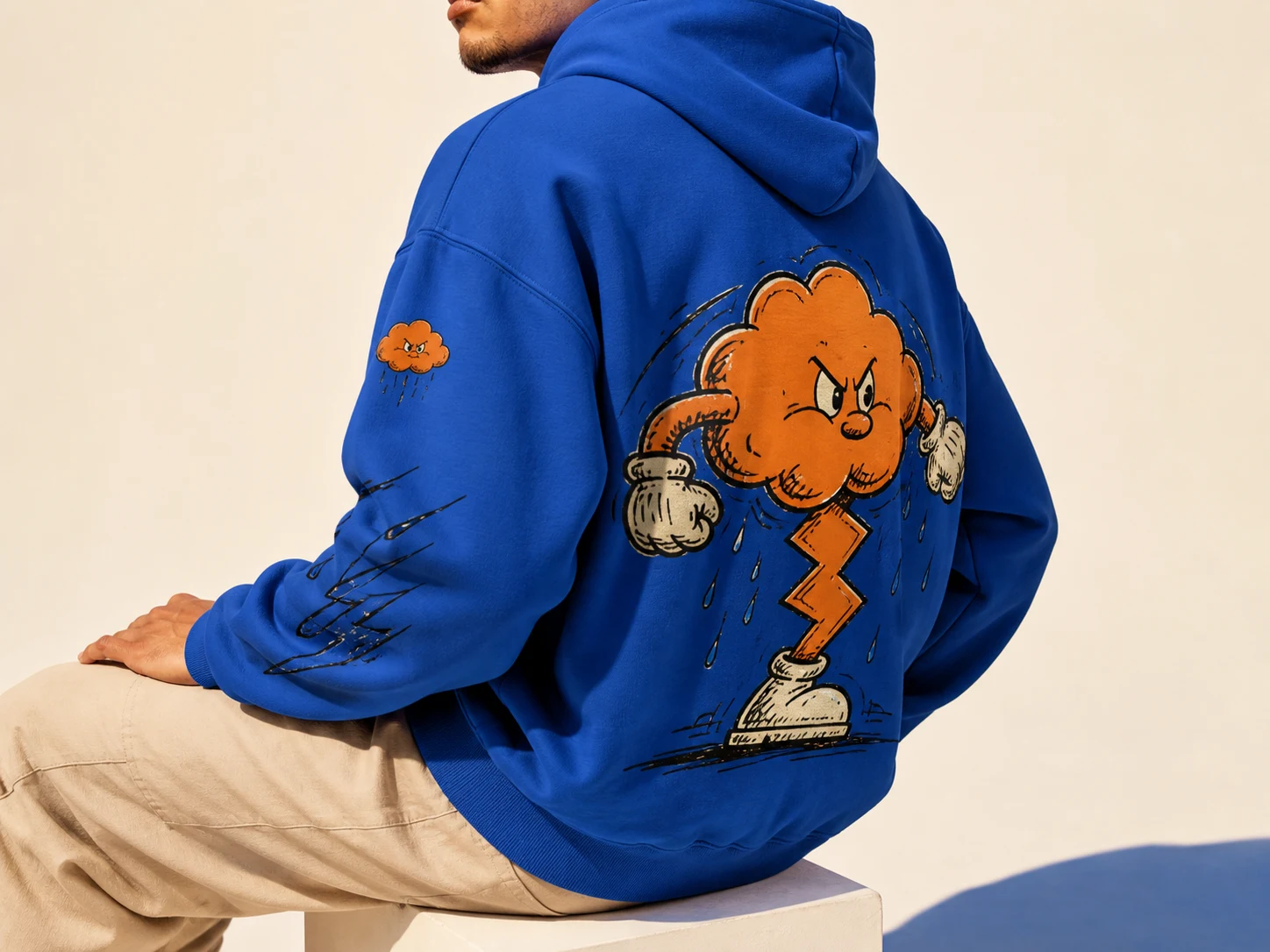
Custom character illustrations create a recognizable streetwear hoodie design by using unique mascots, expressive faces, distinctive poses, and memorable visual features. A mascot can appear as a small chest emblem or a larger back illustration supported by text and symbols. Consistent linework, colors, and personality traits help the character maintain a clear identity across different hoodie styles. A colorful hoodie featuring an original cartoon mascot with bold outlines creates an approachable graphic concept.
- Tattoo-Flash Compositions
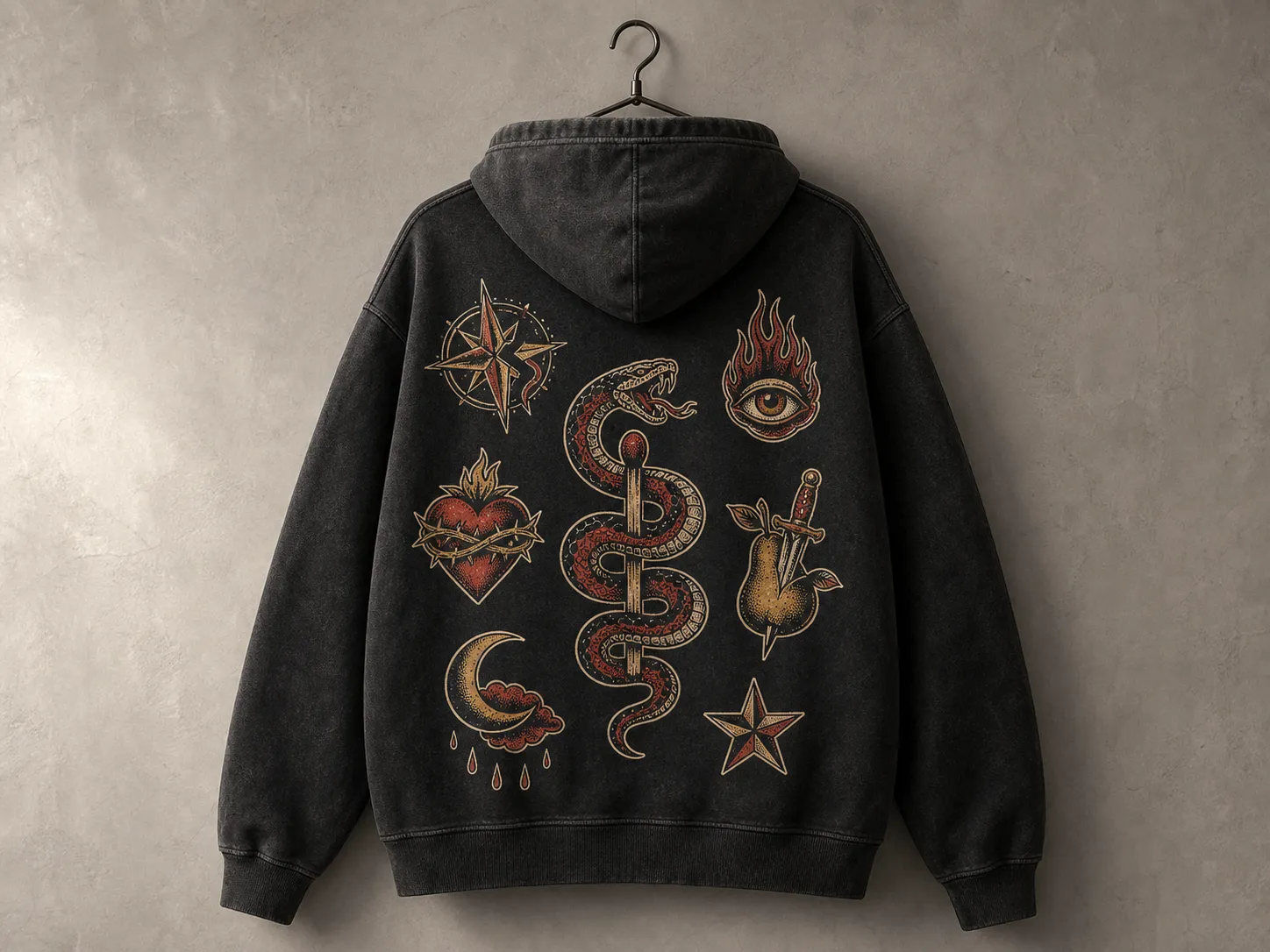
Multiple symbolic illustrations form a connected streetwear hoodie design through tattoo-flash layouts featuring elements such as roses, snakes, daggers, flames, eyes, skulls, hearts, and stars. Each artwork element should share similar line thickness, shading style, and color treatment to maintain visual unity. These compositions work well across full backs, sleeve sequences, or scattered front layouts. A black hoodie with a collection of vintage-style flash graphics embodies a bold and artistic streetwear aesthetic.
Vintage and Subculture Streetwear Hoodie Design Ideas
Retro influences and cultural references create streetwear hoodie designs that connect fashion with music, art, sports, and historical aesthetics. These concepts use aged textures, nostalgic graphics, bold typography, and recognizable visual styles to create distinctive garments. Users can personalize these streetwear hoodie design ideas by adapting the artwork theme, color palette, typography style, and graphic arrangement. From racing-inspired visuals to underground music references, vintage and subculture concepts create expressive streetwear pieces with strong visual identity.
Consider the following vintage and subculture concepts for your next streetwear hoodie:
- Distressed Racing Graphics
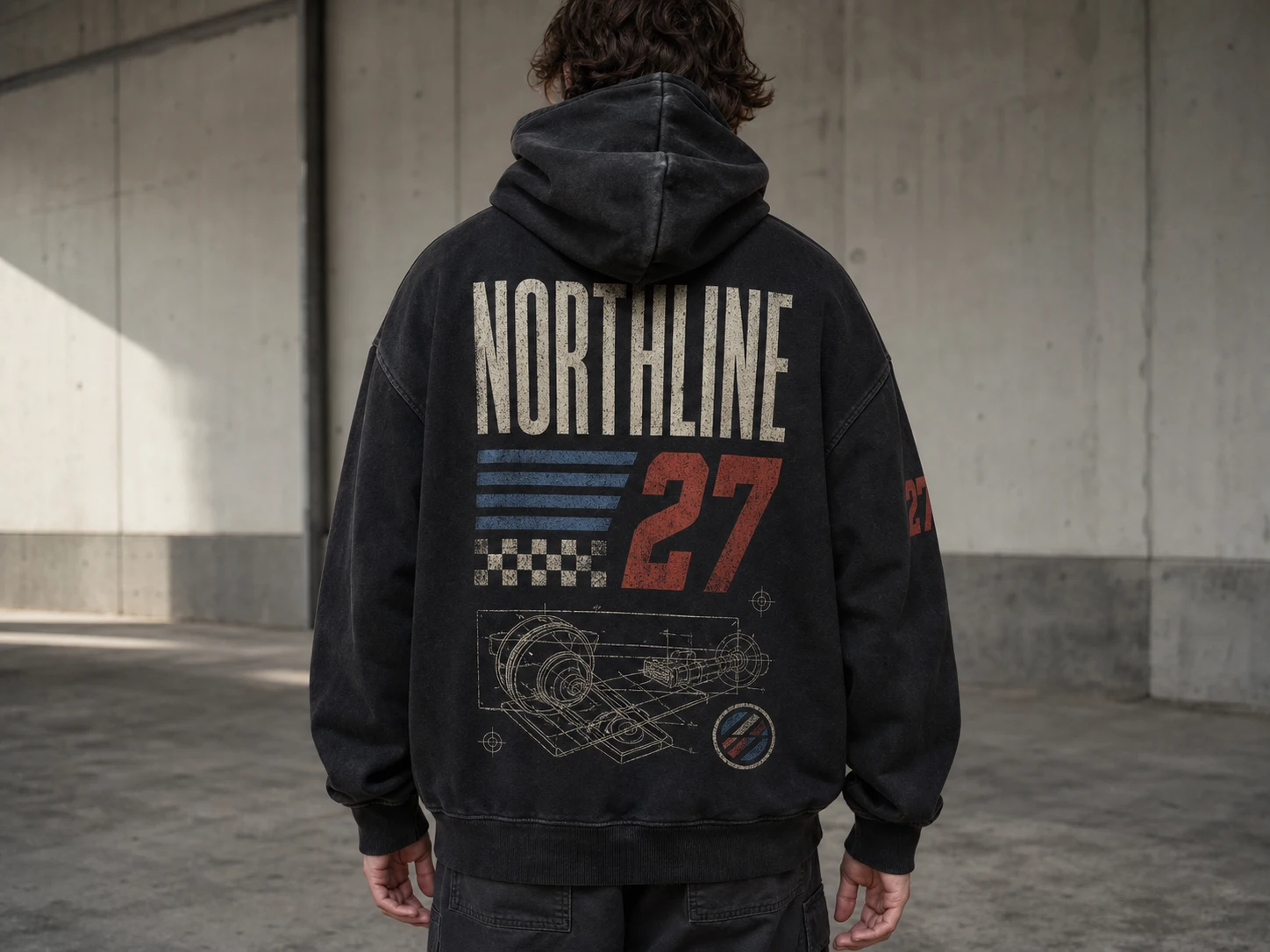
Motorsport-inspired artwork brings a vintage streetwear hoodie style through racing numbers, speed lines, checker patterns, mechanical details, and fictional team graphics. Faded ink effects, cracked textures, worn edges, and weathered finishes add an aged appearance that matches retro racing aesthetics. A large back graphic can feature a fictional race name with bold typography, while smaller chest or sleeve elements can support the theme. A black hoodie with distressed racing artwork and retro lettering represents an energetic streetwear hoodie design idea without copying existing racing identities.
- Y2K Chrome Graphics
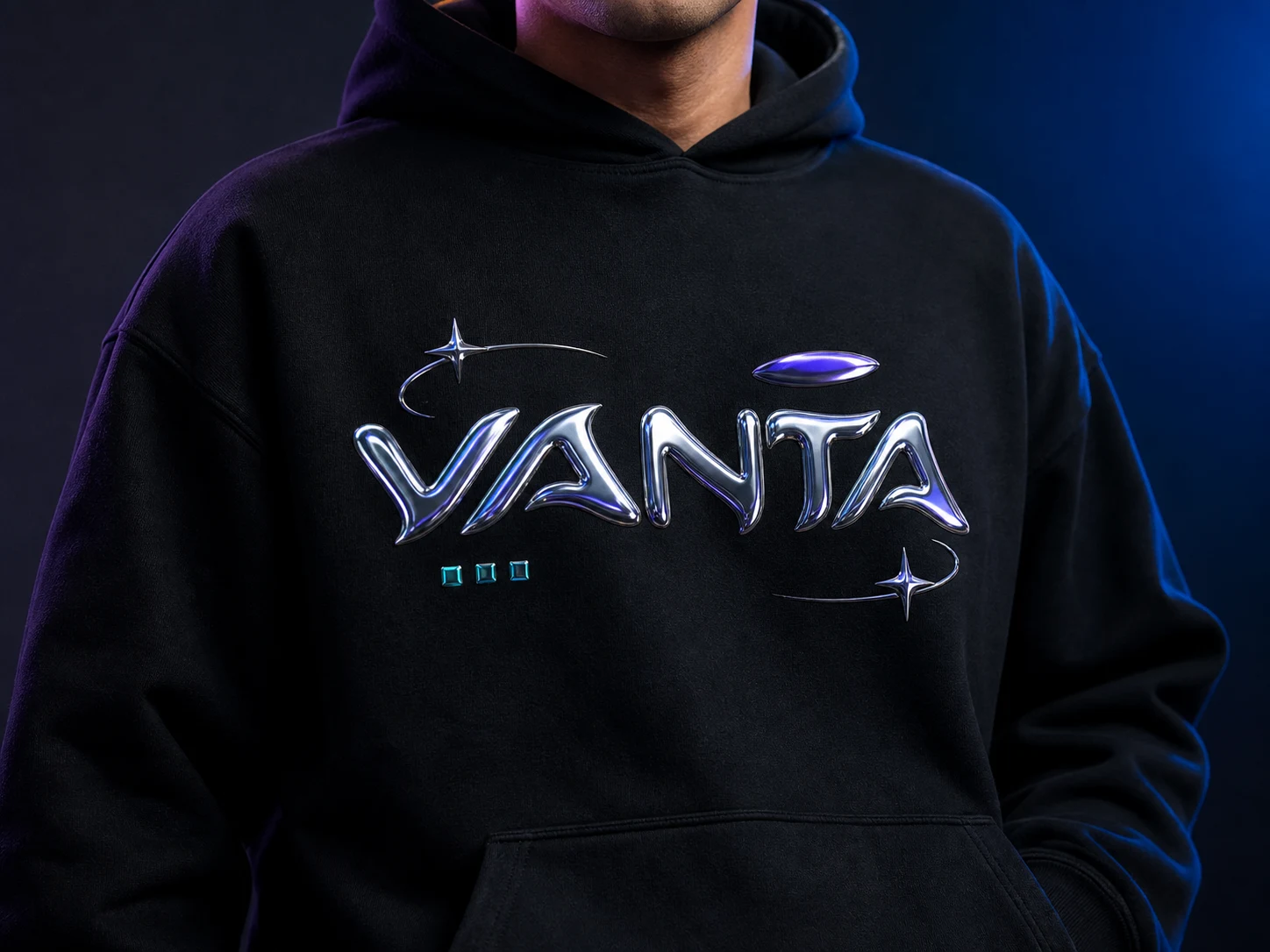
Early 2000s visual trends influence streetwear hoodie design ideas through metallic lettering, chrome surfaces, digital symbols, stars, flames, butterflies, and glossy graphic effects. These concepts combine reflective details, bright highlights, and dark backgrounds to achieve a futuristic appearance. Black, navy, purple, silver, and neon color combinations complement chrome-style artwork. A black oversized hoodie with a silver metallic wordmark and digital symbols showcases a bold Y2K-inspired graphic direction with a modern streetwear feel.
- Graffiti Tag Artwork
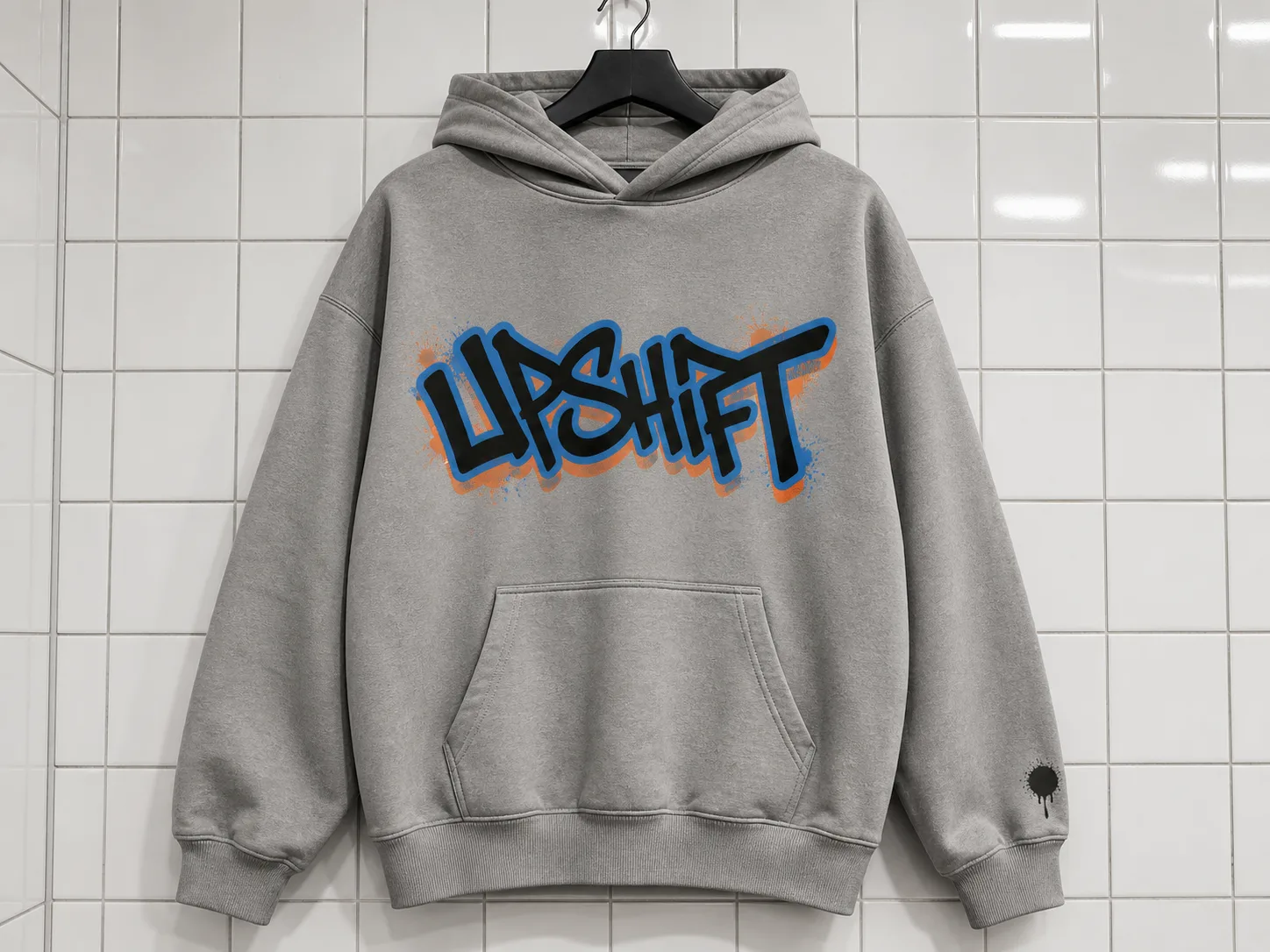
Urban lettering styles bring an artistic streetwear hoodie approach through original tags, spray textures, paint drips, outlines, shadows, and layered colors. A single word, nickname, phrase, or initials can become the central graphic across the back, chest, or sleeves. Consistent lettering styles and controlled color choices maintain visual balance throughout the composition. A gray hoodie featuring an original graffiti tag with layered spray effects represents a raw urban aesthetic while maintaining a distinct visual identity.
- Vintage College Crests
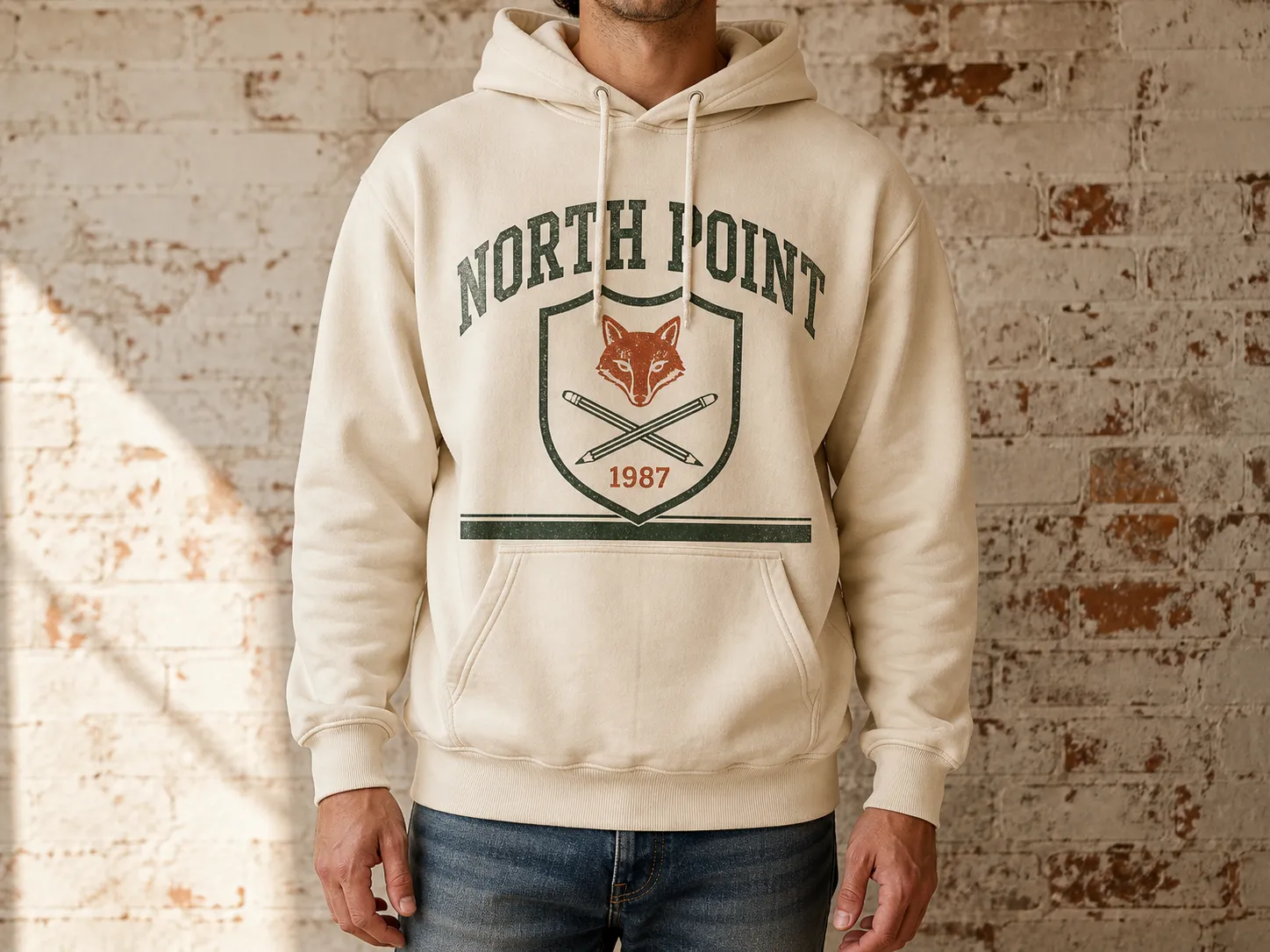
Classic academic references influence streetwear hoodie styles through fictional college names, shield shapes, varsity numbers, establishment dates, mascots, and arched typography. Faded colors, cracked prints, and traditional emblem layouts add a worn heritage appearance. Original names and custom symbols help maintain uniqueness while avoiding direct copies of existing institutions. A cream hoodie with a vintage crest, varsity lettering, and a fictional founding year reflects a timeless collegiate-inspired streetwear concept.
- Punk, Grunge, and Mixtape Collages
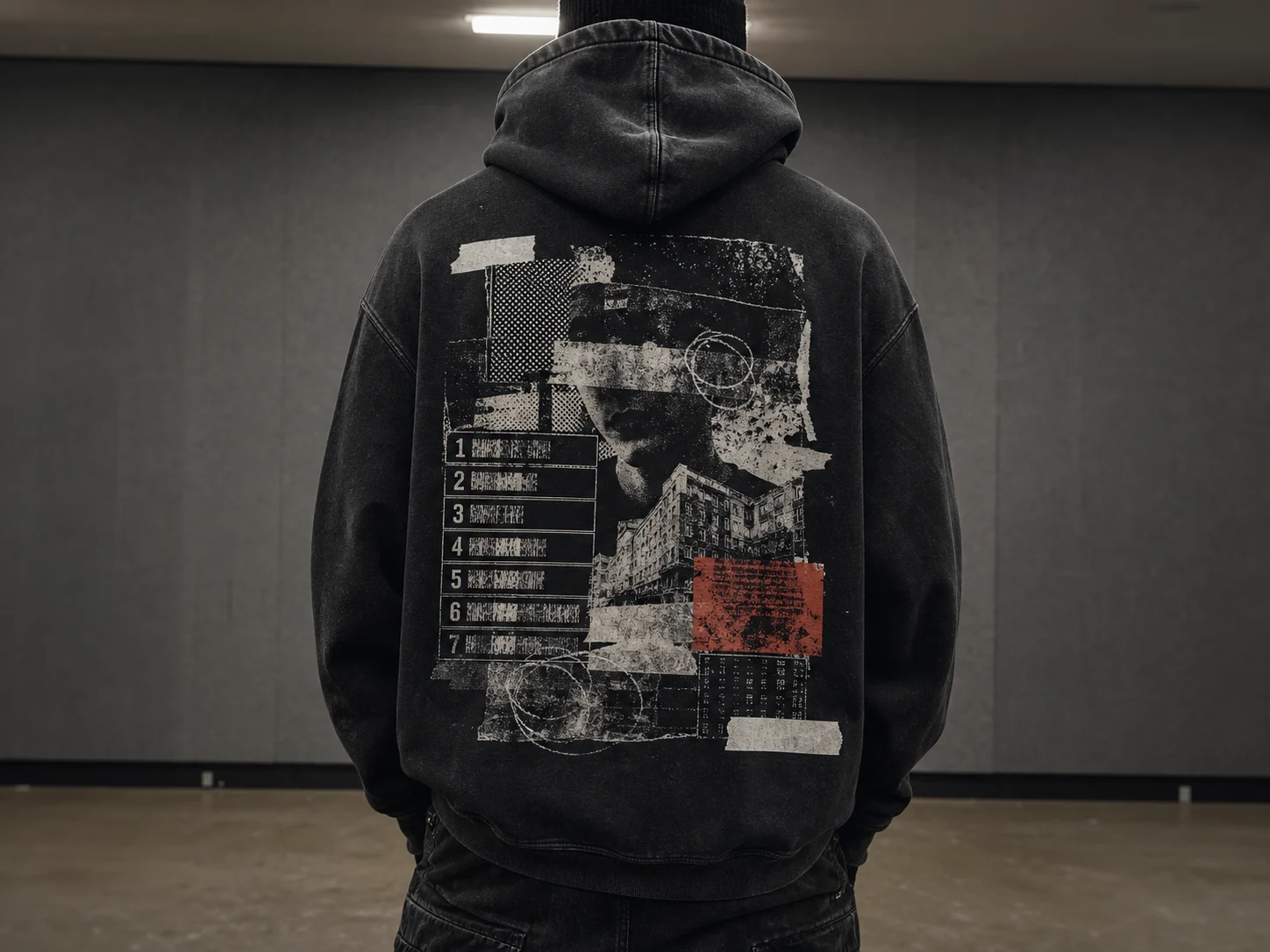
Layered graphics create alternative streetwear hoodie design ideas by combining torn posters, handwritten notes, grainy portraits, track-list layouts, warning labels, and damaged typography. Punk styles often use raw textures and rebellious symbols, while grunge concepts focus on faded graphics and imperfect finishes. Mixtape-inspired layouts can combine original titles, artwork, and music-related elements into a cohesive composition. A black hoodie with distressed collage graphics, handwritten text, and vintage textures creates an expressive subculture-inspired streetwear design.
Color, Texture, and Garment Detail Streetwear Hoodie Design Ideas
Visual treatments beyond artwork placement add depth to streetwear hoodie design ideas through color transitions, surface effects, garment finishes, and hidden details. These concepts focus on how colors, textures, and materials influence a hoodie’s overall appearance. Users can personalize these ideas by adjusting color combinations, graphic effects, fabric details, and placement choices. From gradient artwork to reflective accents, these approaches add character while maintaining a balanced streetwear aesthetic.
The following color, texture, and garment detail ideas can help shape a distinctive streetwear hoodie design:
- Colour-Gradient Graphics
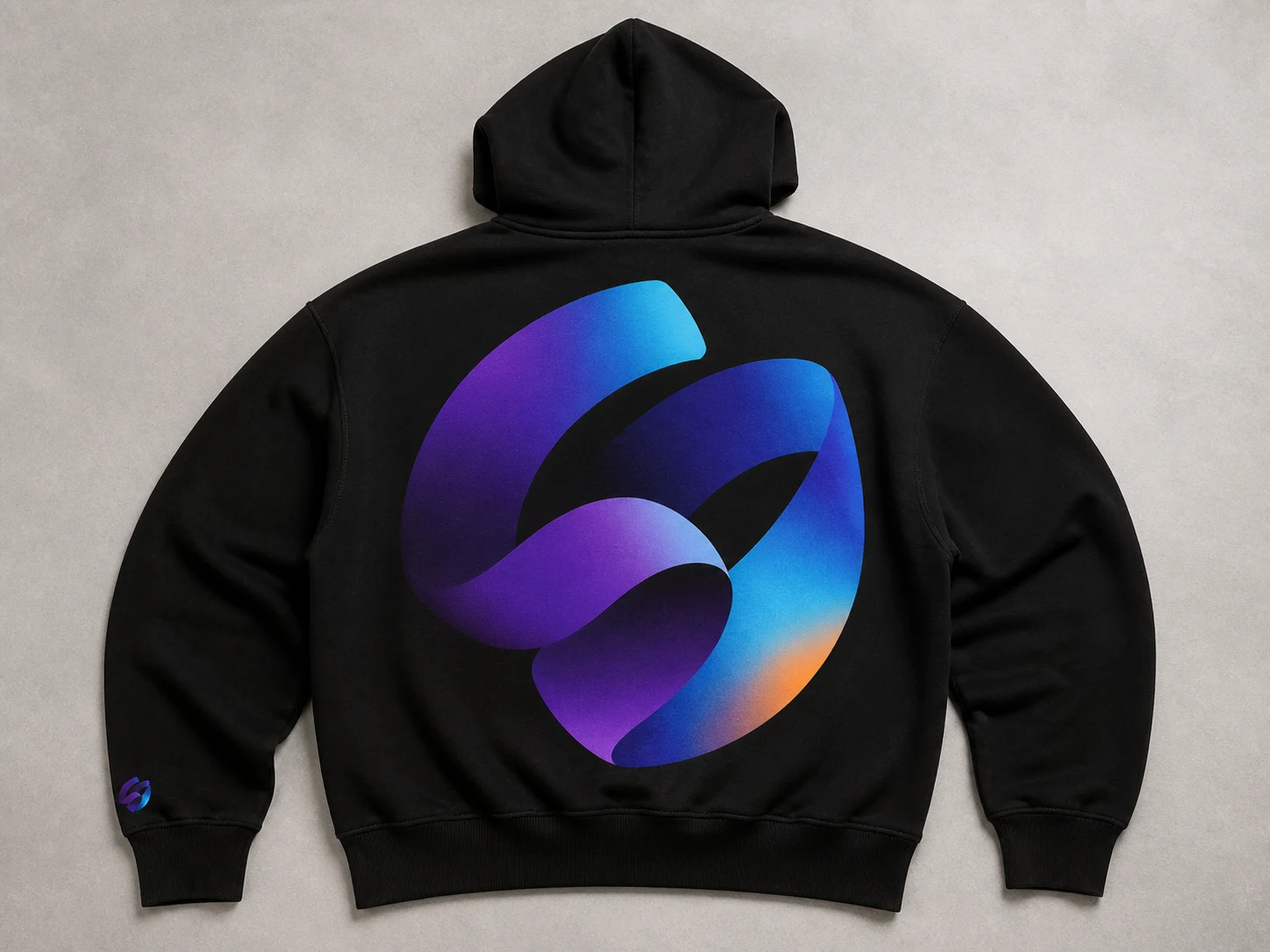
Blended color transitions add visual movement to a streetwear hoodie design through smooth shifts between different shades, tones, or contrasting colors. Gradient graphics work well with typography, flames, abstract shapes, waves, and illustrated artwork that benefits from depth. A controlled color palette helps maintain a clean visual direction while preventing the graphic from appearing crowded. A black hoodie with a purple-to-blue gradient graphic across the back represents a modern approach to colorful streetwear hoodie styling.
- Puff-Print Details
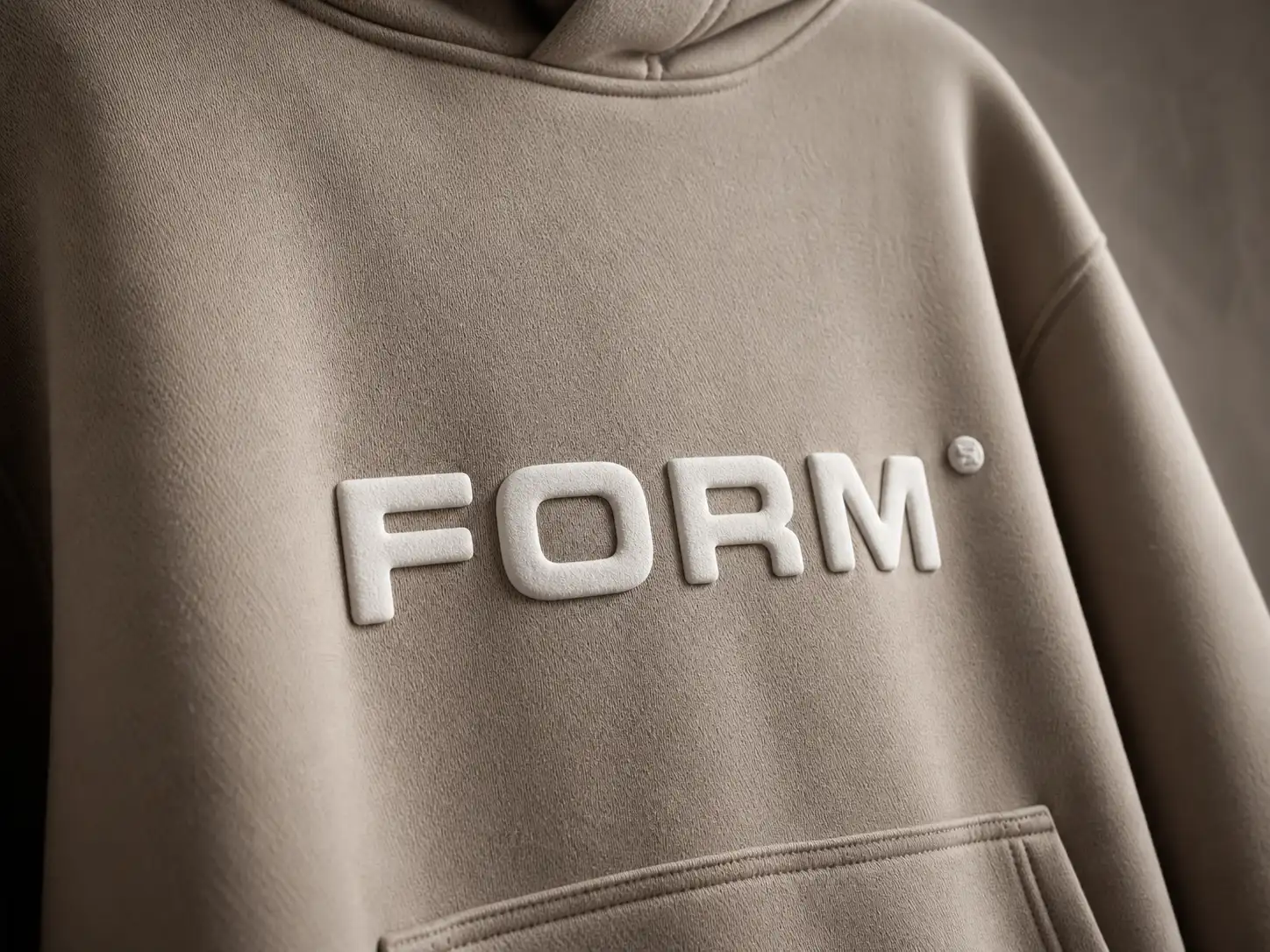
Raised surface effects add dimension to streetwear hoodie designs through textured logos, slogans, symbols, and bold graphic elements. Puff-print details work best with thick lettering, simple shapes, and strong outlines because these elements maintain clarity when lifted from the fabric surface. Small chest logos, large back graphics, and sleeve text can use this treatment to create a tactile appearance. A heavyweight hoodie with a raised white logo on the chest represents a minimal graphic style with added texture.
- Distressed Washes and Edges
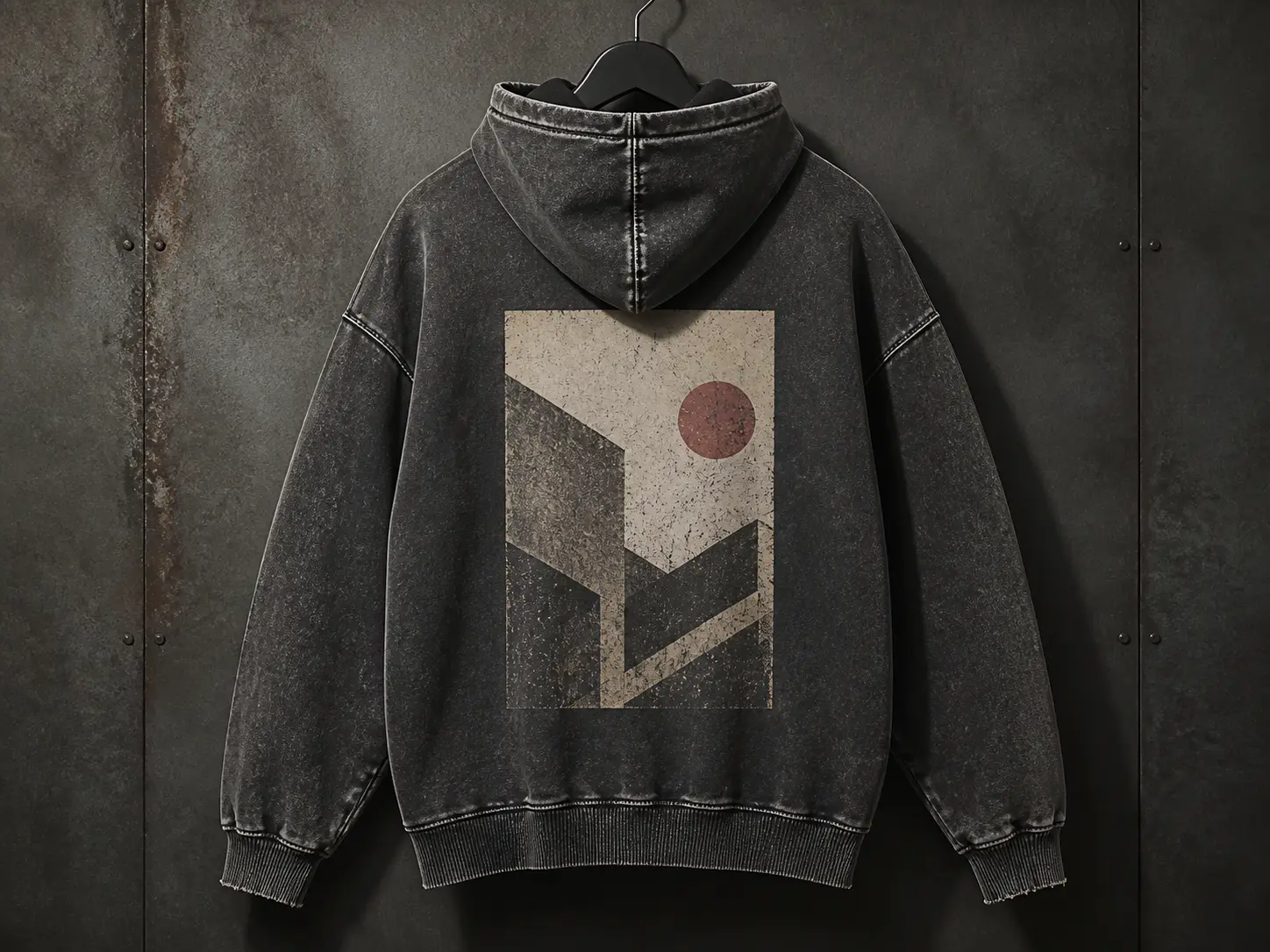
Worn textures and aged finishes give streetwear hoodies a vintage appearance through faded colors, cracked graphics, frayed edges, and weathered surface effects. These details work well with punk, grunge, racing, and retro-inspired concepts where imperfect textures support the overall theme. Garment washes and distressed artwork should complement the graphic instead of making the hoodie appear randomly damaged. A faded black hoodie with cracked back artwork and worn sleeve details represents a rugged vintage streetwear style.
- Contrasting Hood Lining
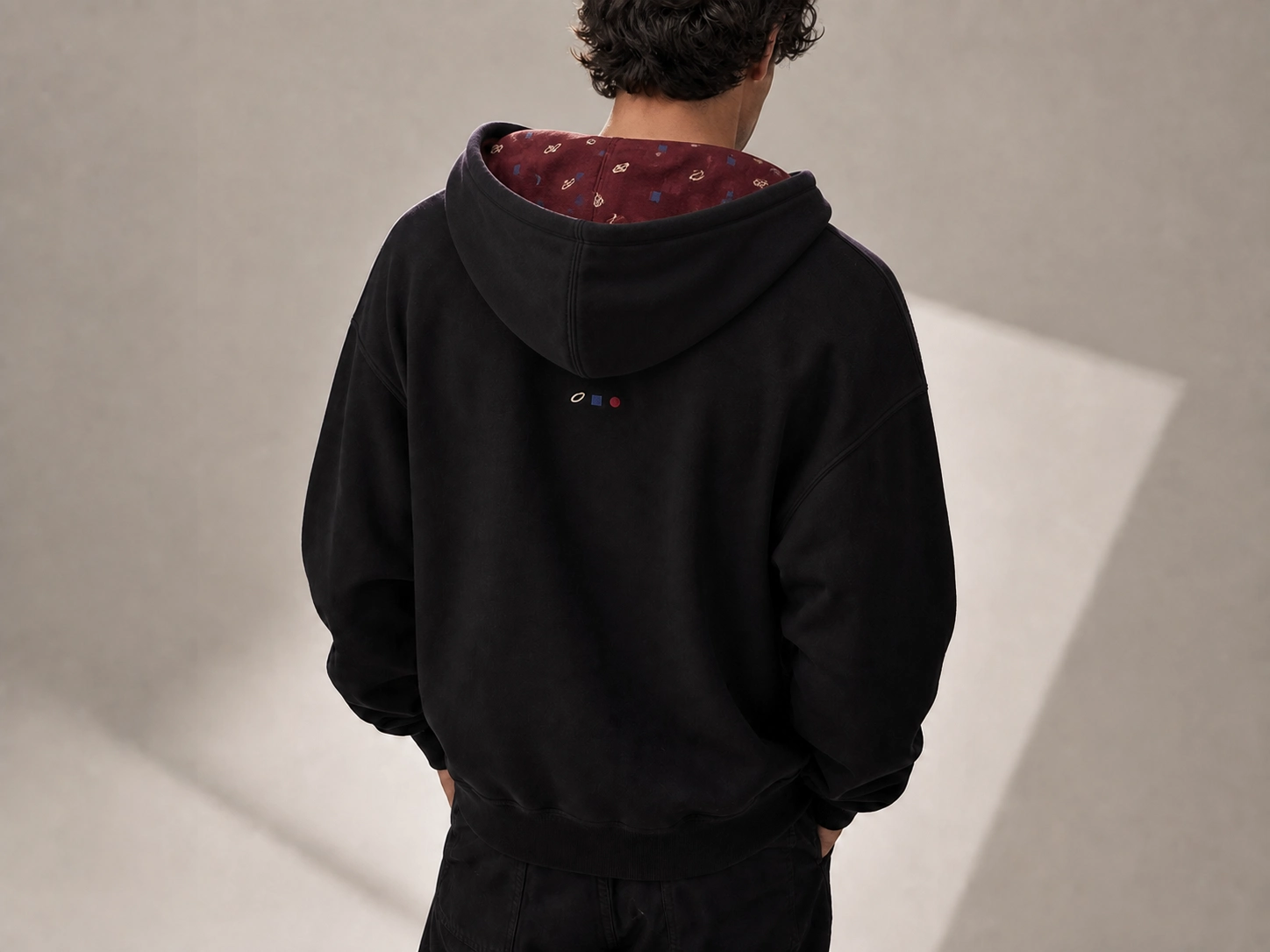
Hidden color details inside the hood create a unique visual element to streetwear hoodie design ideas by introducing contrast through fabric, patterns, or printed sections. A bright lining, repeated graphic, or subtle message becomes visible when the hood is lowered or viewed from different angles. This detail can connect with the main artwork through matching colors, symbols, or textures. A black hoodie with a red patterned hood lining creates a strong contrast while maintaining a cohesive streetwear appearance.
- Reflective and Holographic Accents
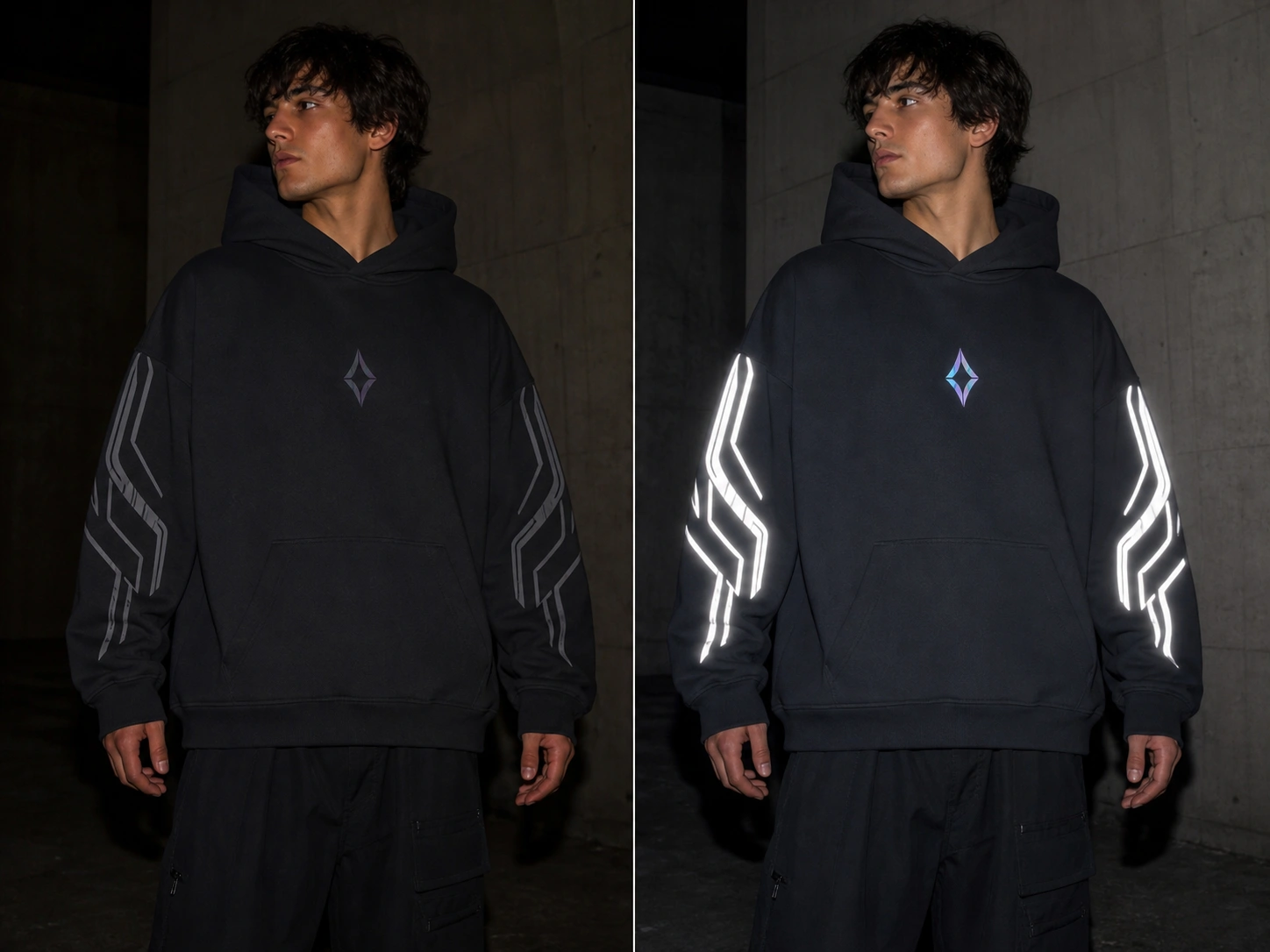
Light-responsive details deliver a futuristic touch to streetwear hoodie designs through reflective materials, metallic effects, and holographic surfaces. These accents work well on typography, outlines, symbols, and small graphic sections where changing light creates visual interest. Using these effects as highlights rather than covering the entire hoodie keeps the main artwork clear and balanced. A dark hoodie featuring reflective sleeve graphics and holographic logo details embodies an experimental streetwear concept with a modern aesthetic.
How Can You Turn a Streetwear Hoodie Idea Into a Personalized Design?
You can turn a streetwear hoodie idea into a personalized design by choosing a central theme and main visual element, then adding personal text, symbols, or imagery. You can refine the concept by selecting the graphic placement, colorway, scale, hoodie fit, and decoration method. Create multiple variations and preview them on a hoodie mockup to compare proportions, placement, contrast, and overall appearance before production. Consider how the finished garment will look from different angles and how comfortably the artwork works with the hoodie’s construction.
Start with these steps to shape your streetwear hoodie design:
- Choose One Central Theme
Define the main theme before adding any artwork because a focused concept keeps the entire hoodie design visually consistent. Select a direction such as gothic, vintage, graffiti, minimal, or futuristic streetwear. Remove unrelated elements that weaken the message. A clear theme helps guide the artwork style, typography, colors, and supporting details throughout the design process.
- Select the Main Visual Element
Choose one primary graphic element to establish the hoodie’s visual identity and guide the supporting details. Select an illustration, logo, character, symbol, photograph, or typography piece as the central focus. Keep secondary graphics smaller so they support the main artwork instead of competing with it. A strong focal element improves recognition and creates a balanced composition.
- Add Personal Text, Symbols or Imagery
Include personal details such as names, initials, dates, locations, symbols, or meaningful images to make the hoodie concept unique. Select elements that connect with your interests, experiences, or brand identity rather than adding random decorations. The original text and custom symbols help the hoodie convey a specific message while maintaining a clear visual direction.
- Choose the Graphic Placement
Select the right garment area because placement determines how the artwork appears when the hoodie is worn. Compare options such as the chest, back, sleeves, hood, and pocket areas based on graphic size and level of detail. Large illustrations work well on the back, while smaller symbols often suit the chest or sleeve areas for balanced visibility.
- Match the Colorway to the Design
Choose hoodie colors and graphic shades that support the intended mood and maintain strong contrast. Match dark garments with visible artwork tones and select neutral colors for minimal styles. A controlled color palette helps typography, illustrations, and symbols remain clear. Review how the graphic interacts with the fabric color before finalizing the overall appearance.
- Adjust the Graphic Scale
Control the artwork size of the hoodie to maintain balance between visual impact and wearability. Large graphics create strong statements across oversized hoodies, while smaller graphics support minimal styles. Review how the design appears on different hoodie sizes because proportions change with garment dimensions. Proper scaling keeps important details visible without making the composition feel crowded.
- Adapt the Design to the Hoodie Fit and Style
Modify the artwork according to the hoodie structure, including oversized fits, standard silhouettes, pullover styles, and zip-up designs. Consider seams, pockets, sleeves, and hood shapes before final placement. A graphic that suits the garment proportions appears more natural and balanced. Adjusting the layout for the hoodie style improves the final wearable appearance.
- Choose the Print or Decoration Method
Select a suitable decoration method for the hoodie based on the artwork style, texture requirements, and level of detail. Options include screen printing, embroidery, puff print, patches, reflective accents, and other treatments. Simple graphics often suit bold printing, while textured concepts may benefit from raised or stitched details. Match the finishing method with the intended visual effect.
- Create and Compare Design Variations
Develop multiple versions of the hoodie by changing one element at a time, such as color, placement, scale, or typography. Comparing variations helps identify the strongest composition before finalizing the hoodie design. Review each version from front, back, and side views to understand how the artwork works across the full garment structure.
- Preview the Design on a Hoodie Mockup
Review the artwork on a realistic garment preview to evaluate graphic size, color balance, placement, and overall visibility before finalizing the hoodie design. A hoodie mockup helps compare front, back, sleeve, hood, and zip-up views to identify spacing or proportion issues. Checking the complete garment presentation ensures the graphic elements appear balanced and aligned with the intended streetwear style.
How Can You Make a Streetwear Hoodie Design Feel Original?
You can make a streetwear hoodie design feel original by replacing common symbols with custom artwork and using original lettering, personal references, and combined sources of inspiration. Use public-domain or properly licensed imagery when needed, and check names, slogans, characters, and logos before adding them. Compare references to avoid close similarities, then remove borrowed details that lack personal meaning. These steps help the finished hoodie express a distinctive and intentional visual identity.
Apply the following steps to make your streetwear hoodie design more distinctive and personal:
- Replace common symbols with custom artwork
Modify familiar symbols by changing their shapes, details, and visual style to create original artwork. Instead of using standard flames, skulls, stars, or wings, redesign them with personal elements that match your hoodie theme. Custom illustrations, unique proportions, and different line styles help transform common graphics into recognizable streetwear visuals with a stronger individual identity.
- Use original lettering instead of copied logos
Develop unique typography by creating original slogans, wordmarks, or letter arrangements instead of imitating existing logos. Adjust font styles, spacing, shapes, and layouts to match your hoodie concept. Custom lettering allows the message to remain clear while building a distinct visual identity. Original text choices make the design more personal and reduce similarity with established brands.
- Build the design from personal interests, memories or references
Use personal experiences, hobbies, locations, dates, or meaningful moments as inspiration for your hoodie artwork. Select references that connect with your identity instead of adding unrelated trendy elements. Personal symbols, favorite places, or memorable events can become visual details within the composition. These choices help the hoodie communicate a story that feels unique and intentional.
- Combine several references without reproducing one design
Blend different sources of inspiration by selecting separate elements such as colors, textures, layouts, or typography styles. Avoid following an existing hoodie as the complete template. Combining multiple influences with original artwork choices allows the final composition to develop its own structure while maintaining connections with the styles that inspired the concept.
- Use public-domain or properly licensed imagery where needed
Select approved images, illustrations, fonts, or textures when using external resources in a hoodie concept. Public-domain assets, licensed graphics, and original visuals provide safer options for creative projects. Checking image permissions before use helps maintain a professional design process and prevents the final streetwear hoodie artwork from depending on unauthorized materials.
- Check names, slogans, characters, and logos before using them
Review every name, phrase, character, and logo before adding these elements to a hoodie design. Existing brands, fictional characters, and recognizable symbols may be subject to ownership restrictions. Checking these details allows you to replace protected elements with original alternatives while keeping the artwork unique, recognizable, and aligned with the intended streetwear style.
- Compare references so the design does not resemble an existing hoodie too closely
Review the completed concept alongside the references that influenced it before finalizing the artwork. Compare graphic placement, colors, typography, symbols, and overall composition to identify similarities. Adjusting specific details such as scale, arrangement, or visual style helps maintain creative independence while preserving the inspiration behind the streetwear hoodie design.
- Remove details that feel borrowed rather than personal
Refine the artwork by removing elements that only imitate popular designs without adding personal meaning. Review each symbol, texture, phrase, and graphic feature to determine its purpose within the composition. Keeping meaningful details and eliminating unnecessary references creates a cleaner streetwear hoodie design that communicates a stronger personal identity.
What Should You Check Before Finalizing the Hoodie Design?
Before finalizing the hoodie design, you should check graphic resolution, print dimensions, scale, alignment, placement, color contrast, and small-text readability. Review how artwork works around pockets, seams, and zippers, and confirm that the chosen print method suits the design details. Preview the artwork on an accurate hoodie mockup from multiple angles, then review copyright and trademark concerns to identify any elements that need modification before production.
Use the following checks to refine the artwork and prepare it for production:
- Graphic resolution
Check the artwork quality to ensure the graphic remains sharp and clear at the intended print size. Low-resolution images can appear blurry, pixelated, or distorted when transferred onto fabric. Use high-quality artwork files that maintain clean edges and details. Reviewing image clarity before production helps preserve the visual impact of the streetwear hoodie design.
- Print dimensions
Confirm the exact dimensions of each graphic before applying the artwork to the hoodie. Compare the design size to the available print area on the front, back, sleeves, or hood. Proper measurements prevent oversized or undersized designs, which can affect the overall appearance. Accurate dimensions help maintain balanced placement across different hoodie sizes.
- Graphic scale
Review the graphic size in relation to the hoodie shape and intended style. Large artwork can create a bold streetwear appearance, while smaller graphics support minimal concepts. Adjust the scale to ensure important details remain visible without overwhelming the garment. A balanced graphic size improves readability and creates a more polished final composition.
- Front and back alignment
Check the relationship between front and back graphics to ensure both sides work together visually. Matching colors, symbols, typography, or themes can create a connected hoodie design. Confirm that the placement feels balanced when viewed from different angles. Proper alignment helps the garment maintain a consistent visual identity across the entire surface.
- Placement around pockets and seams
Review graphic positions near pockets, seams, collars, and garment edges before finalizing the artwork. Important details should not disappear into folds, stitching, or pocket areas. Adjust placement to maintain visibility and balance across the hoodie structure. Careful positioning ensures the design appears intentional when the garment is worn.
- Zip-up graphic separation
Check how artwork divides across the zipper when using a zip-up hoodie style. The graphic should align correctly when the hoodie is closed while maintaining a balanced appearance when opened. Avoid placing important text, faces, or symbols directly over the zipper area. Proper separation keeps the artwork clear and visually connected.
- Colour contrast
Evaluate the relationship between the hoodie color and graphic colors to maintain strong visibility. High-contrast combinations help artwork, typography, and symbols remain readable across different lighting conditions. Review dark and light color interactions before production. Balanced contrast ensures the streetwear hoodie design maintains its intended appearance on the final garment.
- Small-text readability
Test small lettering at its actual size to confirm that words, slogans, and details remain readable. Thin fonts, tight spacing, and tiny text elements may lose clarity during printing. Adjust letter size, spacing, or placement when necessary. Clear typography helps the hoodie communicate its message without reducing visual quality.
- Print-method limitations
Consider how the selected decoration method affects the final appearance of the artwork. Screen printing, embroidery, puff print, reflective details, and other treatments have different requirements for line thickness, texture, and detail levels. Matching the artwork style with the suitable method helps maintain the intended graphic quality.
- Hoodie mockup accuracy
Review the design on a realistic hoodie mockup to evaluate placement, proportions, colors, and overall appearance. A mockup shows how artwork interacts with the actual garment shape, sleeves, hood, and seams. Comparing multiple views helps identify adjustments before production. Accurate previews improve confidence in the final streetwear hoodie design.
- Copyright and trademark risks
Check all artwork elements, names, slogans, characters, and logos before approving the final hoodie design. Protected symbols or recognizable brand elements may require permission before use. Replace restricted content with original alternatives when needed. Reviewing ownership concerns helps maintain an authentic design while reducing potential legal issues.

 Trusted By Thousands Of Designers
  Cancel Your Subscription Anytime
  30 Day Money Back Guarantee