

Business t-shirt design ideas help companies create apparel that strengthens brand recognition while providing comfortable, practical clothing for employees and promotional campaigns. Successful designs combine clear branding, readable typography, strategic logo placement, suitable printing methods, and quality fabrics to produce shirts that employees enjoy wearing and customers remember.
Popular business t-shirt ideas include minimalist logo designs, department-specific uniforms, event shirts, custom illustrations, retro-inspired graphics, and sustainability-focused apparel. Businesses should also choose logo placements that match their goals, such as left-chest logos for professional uniforms or full-back designs for maximum visibility. Selecting the right print method, fabric, and fit further improves durability, comfort, and overall appearance.
Before production, consider factors such as fabric type, print method, logo placement, sizing, and branding objectives to ensure every design aligns with your company’s identity and intended use. Whether creating employee uniforms, promotional merchandise, or event apparel, thoughtful planning helps produce business t-shirts that are professional, comfortable, and built to represent your brand effectively.
What Makes a Great Business T-Shirt Design?
An effective business t-shirt design communicates one clear message. The shirt should help a viewer recognize the business, understand the design, or connect with the company’s values without needing a detailed explanation.
Five principles that shape most successful company shirts are:
1. Clear Brand Alignment
The colors, typography, graphics, and tone should match the company’s established visual identity. A financial consulting firm may prefer subtle colors and a small embroidered logo, while a creative studio may use bold illustrations or back prints. Consistent branding strengthens recognition across all customer touchpoints.
2. Readable Typography
Text should remain legible at a normal viewing distance. Decorative typefaces may support a specific theme, but they should not reduce readability. Short slogans usually work better than long statements. A phrase such as “Built for Better Work” will remain clearer on a shirt than a full paragraph describing the company’s mission.
3. Intentional Logo Placement
Logo placement affects visibility, formality, and visual balance. A left-chest logo creates a familiar uniform appearance, while a full-back design creates stronger visibility at events. The placement should support the shirt’s purpose rather than follow a trend without context.
4. Controlled Visual Hierarchy
One element should receive the most attention. This focal point may be the company logo, a slogan, an illustration, or an event name. When several large elements compete for attention, the shirt becomes difficult to understand. A clear hierarchy helps viewers process the design quickly.
5. Wearable Fabric and Fit
Employees and customers are more likely to wear a shirt when it feels comfortable and fits well. Fabric weight, breathability, stretch, and cut all affect the wearer’s experience. A visually strong design cannot compensate for a rough fabric, restrictive fit, or poorly positioned print.
What Are the Top Business T-Shirt Design Ideas?
Minimalist Logo Business T-Shirt Design Ideas
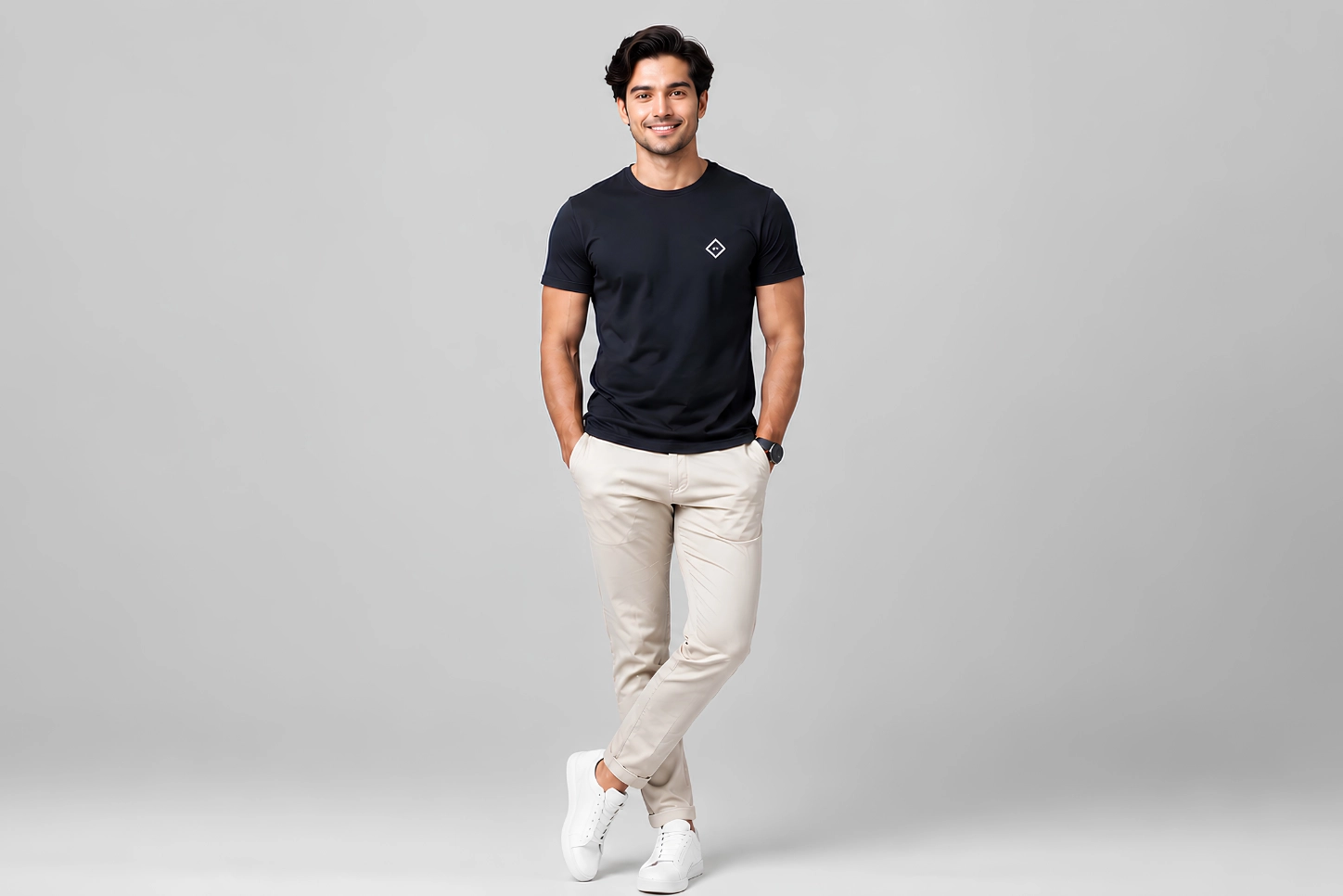
Minimalist business t-shirt design ideas use a small number of visual elements to create a clean, professional appearance. A common layout combines a small left-chest logo with an otherwise blank shirt. Another option places a centered logo on the chest with no additional text. Both formats keep the company identity visible without making the shirt feel like an advertisement.
Specific minimalist design options include:
- A small left-chest logo on a neutral shirt
- A tonal logo printed slightly lighter or darker than the fabric
- A single-color logo with generous negative space
- A compact sleeve icon paired with a plain front
- A small front logo with a website printed below the back collar
Minimalist logo shirts work well for offices, retail teams, service companies, networking events, and customer-facing employees. They also make practical business logo t-shirts because they can match different work environments without overwhelming the wearer.
All-Over Print Pattern Business T-Shirt Design Ideas
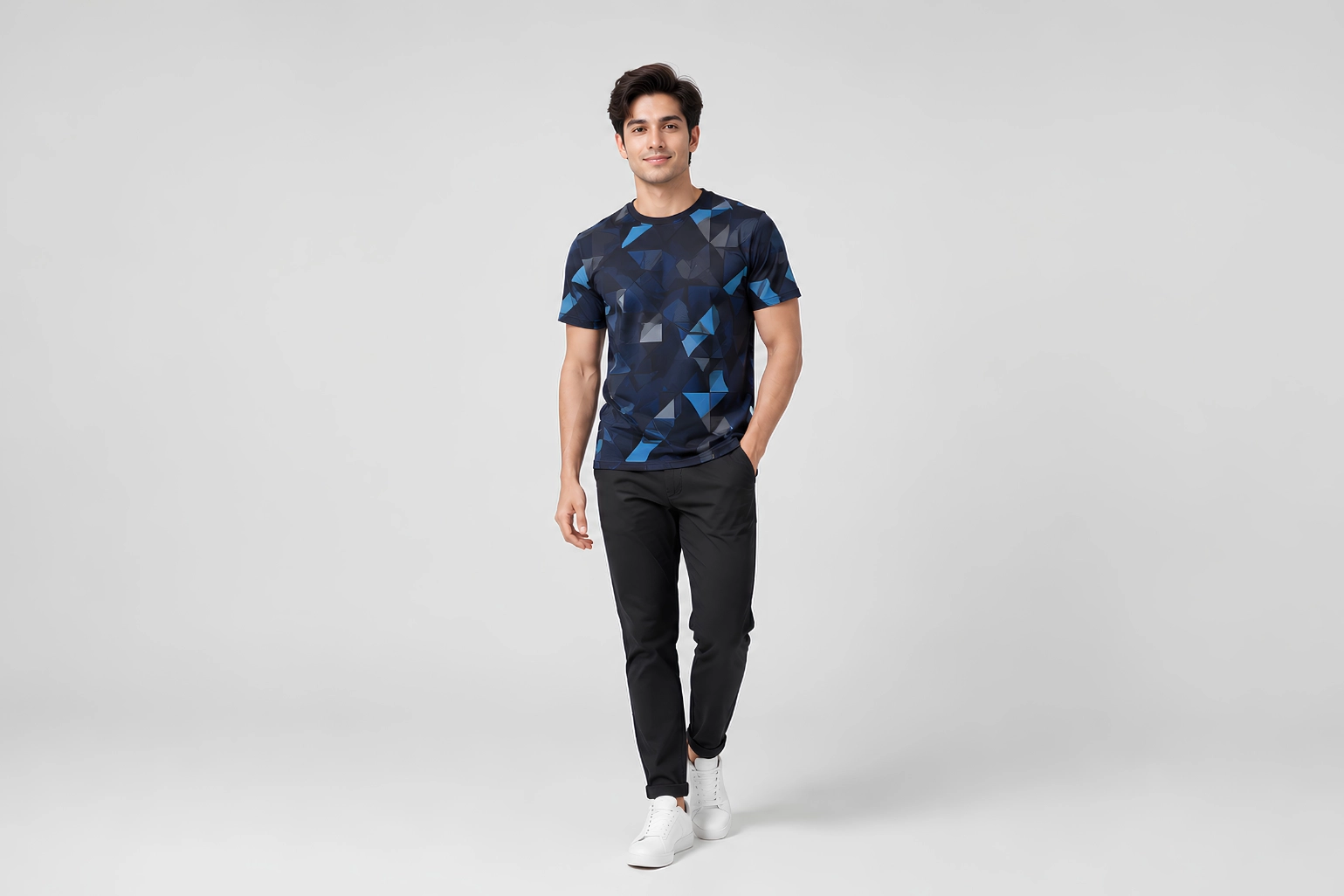
Businesses looking to create memorable merchandise or eye-catching promotional apparel can use all-over print designs to maximize visual impact. Instead of relying on a single logo, repeating brand elements, illustrations, or custom patterns become the main design feature. Careful pattern planning ensures graphics remain aligned across seams, sleeves, and different garment sizes.
Possible concepts include:
- Repeating company icons arranged as a monogram
- Abstract patterns built from brand colors
- Geometric shapes based on the company logo
- Industry-related illustrations, such as coffee beans for a café
- Botanical patterns for wellness or sustainability brands
- Retro checkerboards, gradients, or curved line patterns
All-over print artwork requires careful pattern mapping. Designers should inspect how graphics cross seams, sleeves, collars, and side panels. A shirt may look balanced in a flat digital file but appear misaligned after sewing. A realistic apparel mockup can help identify these issues before production.
Statement Slogan Business T-Shirt Design Ideas
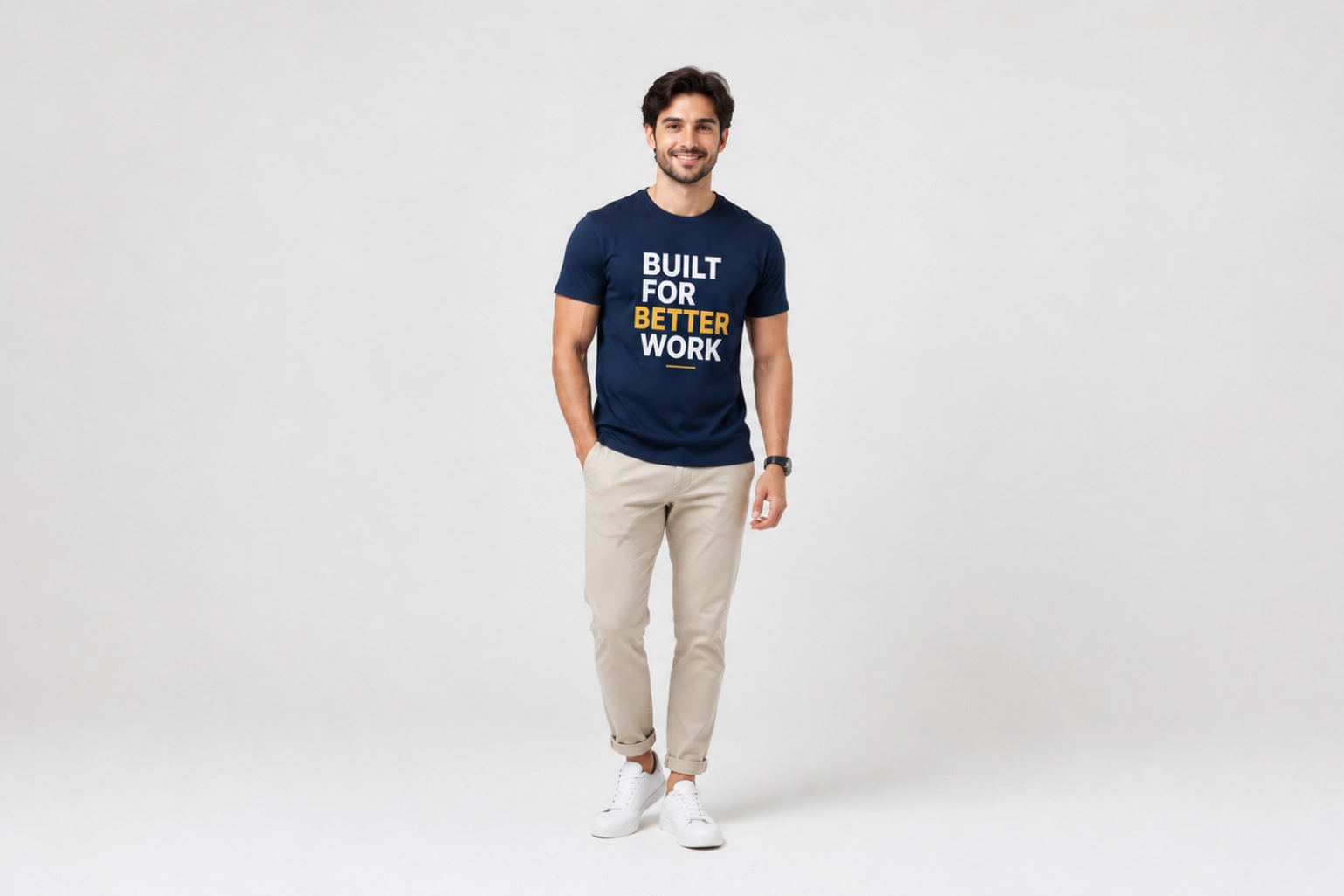
A short, memorable slogan can reinforce a company’s mission while making business t-shirts more engaging than logo-only designs. The message should reflect the brand’s values, culture, or campaign rather than simply filling empty space. Clear typography and concise wording improve readability and help employees or customers wear the shirt with confidence.
Examples include:
- “Built for Better Work”
- “Create. Test. Improve.”
- “Local Team. Lasting Impact.”
- “Service Starts Here.”
- “Good Ideas Need Action.”
- “Designed With Purpose.”
- “People Power Progress.”
A slogan should not be added only to fill space. It should express an idea that employees or customers are comfortable wearing publicly. Typography should also match the message. Bold block lettering may suit an operational team, while restrained serif typography may support a heritage brand.
Team or Department Business T-Shirt Design Ideas
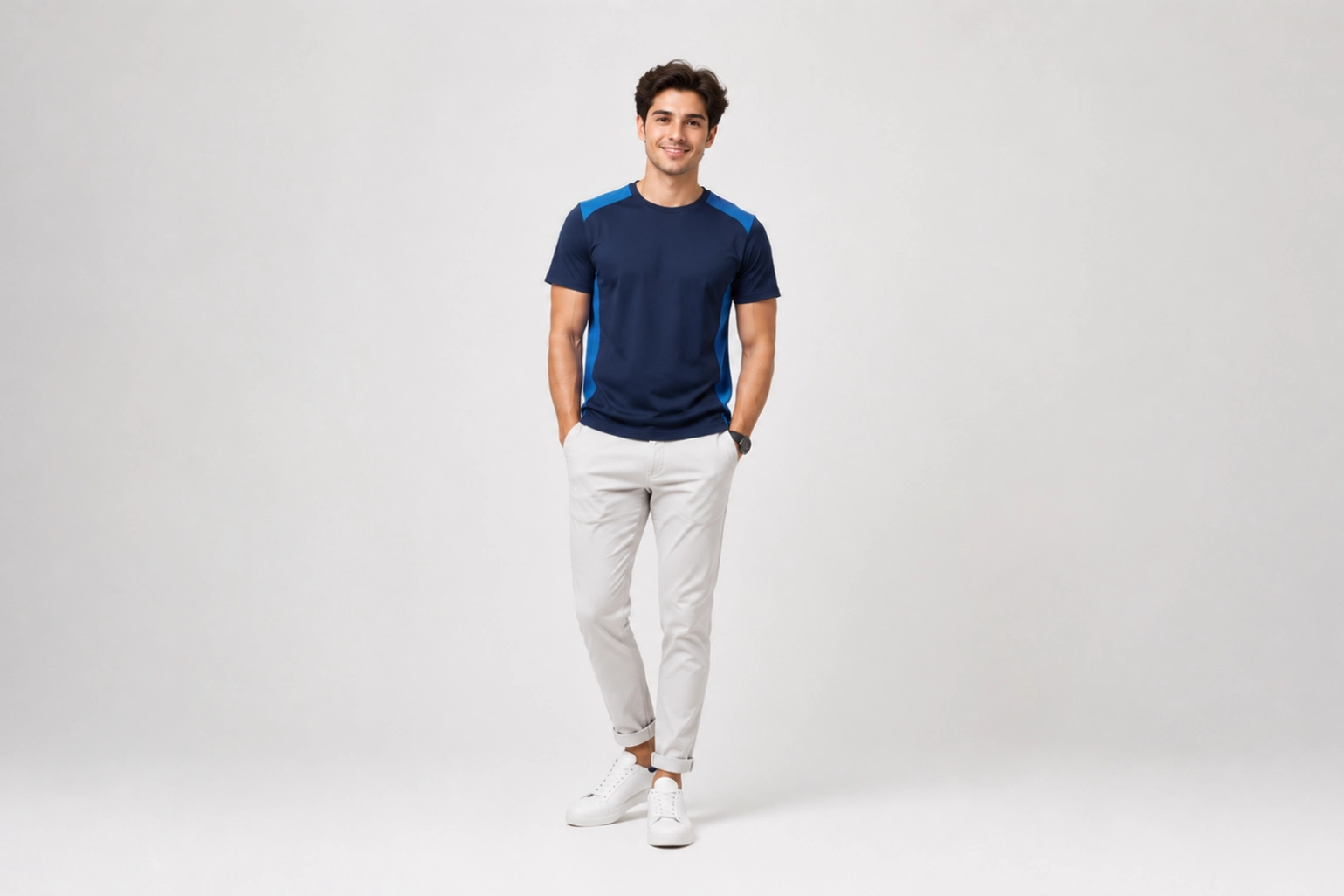
Department-specific t-shirt design can help employees identify roles while maintaining a unified company appearance. A business can use one shared logo and adjust the color, secondary label, or graphic for each team. For example, a company may give every employee a charcoal shirt with the same left-chest logo. The back can then identify each department using a different label or accent color. This method supports role identification without fragmenting the overall brand.
| Department | Design Approach | Practical Use |
| Sales | High-contrast colors and a clear team identifier | Conferences, sales events, outreach |
| Technical or IT | Dark fabric with geometric or circuit-inspired graphics | Internal events, technical conferences |
| Marketing | Clean typography with an expressive secondary graphic | Campaign launches, workshops |
| Operations | High-visibility colors and large role labels | Warehouses, logistics, floor teams |
| Customer support | Friendly color palette with a readable front logo | Customer-facing events |
| General staff | Neutral shirt with a consistent company logo | Daily uniforms and group photos |
Event-Specific Business T-Shirt Design Ideas
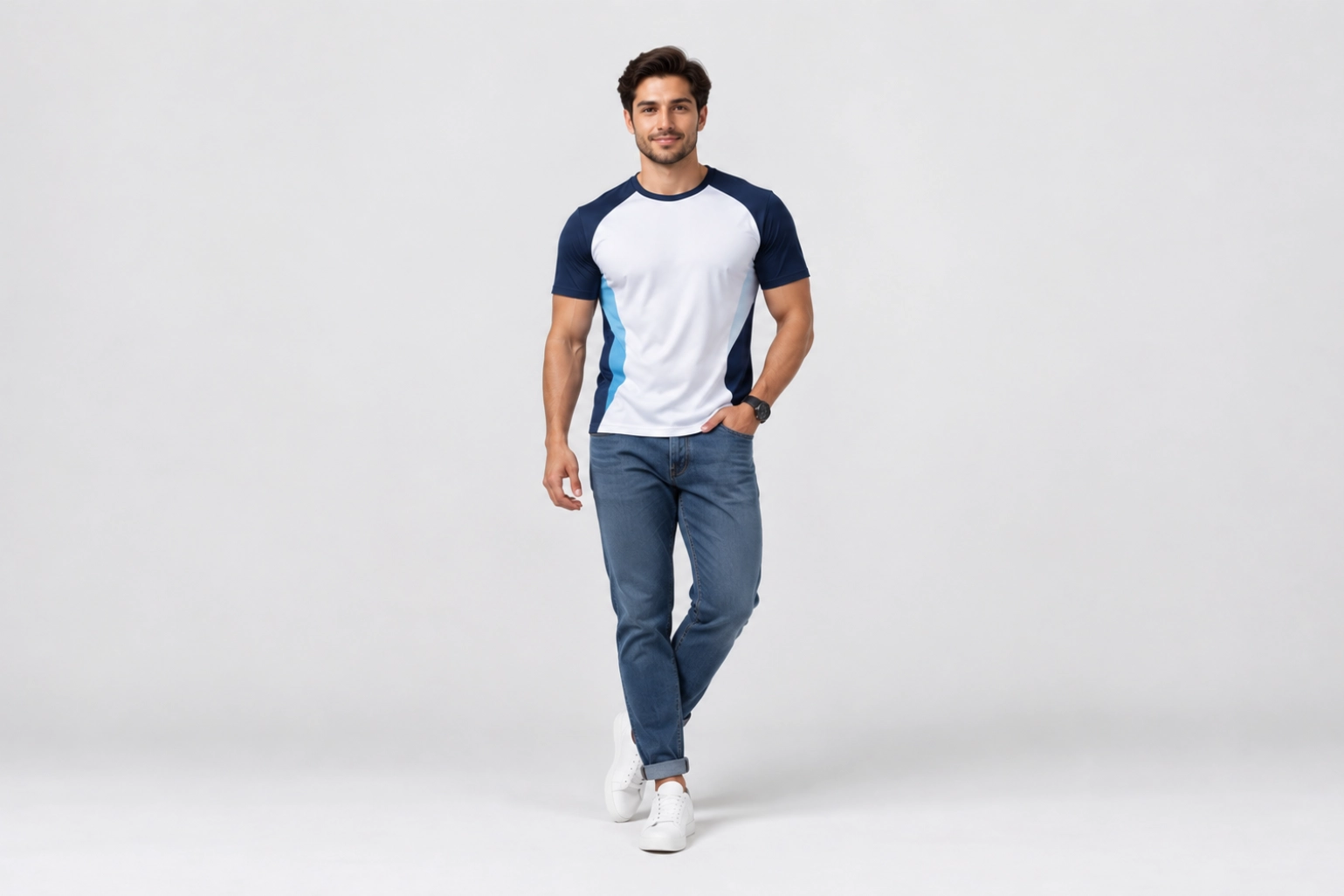
Business t-shirts designed for special occasions help employees and attendees associate the apparel with a memorable event. The event name, year, and supporting graphics usually take priority, while the company logo serves as secondary branding. Keeping the design timeless increases the likelihood that people will continue wearing the shirt after the event.
They may support:
- Product launches
- Trade shows
- Conferences
- Company anniversaries
- Fundraising campaigns
- Employee retreats
- Seasonal promotions
- Community events
For example, a product launch shirt may feature the product symbol on the front and the launch date below the collar on the back. A company anniversary t-shirt combines the founding year with a simplified heritage logo. Event shirts often become keepsakes. Businesses should therefore avoid filling them with temporary details that make the t-shirt difficult to wear after the event.
Custom Artwork & Illustration Business T-Shirt Design Ideas
![Man in a cream graphic T‑shirt and olive cargo pants stands with hands in pockets against a light backdrop in a studio setting.]','Man in a cream graphic tee and olive cargo pants posing with hands in pockets on a light gray background.','Model wearing a cream graphic T‑shirt, green cargo pants, and white sneakers, posed in a minimalist studio.','Casual outfit: cream graphic tee, olive cargo pants, white sneakers; man poses in a neutral studio.','Informal fashion photo of a man in a graphic tee with olive cargo pants, standing against a plain backdrop.](https://mock-it.co/wp-content/uploads/2026/08/Custom-Artwork-Illustration-Business-T-Shirt-Design-Ideas.webp)
Custom artwork t-shirt designs turn company apparel into a more distinctive visual asset, which works well for creative studios, entertainment companies, restaurants, retailers, tourism businesses, and brands that sell merchandise directly to customers. A coffee company, for example, could create an illustration showing the journey from coffee plant to cup. A software business could use a playful diagram that connects code, collaboration, and customer outcomes.
Potential concepts include:
- An illustrated company mascot
- A diagram showing the tools used by the business
- A hand-drawn interpretation of the company’s location
- A visual timeline of the company’s history
- A large back illustration with a small chest logo
- A limited-edition artist collaboration
- A stylized representation of the company’s product or process
Typography and graphics in a business t-shirt should align with the organization’s brand identity, as decorative elements without a clear brand connection may attract attention but do little to strengthen brand recognition.
Retro or Vintage-Inspired Business T-Shirt Design Ideas
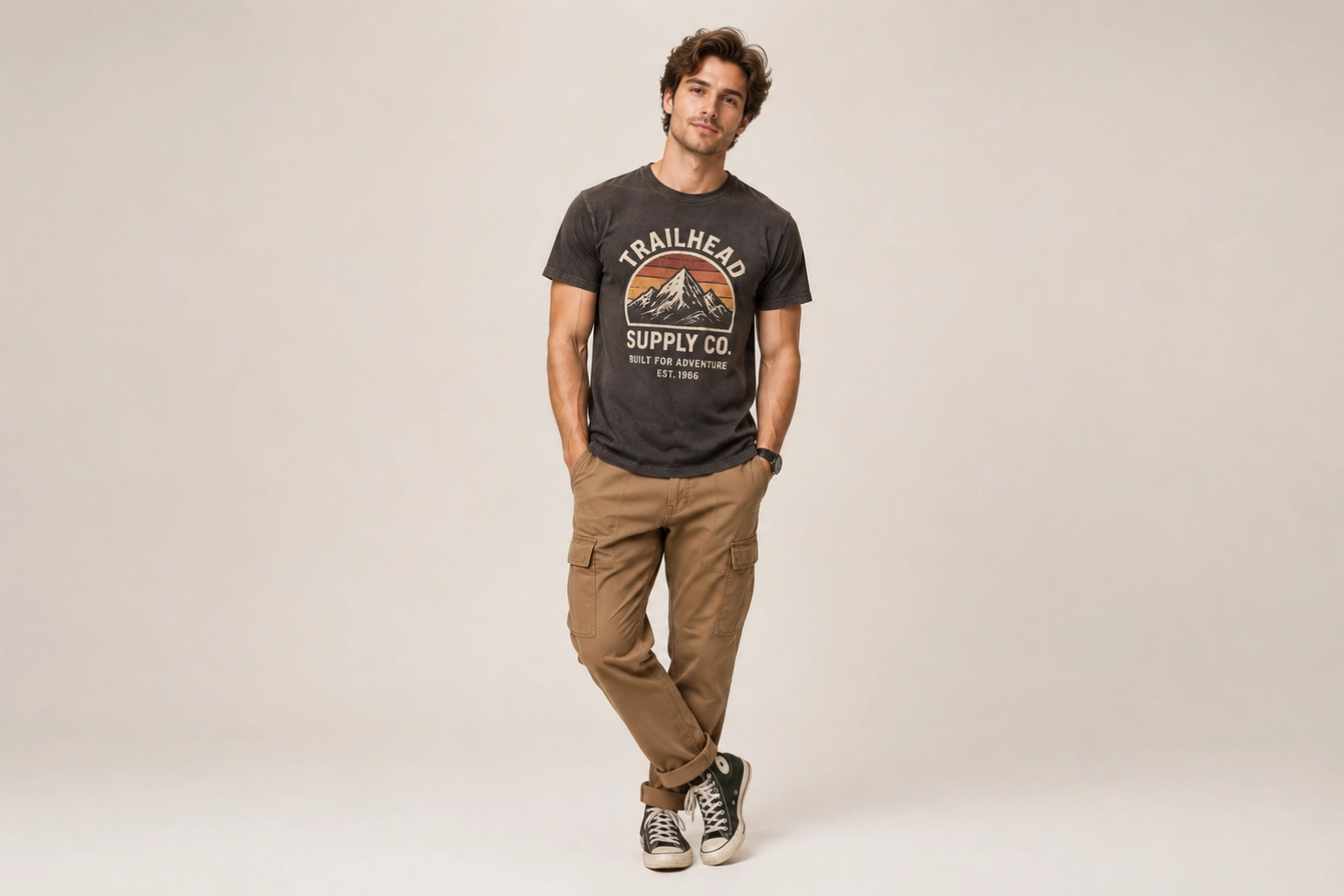
Drawing inspiration from past design styles can give business apparel a distinctive personality while highlighting brand heritage. Instead of copying a specific era, successful retro business t-shirt design ideas incorporate authentic brand history, original logos, founding dates, or long-standing products to create a more meaningful connection.
Common visual directions include:
- 1970s-Inspired Graphics: Earthy colors, curved typography, sunsets, and simple line art can support outdoor, travel, hospitality, or environmentally focused businesses.
- 1980s-Inspired Graphics: Neon accents, geometric grids, condensed typography, and high-contrast compositions may suit technology, gaming, entertainment, or creative brands.
- 1990s-Inspired Graphics: Ringer shirts, bold mascot illustrations, collegiate lettering, and distressed graphics can support breweries, sports businesses, agencies, and casual retail brands.
- Heritage Workwear Graphics: Badge-shaped logos, date stamps, trade symbols, and restrained color palettes can help established companies communicate history and craft.
Eco-Friendly & Sustainability Message Business T-Shirt Design Ideas
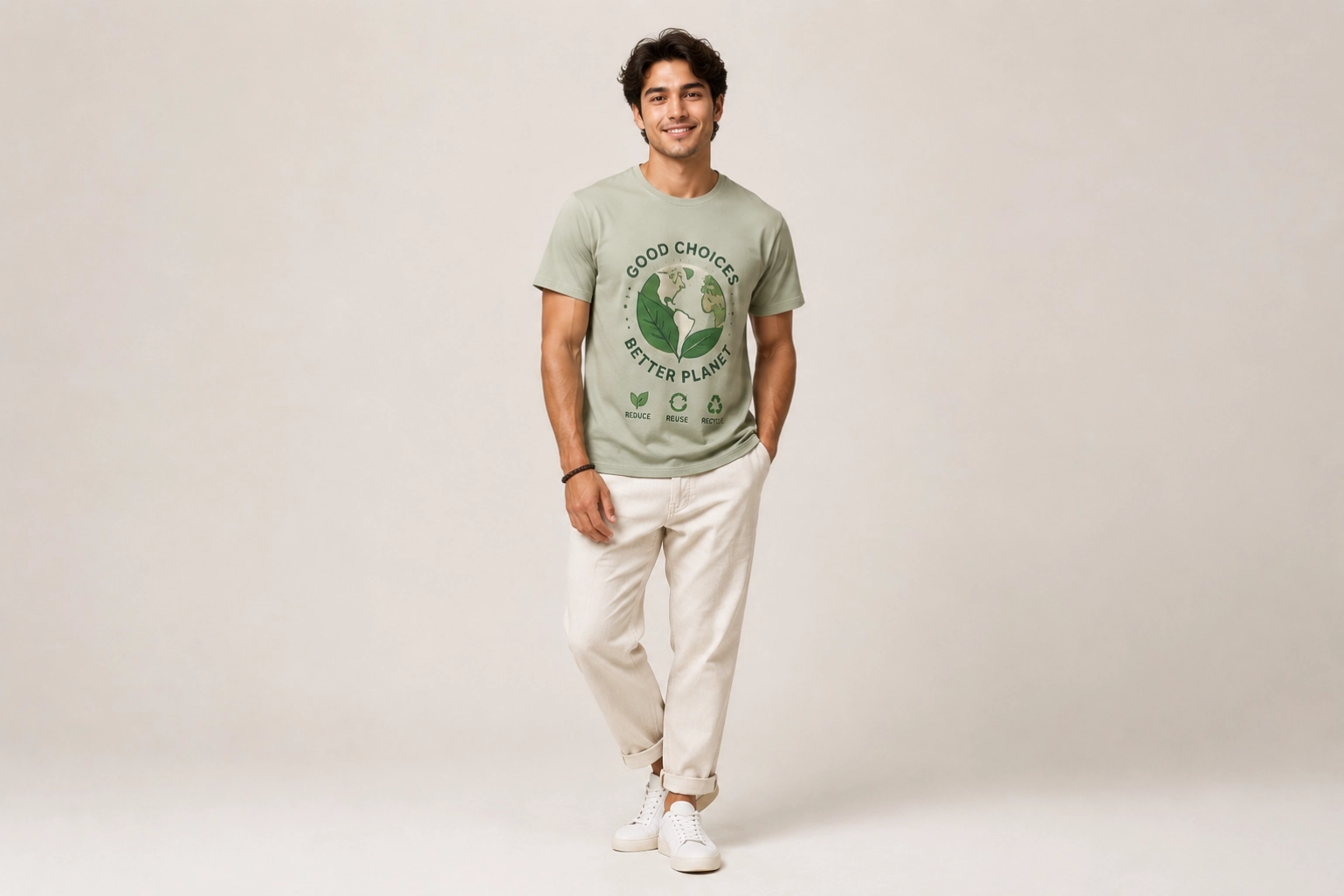
Businesses promoting sustainability should ensure that the design, materials, and production methods of their T-shirts support the same environmental message. Using recycled or organic fabrics, responsible printing methods, and thoughtful graphics creates greater authenticity than relying on sustainability messaging alone. Clean, understated T-shirt designs often communicate environmental values more effectively than overly complex graphics, while also encouraging longer product use and reducing the influence of short-lived fashion trends.
Relevant design ideas include:
- Nature-inspired illustrations
- Garment composition information
- Repair, reuse, or recycling messages
- A verified material certification
- A small sourcing statement inside the collar
- Earth-toned color palettes
- Limited-ink designs that reduce visual and production complexity
What Are the Best Logo Placement Ideas for Business T-Shirts?
The best logo placement ideas for business t-shirts are the left chest, full back, sleeve, all-over front, and small tag or hem. Left-chest logos create a professional look, while full-back designs improve long-distance visibility. Sleeve logos support secondary branding, and all-over front graphics suit bold campaigns. Small tag or hem placements offer a subtle, premium finish. The right option depends on visibility, design complexity, garment size, and intended business use.
Left Chest Logo Placement
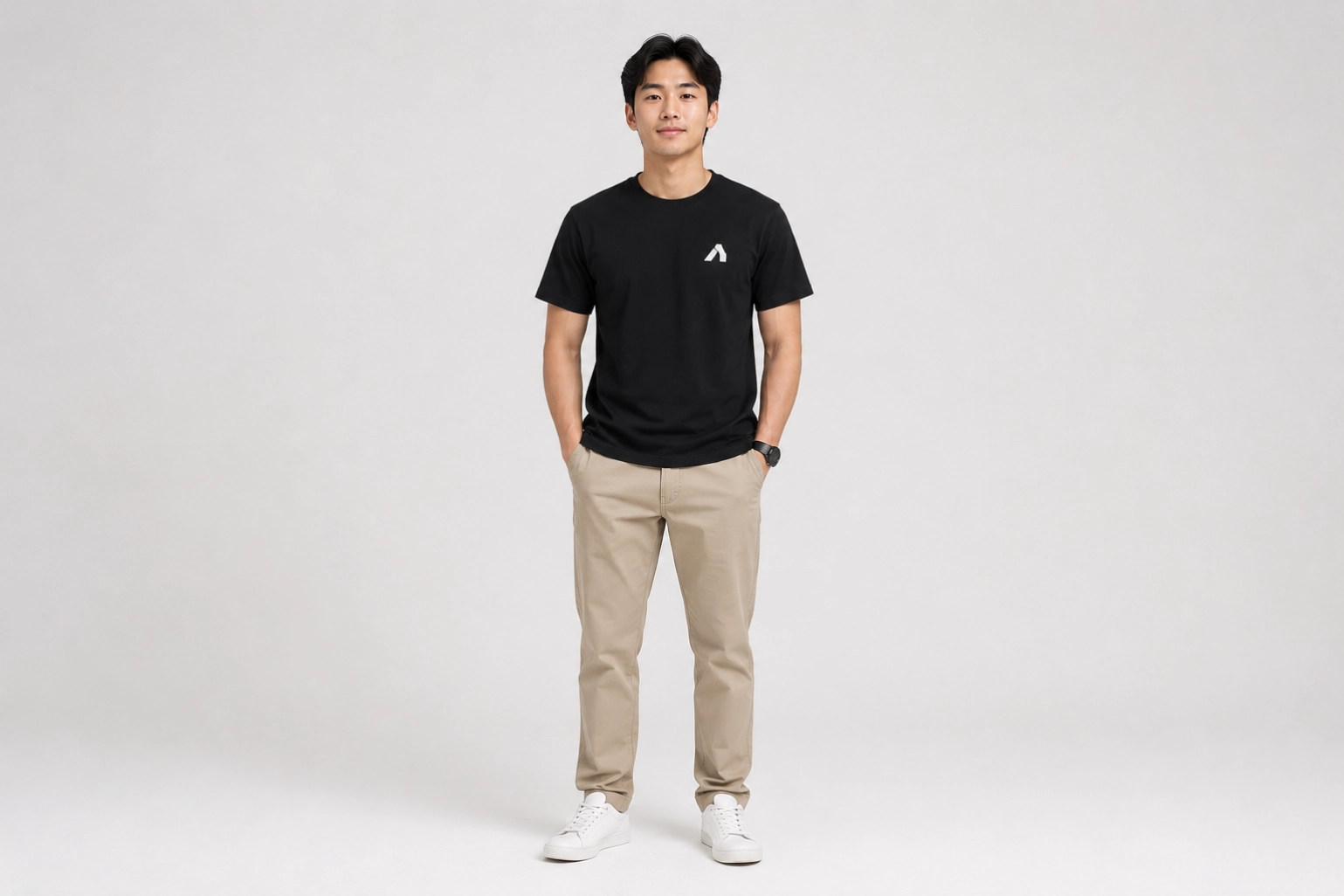
A small logo on the left chest is one of the most popular business t-shirt design ideas because it creates a clean, professional appearance without dominating the garment. It remains clearly visible during face-to-face interactions and works well with embroidery, screen printing, DTG, and DTF printing. Simple logos with bold shapes reproduce best at this size, while fine details and small text may lose clarity. This placement is widely used for employee uniforms, retail staff, hospitality teams, tradespeople, and corporate apparel.
Full Back Logo Placement
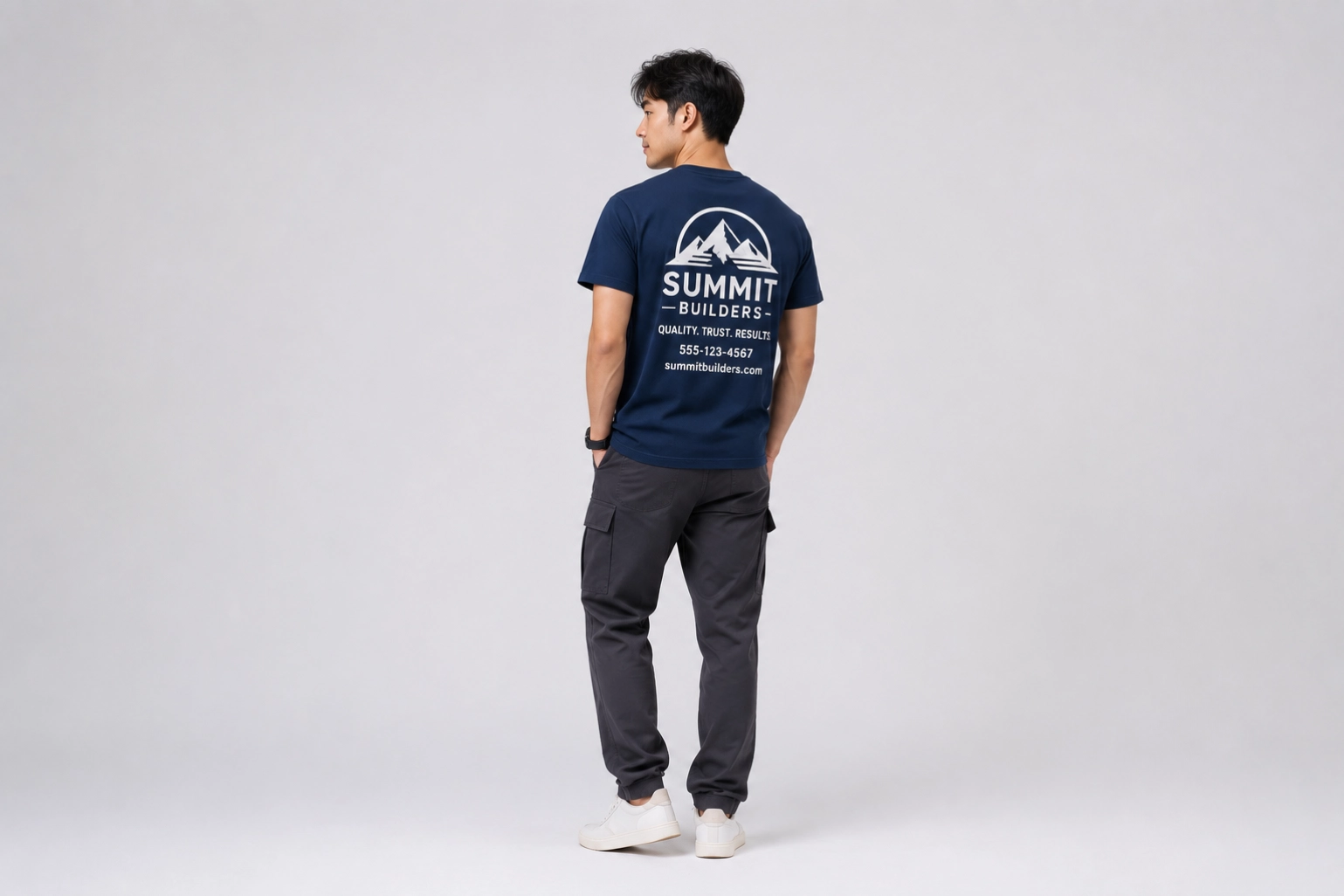
Businesses that want greater visibility from a distance often choose a full-back design to showcase branding, messaging, or contact details. The larger print area accommodates company logos, service information, and promotional graphics without affecting front branding. To keep the design readable, the layout should remain simple and balanced.
A practical full-back layout might include:
- A large company logo between the shoulder blades
- A short service description below the logo
- A website or phone number in smaller type
- A small left-chest logo on the front
The back should not become a crowded advertisement. One logo, one short message, and one contact detail are usually easier to read than several competing elements.
Sleeve Logo Placement

Adding branding to the sleeve creates a subtle, professional accent that supports the primary front or back design rather than replacing it. The upper sleeve offers the best visibility and provides enough space for compact graphics while keeping the shirt balanced. Since the printable area is limited, simple business t-shirt design ideas perform better than intricate artwork.
Businesses often use sleeves for:
- Secondary logos
- Department icons
- Sponsor marks
- Social media handles
- Campaign symbols
- Country or city identifiers
All-Over Front Logo Placement
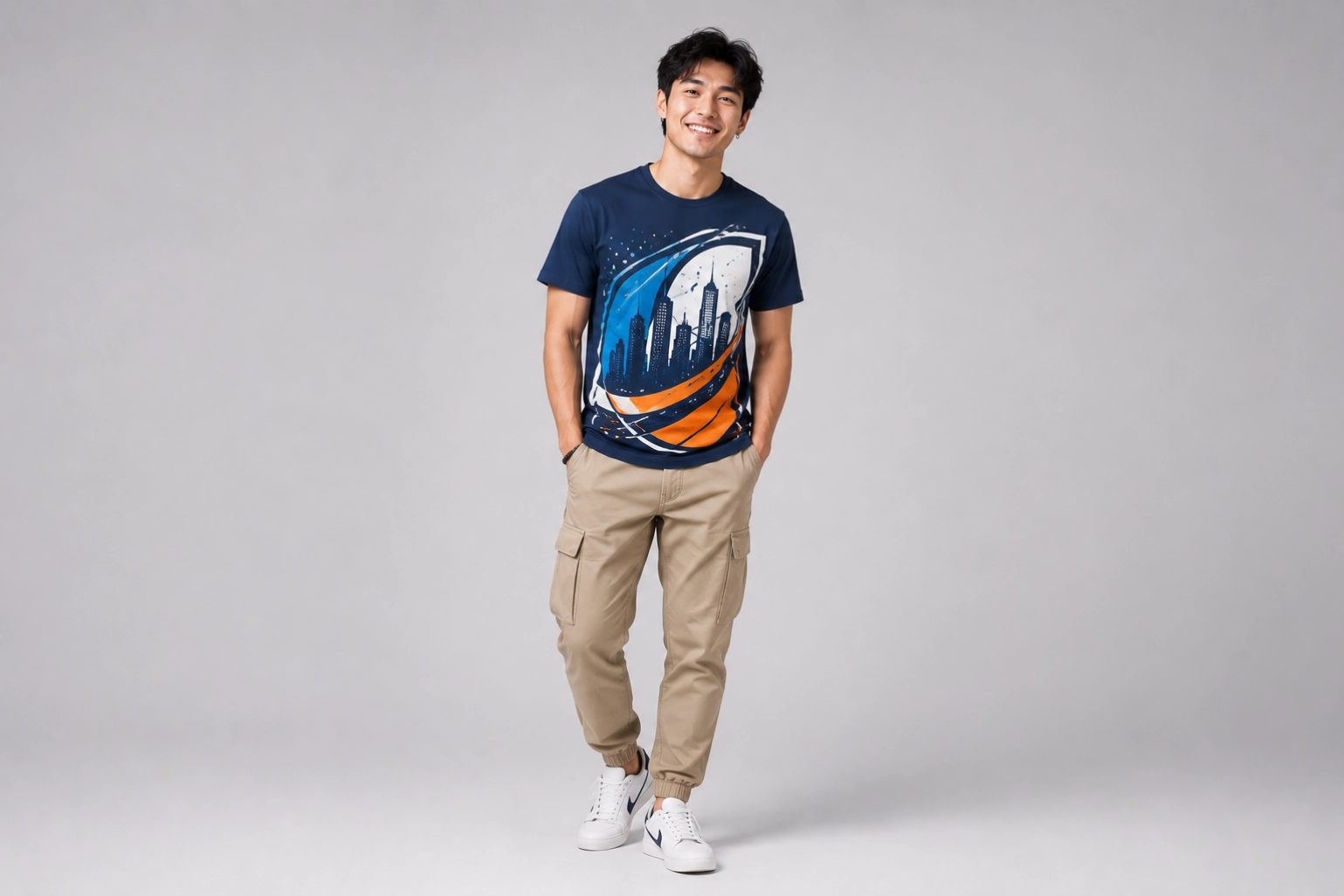
A t-shirt with large front graphics works well for promotional campaigns, company events, product launches, and branded merchandise that needs to make a strong visual impression. An all-over front design uses most of the shirt’s front panel, allowing bold logos, illustrations, or marketing graphics to become the focal point. High-resolution artwork with clean shapes produces the most consistent results, and testing the design across multiple shirt sizes helps ensure it remains properly proportioned after printing.
Small Tag or Hem Placement
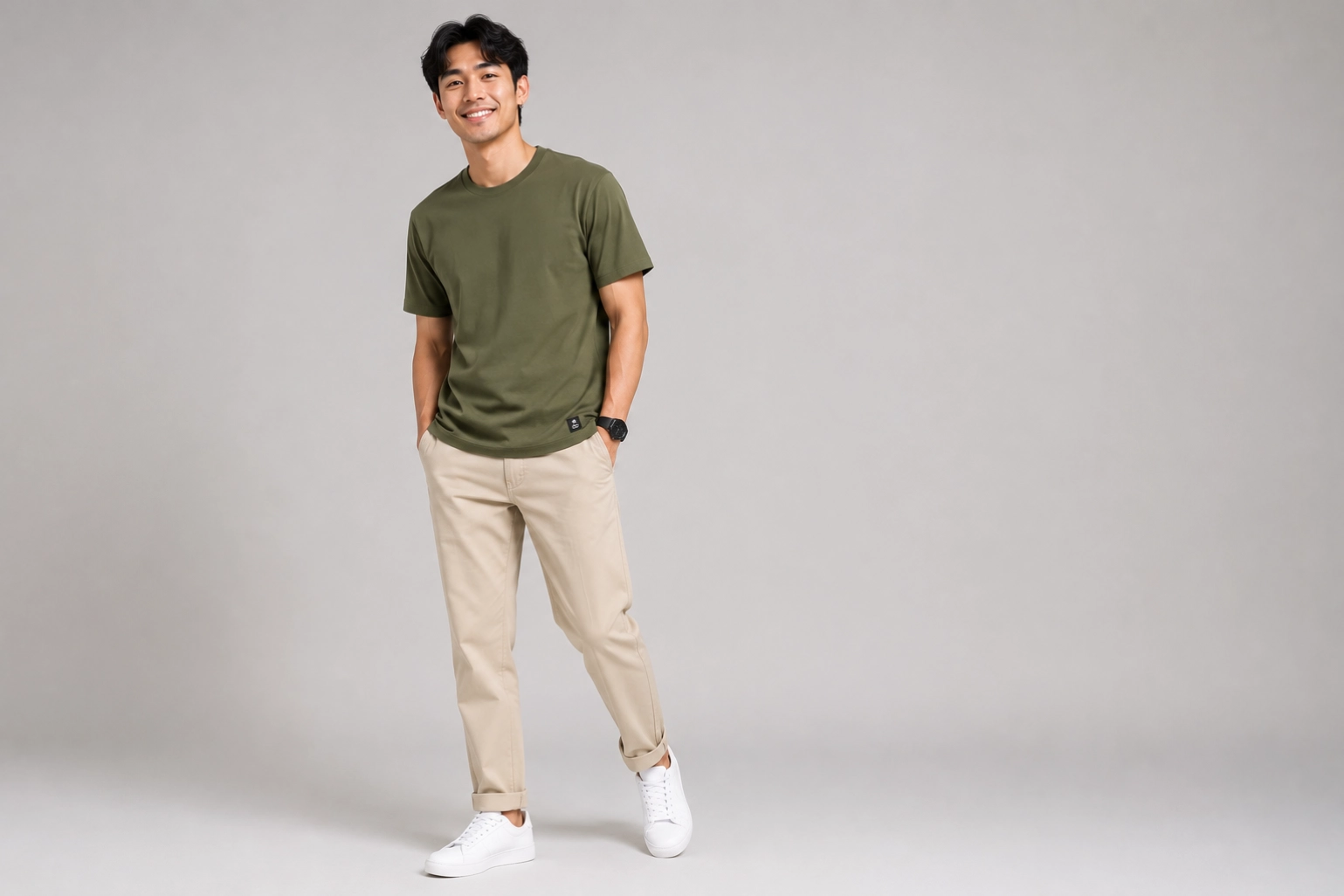
Instead of placing the logo prominently on the chest or back, many premium business t-shirt design ideas use the bottom hem or side label for understated branding. This approach creates a retail-inspired appearance while keeping the overall design clean and minimal. Small embroidered logos, printed icons, and woven labels all work well in this location. Because the available space is limited, compact symbols and simplified brand marks remain more effective than detailed graphics or long wordmarks.
Each logo placement offers different advantages depending on branding goals, visibility, and available print space.
The table below provides a side-by-side comparison of the most common options.
| Placement | Visibility | Style | Best Use | Main Limitation |
| Left chest | Moderate | Professional and familiar | Uniforms, service teams, office apparel | Limited space for detail |
| Center chest | High | Direct and balanced | Events, promotions, casual teams | Can feel less formal |
| Full back | Very high from behind | Informational and bold | Staff identification, event teams | Not visible in front-facing photos |
| Sleeve | Low to moderate | Subtle and modern | Secondary logos, sponsors, department icons | Small print area |
| Pocket area | Moderate | Casual and familiar | Retail, hospitality, creative brands | Detailed logos may lose clarity |
| Hem or tag | Low | Minimal and premium | Secondary branding, merchandise | Easy to overlook |
| All-over front | Very high | Expressive and promotional | Campaigns and statement merchandise | Can overwhelm restrained branding |
What Print Methods Work Best for Business T-Shirts?
Business T-shirts work best with screen printing for bulk orders, embroidery for premium branding, DTG printing for detailed full-color artwork, DTF printing for versatile fabric compatibility, heat transfer vinyl for personalized small batches, and sublimation for polyester garments. The right method depends on your design complexity, fabric type, production volume, and branding goals. Choosing a printing technique that matches the artwork and intended use improves print quality, durability, and overall appearance.
Screen Printing for Bulk Uniform Orders
For businesses ordering uniforms or promotional t-shirts in large quantities, screen printing offers one of the most cost-effective and durable solutions. It produces bold, opaque colors that withstand repeated washing, making it ideal for company logos, staff apparel, and event merchandise. Business t-shirt design ideas with simple artwork and a limited color palette deliver the best results because each ink color requires a separate screen. Highly detailed graphics and photographic designs are generally better suited to other printing methods.
Embroidery for Premium Branded Merch
A stitched logo creates a refined, professional appearance that works well for premium business apparel and branded merchandise. Embroidery is commonly used on left-chest logos, sleeves, and small upper-back placements where a textured finish enhances brand visibility without overwhelming the shirt. Business t-shirt design ideas featuring bold shapes, clean lines, and minimal text reproduce most effectively. Large filled designs, intricate gradients, and very fine lettering can reduce comfort, increase weight, and affect stitching quality.
DTG Printing for Detailed Logos
When a business t-shirt design includes detailed illustrations, gradients, or full-color artwork, direct-to-garment (DTG) printing provides excellent image quality without requiring separate screens for each color. This makes it a practical option for small production runs, employee recognition shirts, or limited-edition branded apparel. Cotton and cotton-rich fabrics produce the best results, while high-resolution artwork and proper color preparation help ensure logos and graphics print accurately and consistently.
Heat Transfer Vinyl for Small-Batch Orders
If your business t-shirt design ideas involve multiple garment types or frequent design changes, direct-to-film (DTF) printing offers greater flexibility than many traditional methods. It produces vibrant, full-color graphics on cotton, polyester, and blended fabrics, making it suitable for small-batch orders and mixed apparel collections. Because transfer thickness, texture, and breathability can vary between providers, requesting a printed sample before placing a larger order helps confirm the final appearance and feel.
The following table provides a side-by-side comparison of popular business T-shirt printing methods to help you choose the best option for your design and budget.
| Print Method | Best For | Strengths | Limitations |
| Screen printing | Larger orders and simple graphics | Durable, consistent, strong solid colors | Each color requires additional setup |
| Embroidery | Small premium logos | Textured, professional, long-lasting | Not suitable for large detailed artwork |
| DTG printing | Detailed artwork and smaller runs | Full color, gradients, fine detail | Performs best on compatible cotton garments |
| DTF printing | Detailed transfers on varied fabrics | Flexible garment compatibility and strong color | Finish may feel different from ink printed directly into fabric |
| Heat transfer vinyl | Names, numbers, simple graphics | Fast personalization and specialty finishes | Less efficient for complex large-volume work |
| Sublimation | Polyester garments and all-over prints | Permanent full-color graphics | Requires suitable light-colored polyester material |
What Fabric and Fit Should You Choose for Business T-Shirts?
Ringspun cotton, cotton-poly blends, tri-blends, performance polyester, heavyweight cotton, and recycled blends are the best fabric choices for business t-shirts, while unisex, fitted, relaxed, women’s, extended, and tall fits help accommodate different teams. Select fabrics based on comfort, durability, work environment, and branding goals, then confirm sizing with manufacturer charts and adjust artwork proportionally so every shirt looks balanced and professional across all sizes.
Choosing Fabric for All-Day Comfort
The fabric you choose affects how comfortable business t-shirts feel, how well logos and graphics print, and how the garments hold up after repeated washing. The best option depends on your work environment, branding goals, and how employees will wear the shirts. Lightweight fabrics improve everyday comfort, while heavier materials provide more structure and durability. Performance fabrics are better suited to physically demanding roles, and recycled blends help businesses align their apparel with sustainability initiatives.
Choose the fabric that best matches your business needs:
- Ringspun cotton: Soft, breathable, and comfortable for office teams, retail staff, promotional merchandise, and casual uniforms.
- Cotton-poly blend: Combines cotton comfort with better wrinkle resistance, durability, and reduced shrinkage, making it ideal for daily staff uniforms and bulk orders.
- Tri-blend: Lightweight with a soft drape that works well for startups, creative teams, and premium branded apparel.
- Performance polyester: Moisture-wicking and quick-drying, making it suitable for outdoor staff, delivery teams, events, and active work environments.
- Heavyweight cotton: Offers a structured feel and durable appearance for retail merchandise and workwear-inspired business t-shirts.
- Recycled blend: Incorporates recycled fibers to support businesses with verified sustainability or environmentally focused branding goals.
Sizing and Fit for a Full Team
A single shirt cut will not fit every employee the same way, so offering multiple fit options helps improve comfort while maintaining a consistent, professional appearance across the team. Instead of relying only on standard size labels, businesses should choose styles that accommodate different body types and work environments, since measurements vary between brands and garment models.
Common fit options include:
- Unisex fits: A versatile standard suitable for most teams.
- Relaxed fits: Provide additional room for comfort and ease of movement.
- Fitted retail cuts: Offer a more tailored, modern silhouette.
- Women’s cuts: Designed with a shape that better suits many women’s body types.
- Extended sizes: Improve inclusivity by accommodating a wider size range.
- Tall sizes: Add extra body and sleeve length for taller employees.
What Factors Should You Consider When Designing Business T-Shirts?
You should consider factors such as fabric type, print method, logo placement, and sizing and fit when designing business t-shirts. These elements determine the shirt’s comfort, durability, appearance, and branding effectiveness. Choosing suitable fabrics, matching the print method to the artwork, selecting the right logo placement, and offering appropriate fit options help create professional, comfortable apparel that employees and customers are more likely to wear.
Below are the factors that you should consider when designing business t-shirts:
- Fabric Type
Choosing the right fabric affects comfort, durability, and how well your business t-shirt design prints or wears over time. Cotton provides a soft feel and excellent print quality, while polyester offers moisture-wicking performance and wrinkle resistance. Cotton-poly blends offer a balanced option for uniforms and branded merchandise, while the fabric should suit the intended work environment and printing method. - Print Method
Different printing techniques produce different visual effects, durability levels, and production costs. Screen printing is well suited to large orders with simple graphics, while DTG and DTF printing reproduce detailed artwork and full-color designs more effectively. Embroidery adds a premium finish for smaller logos, so choose a method that matches your order size, budget, and artwork. - Logo Placement
The location of your logo directly affects brand visibility and the overall appearance of the shirt. Left-chest logos create a professional everyday uniform, full-back designs maximize visibility from a distance, and sleeve or hem placements provide subtle secondary branding. Select the placement based on the artwork, audience, and purpose of the shirt. - Sizing and Fit
Providing multiple sizes and fit options makes business t-shirts more comfortable and increases the likelihood that employees or customers will wear them regularly. Unisex, women’s, relaxed, and athletic fits accommodate different body types while maintaining a consistent brand appearance. Review sizing charts, request sample garments, and consider fabric stretch or shrinkage before placing the order.
Should You Design Business T-Shirts In-House or Use a Professional Service?
For most businesses, using a professional business t-shirt design service is the better choice because it delivers high-quality, print-ready designs, consistent branding, and expert guidance on fabrics, printing methods, and logo placement. It also saves time and reduces production errors, especially for bulk orders or branded merchandise. However, designing t-shirts in-house can be a practical option for businesses with design expertise that need quick revisions, highly customised shirts, or small internal orders while maintaining complete creative control.
In-House vs. Professional Business T-Shirt Design
| Factor | In-House Design | Professional Service |
| Approach | Your team creates the design using in-house designers or design software. | A design agency, freelancer, or apparel design company creates the artwork for you. |
| Advantages | Greater creative control, faster revisions, lower costs if design resources already exist, and easier alignment with brand guidelines. | Professional-quality artwork, expert advice on printing and apparel, consistent branding, and production-ready files for any order size. |
| Disadvantages | Requires design expertise and time, and print quality may vary without apparel design experience. | Higher upfront cost, less direct control over revisions, and timelines depend on the provider. |
| Best For | Small businesses, startups, or teams with in-house design skills creating uniforms, event shirts, or small custom orders. | Growing businesses, franchises, and companies needing premium merchandise, large uniform programs, or complex business t-shirt design ideas. |
What Are Common Mistakes to Avoid in Business T-Shirt Design?
Common mistakes to avoid in business t-shirt design include illegible typography, poor color contrast, low-resolution artwork, overly complex designs, uncomfortable fabrics, ignoring print areas, and over-branding. These issues can reduce readability, print quality, comfort, and overall brand impact. Using clear fonts, high-quality artwork, balanced layouts, comfortable fabrics, proper logo placement, and adequate contrast helps create business t-shirts that are professional, durable, visually appealing, and suitable for everyday wear.
7 mistakes to avoid in business t-shirt design are:
1. Illegible Typography
Text should remain easy to read at both close range and from a distance. Decorative fonts, overly thin lettering, and very small text can reduce readability, particularly after printing or embroidery. Choose clean, legible typefaces and size the text appropriately for the intended viewing distance.
2. Poor Color Contrast
The contrast between the artwork and the garment directly affects visibility. Light graphics on light-colored shirts or dark graphics on dark fabrics can make logos and messages difficult to distinguish. Select colors that provide sufficient contrast while remaining consistent with your brand identity.
3. Low-Resolution Artwork
High-quality artwork is essential for producing sharp, professional prints. Pixelated images or low-resolution files often result in blurry edges and poor print quality. Whenever possible, use vector artwork or high-resolution files that meet your printer’s production requirements.
4. Overly Complex Designs
A crowded design can reduce visual impact and increase printing costs. Too many colors, intricate details, or multiple competing graphics may make the shirt difficult to read and reproduce consistently. Focus on simple layouts with clear branding and a balanced color palette.
5. Uncomfortable Fabrics
An attractive design has little value if the shirt is uncomfortable to wear. Low-quality fabrics can feel rough, shrink quickly, or lose their shape after repeated washing. Choose materials that match the intended use while providing comfort, durability, and reliable print performance.
6. Ignoring Print Areas
Artwork positioned too close to seams, collars, hems, or sleeves may print unevenly or become distorted during production. Following recommended print boundaries and reviewing a mockup before printing helps ensure the design appears balanced on every garment size.
7. Over-Branding
Adding multiple logos, slogans, contact details, and graphics can make a business t-shirt look cluttered and less wearable. Prioritize the most important branding elements and leave adequate white space so the design remains clean, professional, and visually appealing.
Frequently Asked Questions About Business T-Shirt Design Ideas
What makes a business t-shirt design effective?
An effective business t-shirt design combines clear branding, readable typography, balanced colors, and a simple layout that reflects your company’s identity. It should be visually appealing, comfortable to wear, and easy to recognize across different work environments and promotional settings.
Where should a logo go on a company t-shirt?
The best logo placement depends on the shirt’s purpose and branding goals. A left-chest logo creates a professional everyday uniform, a full-back design increases visibility from a distance, sleeve logos provide subtle secondary branding, and hem or tag placements offer a premium, minimalist finish.
What’s the best print method for company uniforms?
Screen printing is the best choice for large uniform orders because it produces durable, cost-effective prints. For detailed artwork or smaller quantities, DTG or DTF printing offers greater flexibility, while embroidery provides a premium finish for company logos on professional uniforms.
How do I choose fabric for all-day workwear?
Select fabrics based on the work environment and comfort requirements. Cotton offers softness and breathability, polyester provides moisture-wicking performance and durability, and cotton-poly blends balance comfort, wrinkle resistance, and print quality for everyday business apparel.
How do I size uniforms across a whole team?
Provide a complete size range and use the manufacturer’s sizing chart before placing an order. Requesting sample garments or collecting employee measurements helps minimize sizing issues and ensures a comfortable fit across different body types.
Should I hire a designer or use a mockup tool?
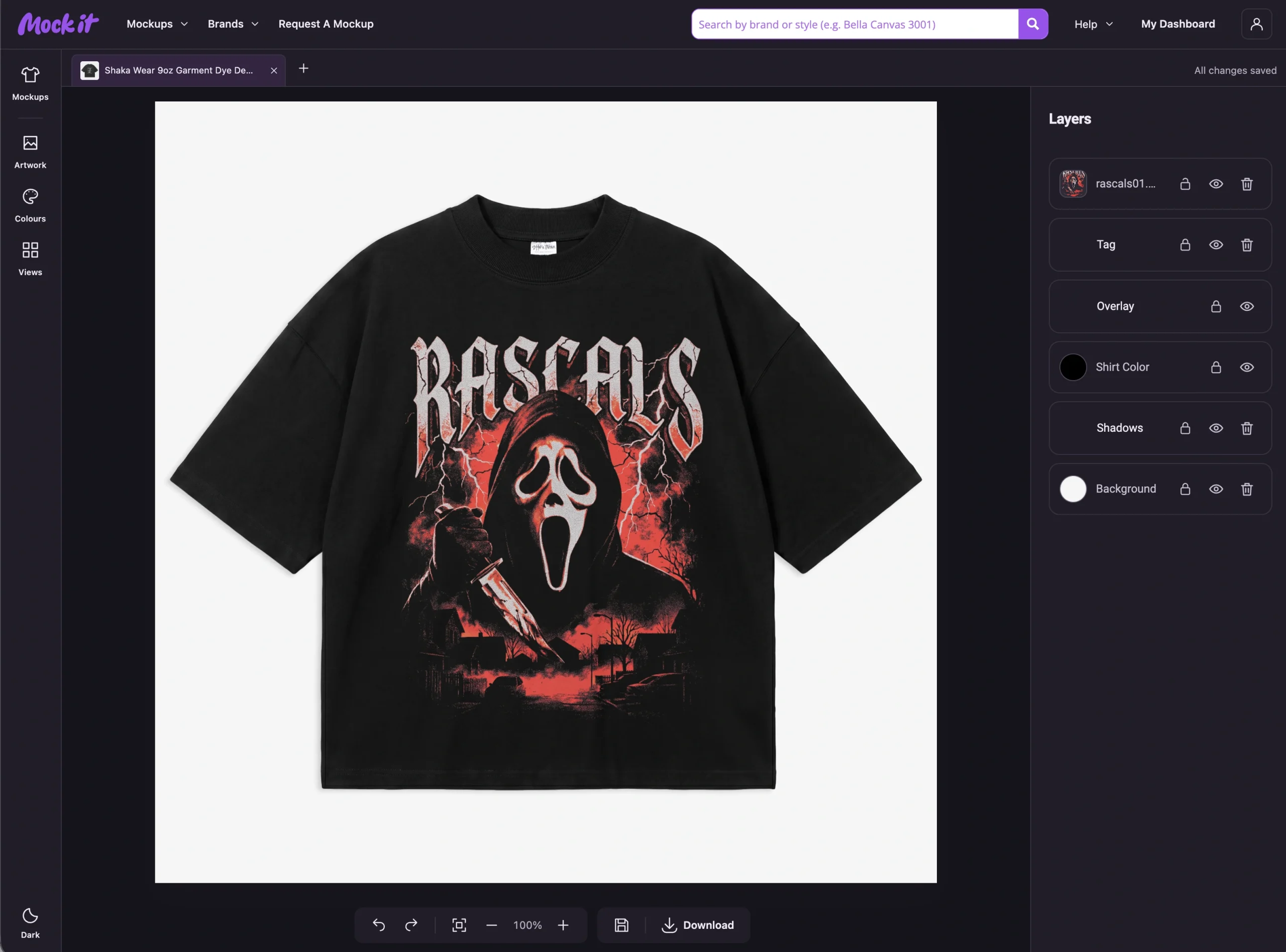
A mockup tool is the best choice for most businesses that need to visualize business t-shirt design ideas, test logo placement, compare colors, and preview designs before printing. Professional designers are better suited for custom branding, complex illustrations, or retail-quality artwork that requires production-ready files. A mockup generator helps you visualize your design on different shirt styles, making it easier to refine the layout before printing or seeking professional design assistance.
How much does custom business t-shirt printing cost?
Custom business t-shirt printing costs range between $5 and $35+ per shirt, depending on factors such as garment quality, print method, design complexity, order quantity, and the number of print locations. Bulk orders generally reduce the cost per shirt, while premium fabrics, embroidery, and multi-color designs increase the overall price.

 Trusted By Thousands Of Designers
  Cancel Your Subscription Anytime
  30 Day Money Back Guarantee