
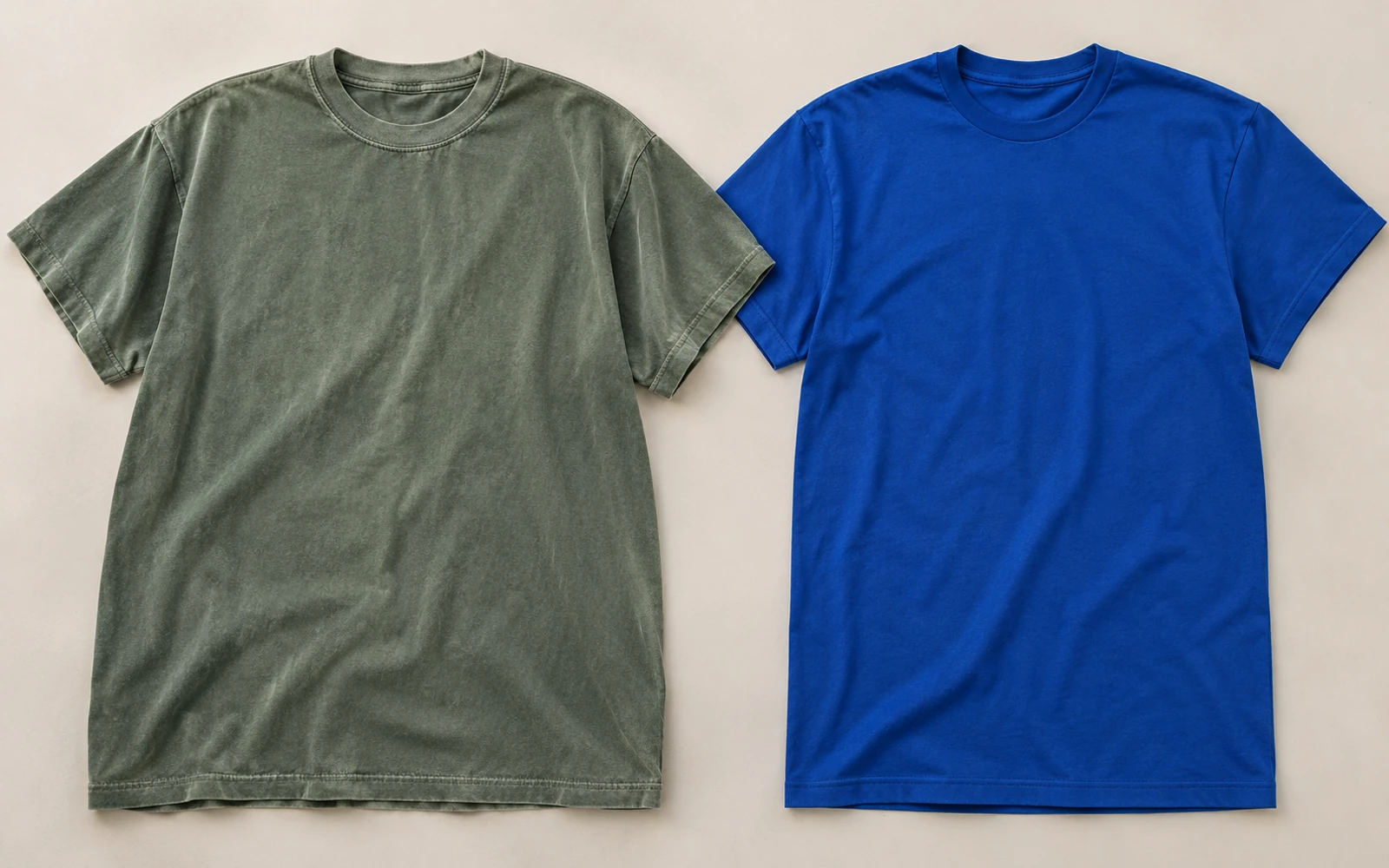
Comfort Colors is better for heavyweight, garment-dyed T-shirts with a soft, relaxed fit and vintage appearance, while Gildan offers more affordable T-shirts across different fabric weights, fits, and textures. Comfort Colors 1717 features 6.1 oz (207 GSM) ring-spun cotton with a washed-in finish, making it suitable for vintage-style merchandise. Gildan offers three popular alternatives: the 5.3 oz (180 GSM) Heavy Cotton 5000 for budget-friendly custom printing, the 6.0 oz (203 GSM) Ultra Cotton 2000 for heavier traditional cotton shirts, and the 4.5 oz (153 GSM) Softstyle 64000 for lightweight, softer everyday graphic tees.
Both brands support custom T-shirt printing, but their fabric composition, softness, colour options, sizing, durability, and pricing influence which blank suits a particular design. For Australian print-on-demand sellers, Gildan provides lower-cost options for promotional apparel and bulk orders, while Comfort Colors suits garment-dyed merchandise with premium positioning. The better choice depends on your preferred fabric feel, fit, printing method, budget, and intended use.
What Are the Differences Between Comfort Colors and Gildan T-Shirts?
Comfort Colors focuses on heavyweight, garment-dyed T-shirts with washed colours and relaxed silhouettes, while Gildan offers a broader selection of cotton T-shirts with different fabric weights, fits, finishes, and prices. Comfort Colors 1717 suits vintage-style merchandise, whereas Gildan 5000, 2000, and 64000 serve different everyday and commercial printing requirements.
Key differences between Comfort Colors and Gildan are:
| Feature | Comfort Colors | Gildan |
| Fabric composition | Ring-spun cotton in the 1717 model | Conventional cotton, ring-spun cotton, and colour-specific blends |
| Fabric weight | 6.1 oz (207 GSM) for 1717 | 4.5–6.0 oz (153–203 GSM) across selected models |
| Softness | Garment-washed, soft cotton texture | Traditional cotton or smoother ring-spun fabric |
| Fit | Relaxed fit | Classic and modern classic fits |
| Colour options | Garment-dyed, washed, muted shades | Solid, vibrant, neutral, and heather shades |
| Durability | Heavyweight fabric with reinforced construction details | Varies by model, fabric weight, stitching, and care |
| Shrinkage | Pre-shrunk through garment washing and dyeing | Depends on model, fibre composition, and washing conditions |
| Price | Higher-priced blank apparel | Several budget-friendly blank options |
| Printing compatibility | Screen printing, DTG, DTF, and compatible heat transfers with process testing | Screen printing, DTG, DTF, and heat-transfer printing depending on model |
| Best for | Vintage merchandise, relaxed graphic tees, premium-positioned apparel | Promotional shirts, everyday graphics, uniforms, and bulk orders |
Fabric Composition
Comfort Colors 1717 uses 100% ring-spun US cotton with a garment-dyed finish, while Gildan 5000 Heavy Cotton and Gildan 2000 Ultra Cotton use conventional cotton, and Gildan 64000 Softstyle features ring-spun cotton. Comfort Colors combines smoother yarn with a garment-washing process to create a soft, vintage texture. Gildan 5000 and 2000 provide a traditional cotton feel, whereas Gildan 64000 offers a smoother, softer surface suitable for detailed printing.
Fabric composition also varies by colour. For example, Gildan 64000 Sport Grey contains 90% cotton and 10% polyester, while Dark Heather contains 65% polyester and 35% cotton. These differences affect fabric texture, ink absorption, printing compatibility, and garment care. Custom apparel businesses should verify each model’s fibre composition before selecting blanks for printing.
Fabric Weight
Comfort Colors 1717 is heavier than Gildan 5000 and 64000, while Gildan 2000 offers a similar heavyweight feel. Comfort Colors provides a substantial, relaxed silhouette, whereas Gildan offers lightweight, midweight, and heavyweight options. Fabric weight affects thickness, drape, and comfort, but heavier cotton does not necessarily indicate better quality.
Comparison of fabric weights across t-shirt models:
| T-Shirt Model | Fabric Weight | GSM | Category |
| Comfort Colors 1717 | 6.1 oz/yd² | 207 GSM | Heavyweight |
| Gildan 5000 | 5.3 oz/yd² | 180 GSM | Midweight |
| Gildan 2000 | 6.0 oz/yd² | 203 GSM | Heavyweight |
| Gildan 64000 | 4.5 oz/yd² | 153 GSM | Lightweight |
Gildan 64000 suits lighter everyday wear, while Comfort Colors 1717 and Gildan 2000 provide more substantial fabric for structured merchandise.
Softness and Texture
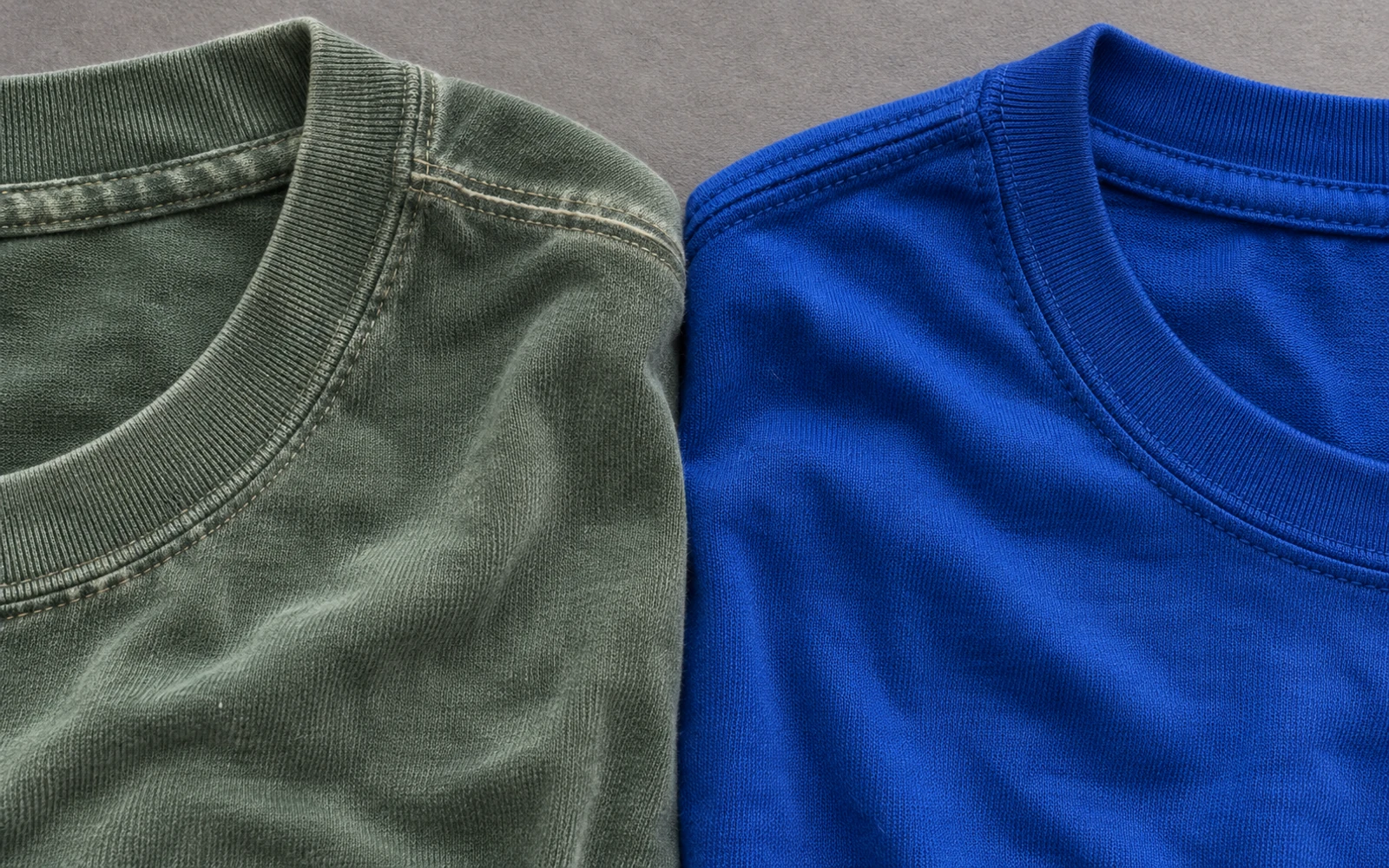
Comfort Colors 1717 offers a softer, washed-in texture than Gildan 5000 and 2000, while Gildan 64000 Softstyle provides a smoother, lighter feel. Comfort Colors uses garment-washed ring-spun cotton for a relaxed, vintage texture, whereas Gildan 64000 combines ring-spun cotton with high stitch density for a smooth printing surface.
Gildan 5000 features 180 GSM conventional cotton with a traditional texture, while Gildan 2000 uses heavier, 203 GSM fabric for a more substantial feel. Comfort Colors suits vintage-style merchandise, while Gildan 64000 is suitable for soft everyday graphic tees.
Fit and Sizing
Comfort Colors 1717 offers a relaxed fit with a roomy, tubular body, while Gildan 5000 and 2000 feature classic fits with traditional T-shirt silhouettes. Gildan 64000 Softstyle uses a modern classic fit with lightweight fabric for a softer drape. Comfort Colors suits relaxed, vintage-style merchandise, while Gildan provides options for everyday apparel, uniforms, and promotional printing.
Sizing varies across models, particularly in chest width, body length, and sleeve dimensions. A large Comfort Colors 1717 may fit differently from a large Gildan 64000. Australian buyers should compare official size charts in centimetres and test samples before placing bulk orders.
Color Options
Comfort Colors offers muted, garment-dyed shades with a vintage appearance, while Gildan provides conventional solid colours, bright shades, and heather variations. Comfort Colors 1717 includes Pepper, Blue Jean, Ivory, Moss, and Espresso, making it suitable for retro graphics and understated merchandise. Gildan offers colours such as Black, White, Navy, Royal, Red, and Sport Grey for promotional apparel and everyday custom T-shirts.
Garment colour affects print contrast, ink requirements, and overall design appearance. Comfort Colors suits washed, vintage-style designs, while Gildan provides more conventional colour options for bold graphics. Australian sellers should verify colour availability, fabric composition, and supplier stock before placing bulk orders.
Durability
Comfort Colors 1717 uses heavyweight 207 GSM ring-spun cotton with a reinforced collar, while Gildan 5000, 2000, and 64000 feature taped necks and shoulders with double-needle hems. Both brands offer construction features that support regular wear, but fabric weight alone does not determine durability. Gildan 2000 and Comfort Colors 1717 provide similarly substantial fabric weights.
Long-term durability depends on seam strength, collar shape retention, fabric quality, and washing practices. Printed T-shirts also require appropriate care because screen printing, DTG, and DTF designs respond differently to laundering. Buyers should assess garment construction and follow care instructions rather than assuming one brand lasts longer.
Shrinkage
Comfort Colors 1717 undergoes garment dyeing and washing to reduce initial shrinkage, while Gildan’s shrinkage performance varies by model, fabric construction, and finishing process. Both brands use cotton fabrics that may shrink after laundering, particularly when exposed to hot water or high drying temperatures. Pre-shrunk garments can still experience changes in size and shape.
Shrinkage depends on washing conditions, fabric treatment, and garment construction rather than GSM alone. Australian custom apparel businesses should follow manufacturer care instructions and test printed samples before bulk production to maintain sizing consistency and reduce customer complaints.
Price
Comfort Colors 1717 is more expensive than Gildan, with an indicative Australian starting price of A$17.05 compared with Gildan’s A$6.00 to A$8.80 range. Comfort Colors commands a higher price for its heavyweight, garment-dyed cotton, while Gildan offers more affordable options for custom printing and bulk orders.
Comparison of T-shirt model prices:
| T-Shirt Model | Starting Price (AUD) | Price Position |
| Comfort Colors 1717 | A$17.05 | Premium |
| Gildan 5000 | A$8.30 | Budget-friendly |
| Gildan 2000 | A$8.80 | Affordable heavyweight |
| Gildan 64000 | A$6.00 | Lowest-cost option |
Printing Compatibility
Comfort Colors and Gildan both support screen printing, DTG, DTF, and compatible heat-transfer methods, but their fabric textures and finishes affect print results. Comfort Colors 1717 uses garment-dyed ring-spun cotton that requires careful testing for dye migration and curing. Gildan 5000 and 2000 provide conventional cotton surfaces suitable for screen printing, while Gildan 64000 offers a smoother, high-stitch-density surface for detailed DTG graphics.
DTF and heat transfers can work on both brands when appropriate temperature, pressure, and application settings are used. Print quality, colour accuracy, and wash durability depend on the garment, ink, and printing process. Australian custom apparel businesses should test the exact T-shirt model and colour before bulk production.
How Do Popular Comfort Colors and Gildan T-Shirt Models Compare?
Comfort Colors 1717, Gildan 5000, Gildan 2000, and Gildan 64000 differ in cotton construction, fabric weight, softness, fit, colour finish, and price. Comfort Colors 1717 provides heavyweight garment-dyed fabric, while Gildan offers traditional heavyweight, midweight, and lightweight alternatives.
Comparison between popular Comfort Colors and Gildan T-shirt models:
| Specification | Comfort Colors 1717 | Gildan 5000 | Gildan 2000 | Gildan 64000 |
| Collection | Garment-Dyed | Heavy Cotton | Ultra Cotton | Softstyle |
| Standard fabric | Ring-spun cotton | Conventional cotton | Conventional cotton | Ring-spun cotton |
| Weight | 207 GSM | 180 GSM | 203 GSM | 153 GSM |
| Fit | Relaxed | Classic | Classic | Modern classic |
| Texture | Washed-in, soft | Traditional cotton | Substantial cotton | Smooth, soft |
| Finish | Garment-dyed | Conventional | Conventional | Conventional |
| Starting blank price | A$17.05 | A$8.30 | A$8.80 | A$6.00 |
| Suitable application | Vintage merchandise | Promotional shirts | Heavyweight graphic tees | Lightweight everyday graphics |
The model specifications provide a basis for choosing a blank according to garment feel, appearance, and printing requirements. Actual prices and available colours should be confirmed with Australian suppliers.
Comfort Colors 1717 vs Gildan 5000
Comfort Colors 1717 is better for heavyweight, vintage-style merchandise, while Gildan 5000 suits affordable custom T-shirts and promotional apparel. Comfort Colors uses 207 GSM ring-spun cotton with a garment-dyed finish and relaxed fit, whereas Gildan 5000 features 180 GSM conventional cotton with a classic fit. Both support custom printing, but their softness, fabric weight, colours, and pricing differ.
Differences between Comfort Colors 1717 and Gildan 5000:
| Feature | Comfort Colors 1717 | Gildan 5000 |
| Fabric | Ring-spun cotton | Conventional cotton |
| Weight | 207 GSM | 180 GSM |
| Fit | Relaxed | Classic |
| Texture | Soft, garment-washed | Traditional cotton |
| Colour finish | Garment-dyed, vintage | Standard solid colours |
| Starting price | A$17.05 | A$8.30 |
| Best for | Vintage merchandise | Budget custom printing |
Comfort Colors 1717 vs Gildan 64000 Softstyle
Comfort Colors 1717 is better for heavyweight, garment-dyed T-shirts, while Gildan 64000 Softstyle suits lightweight, softer everyday graphic tees. Both use ring-spun cotton, but Comfort Colors features 207 GSM fabric with a relaxed fit and washed colours. Gildan 64000 uses 153 GSM cotton with a modern classic fit and a smoother printing surface, making it suitable for detailed graphics and affordable merchandise.
Differences between Comfort Colors 1717 and Gildan 64000:
| Feature | Comfort Colors 1717 | Gildan 64000 |
| Fabric | Ring-spun cotton | Ring-spun cotton |
| Weight | 207 GSM | 153 GSM |
| Fit | Relaxed | Modern classic |
| Texture | Washed-in, soft | Smooth, lightweight |
| Colour finish | Garment-dyed | Standard and heather |
| Starting price | A$17.05 | A$6.00 |
| Best for | Vintage apparel | Everyday graphic tees |
Gildan 2000 vs Gildan 5000
The main difference between Gildan G2000 and G5000 is fabric weight, with Gildan 2000 offering heavier 203 GSM cotton and Gildan 5000 using lighter 180 GSM cotton. Both feature classic fits, traditional cotton textures, and reinforced stitching, making them suitable for custom printing. Gildan 2000 suits structured heavyweight merchandise, while Gildan 5000 provides a more affordable option for promotional shirts and bulk orders.
Differences between Gildan 2000 and Gildan 5000:
| Feature | Gildan 2000 | Gildan 5000 |
| Collection | Ultra Cotton | Heavy Cotton |
| Fabric | Conventional cotton | Conventional cotton |
| Weight | 203 GSM | 180 GSM |
| Fit | Classic | Classic |
| Texture | Heavier, structured | Lighter, traditional |
| Starting price | A$8.80 | A$8.30 |
| Best for | Heavyweight merchandise | Budget promotional shirts |
Gildan 5000 vs Gildan 64000
Gildan 5000 is better for traditional cotton T-shirts and promotional apparel, while Gildan 64000 Softstyle suits lightweight graphic tees requiring a smoother printing surface. Gildan 5000 uses 180 GSM conventional cotton with a classic fit, whereas Gildan 64000 features 153 GSM ring-spun cotton with a modern classic fit. Both support custom printing, but their softness, fabric weight, drape, and prices differ.
Differences between Gildan 5000 and Gildan 64000:
| Feature | Gildan 5000 | Gildan 64000 |
| Collection | Heavy Cotton | Softstyle |
| Fabric | Conventional cotton | Ring-spun cotton |
| Weight | 180 GSM | 153 GSM |
| Fit | Classic | Modern classic |
| Texture | Traditional cotton | Softer, smoother |
| Starting price | A$8.30 | A$6.00 |
| Best for | Promotional apparel | Lightweight graphic tees |
Which Is Better for Custom T-Shirt Businesses: Comfort Colors or Gildan?
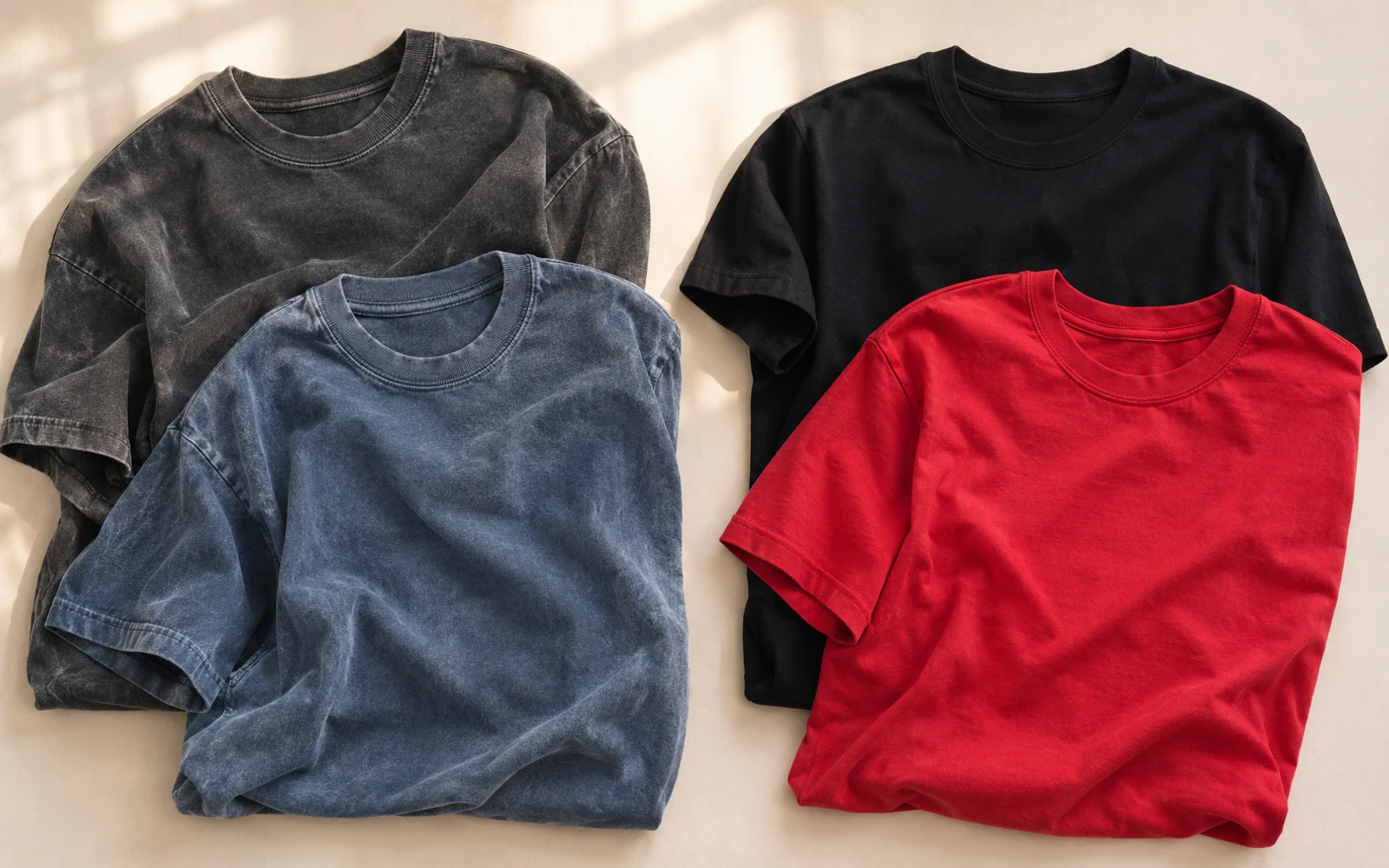
Comfort Colors suits custom T-shirt businesses selling premium, vintage-style merchandise, while Gildan offers affordable blanks for promotional apparel, everyday graphic tees, and bulk orders. Comfort Colors 1717 features 207 GSM garment-dyed cotton and a relaxed fit, whereas Gildan 5000, 2000, and 64000 provide different weights and textures. Australian sellers should compare printing costs, supplier availability, shipping, customer preferences, and profit margins before choosing either brand.
Which Is Better for Print-on-Demand: Comfort Colors or Gildan?
Gildan is better for print-on-demand sellers prioritising affordable blank T-shirts, while Comfort Colors 1717 suits premium, vintage-style merchandise. Gildan 5000 offers budget-friendly cotton, Gildan 64000 provides a softer printing surface, and Comfort Colors 1717 features heavyweight, garment-dyed fabric. Australian POD sellers should compare product availability, DTG and DTF compatibility, fulfilment costs, and shipping charges through providers like Printful and Printify. Gildan supports lower production costs, while Comfort Colors may justify higher retail pricing.
Which Is Better for Bulk T-Shirt Printing: Comfort Colors or Gildan?
Gildan is better for budget-friendly bulk T-shirt printing, while Comfort Colors 1717 suits premium merchandise requiring heavyweight, garment-dyed fabric. Gildan 5000 offers affordable 180 GSM cotton, Gildan 2000 provides heavier 203 GSM fabric, and Gildan 64000 features lightweight 153 GSM ring-spun cotton. For Australian businesses, Gildan generally reduces blank garment costs for uniforms, promotional giveaways, and events. Comfort Colors suits vintage-style collections, while final costs depend on order quantity, printing methods, and supplier discounts.
Should You Choose Comfort Colors or Gildan?
Choose Comfort Colors 1717 for heavyweight, garment-dyed T-shirts with a relaxed fit and vintage appearance, or Gildan for affordable blanks with different fabric weights, textures, and fits. Comfort Colors suits premium merchandise and casual apparel, while Gildan 5000 supports budget printing, Gildan 2000 provides heavier cotton, and Gildan 64000 offers lightweight softness. Compare fabric quality, printing compatibility, pricing, and intended use before deciding.
Key comparisons between Comfort Colors and Gildan models:
| Your Requirement | Recommended Model | Reason |
| Vintage-style merchandise | Comfort Colors 1717 | Garment-dyed colours and relaxed fit |
| Heavyweight garment-dyed T-shirt | Comfort Colors 1717 | 207 GSM ring-spun cotton |
| Budget-friendly custom printing | Gildan 5000 | 180 GSM cotton and lower blank cost |
| Heavier traditional cotton T-shirt | Gildan 2000 | 203 GSM cotton construction |
| Soft everyday graphic tee | Gildan 64000 | 153 GSM ring-spun cotton |
| Lightweight-feeling apparel | Gildan 64000 | Lower fabric weight and smoother drape |
| Promotional giveaways | Gildan 5000 | Classic fit and affordable starting price |
| Bulk uniforms | Gildan 5000 or 2000 | Traditional cotton construction and multiple weight options |
| Relaxed casual merchandise | Comfort Colors 1717 | Washed finish and relaxed silhouette |
| Smooth surface for detailed graphics | Gildan 64000 | Ring-spun cotton and high stitch density |
Does Gildan Own Comfort Colors?
Yes. Gildan Activewear acquired Comfort Colors in March 2015. Although Gildan owns Comfort Colors, both brands maintain distinct product characteristics. Comfort Colors specialises in garment-dyed T-shirts with washed colours and relaxed fits, while Gildan offers Heavy Cotton, Ultra Cotton, and Softstyle collections with different fabric weights, textures, and fits.
How Can You Create Custom T-Shirt Mockups for Comfort Colors and Gildan?
Custom T-shirt mockups help designers and apparel sellers visualise artwork on Comfort Colors and Gildan garments before printing or publishing product listings. A digital mockup allows users to evaluate garment colour, design placement, scale, and overall presentation without producing a physical sample for every design variation.
Here are six steps to create custom T-shirt mockups:
- Step 1: Choose a T-shirt style
Select a garment that matches the intended product, such as Comfort Colors 1717, Gildan 5000, Gildan 2000, or Gildan 64000. The selected mockup should reflect the actual shirt’s fit, shape, and construction as closely as possible.
- Step 2: Select the garment colour
Choose a colour that corresponds to the selected blank T-shirt. For example, Comfort Colors Pepper provides a washed charcoal appearance, while Gildan Black offers a conventional dark colour. Matching the intended garment colour helps assess artwork contrast.
- Step 3: Upload your artwork
Add the graphic in a suitable image format, such as PNG. A transparent background allows the artwork to appear directly on the shirt without an unwanted rectangular image background. Use the print provider’s recommended artwork dimensions and resolution.
- Step 4: Adjust the design placement
Position the artwork on the chest, back, or another supported print area. Adjust its width, height, and alignment to match the intended production dimensions. Check the placement against the collar, sleeves, and garment seams.
- Step 5: Customise the background
Choose a background that makes the T-shirt and artwork visible. Neutral backgrounds can support product catalogue consistency, while lifestyle settings can help present a garment in a specific wearing context.
- Step 6: Generate and review the mockup
Generate the mockup and check the garment colour, design placement, and print size. A T-shirt mockup generator helps creators visualise designs and prepare product images. However, physical samples are recommended to verify fabric texture, colour accuracy, and print quality before production.

 Trusted By Thousands Of Designers
 Cancel Your Subscription Anytime
 30 Day Money Back Guarantee