

When deciding how to present your apparel, you typically have two choices: flat lay mockups or on-model images. Each serves a distinct purpose:
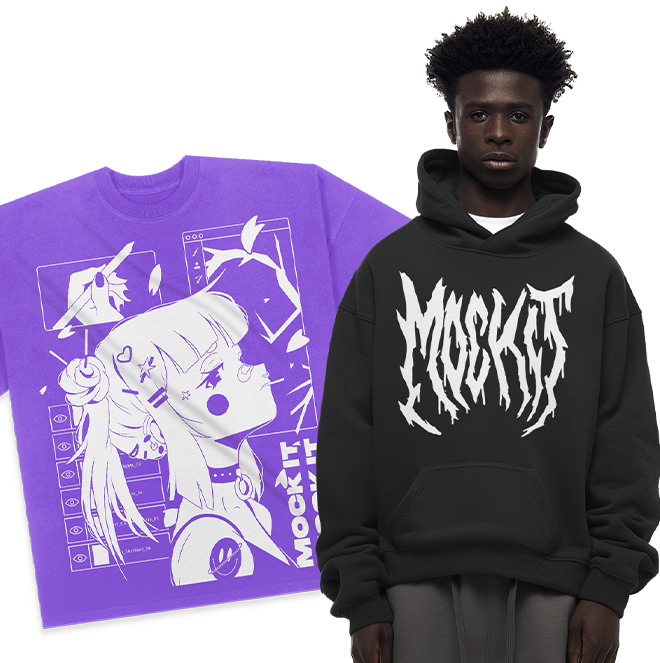
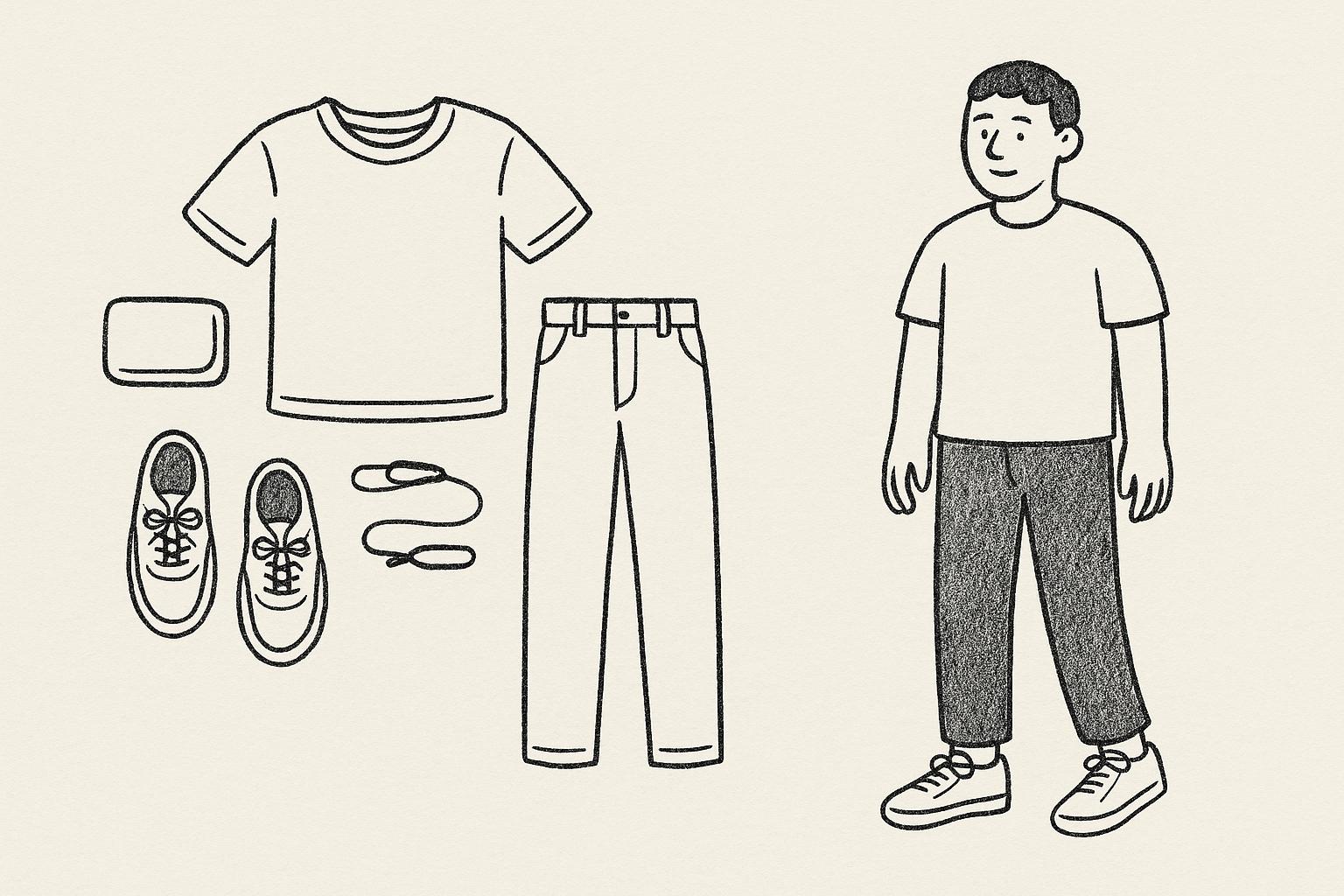
- Flat Lay Mockups: Show garments laid flat, photographed from above. Ideal for highlighting design details like prints, logos, and textures. They’re affordable, quick to produce, and great for catalogs or bulk product listings.
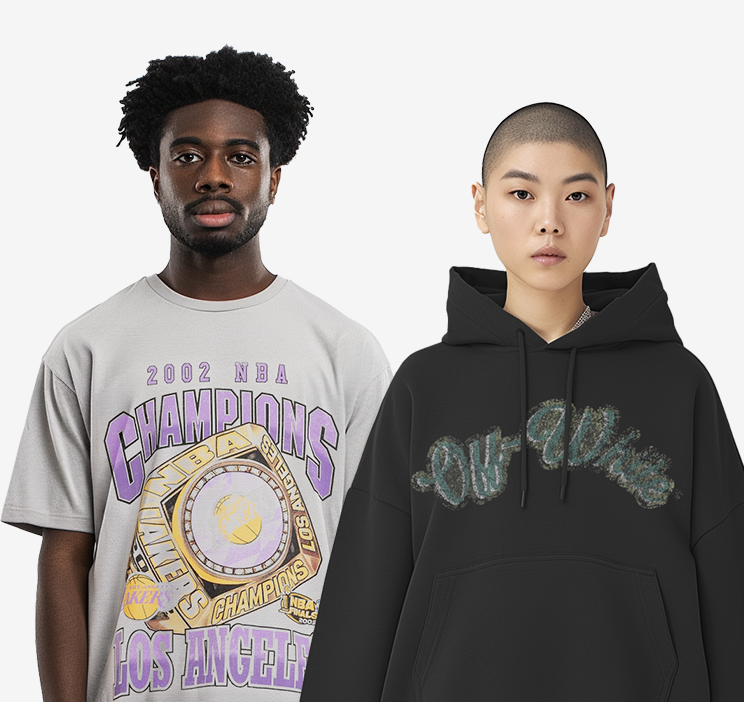
- On-Model Images: Feature clothing worn by a person, showcasing fit, movement, and lifestyle appeal. These images are more engaging and help customers imagine wearing the product but require more resources and planning.
Key Takeaway: Flat lays are perfect for showcasing details and maintaining consistency, while on-model shots create emotional appeal and reduce fit-related doubts. Using both styles together can maximize your marketing impact.
Quick Comparison
| Criteria | Flat Lay Mockups | On-Model Images |
|---|---|---|
| Style | Overhead, clean, and simple | Dynamic, showing fit and movement |
| Cost | Lower | Higher |
| Setup Speed | Faster | Slower |
| Best For | Catalogs, thumbnails, detail shots | Hero images, ads, lifestyle content |
| Fit Representation | Limited | Strong |
| Emotional Appeal | Low | High |
Platforms like Mock It provide tools to create both styles without expensive photoshoots, starting at $7.99/month.
Flat Lay vs On-Model Mockups: Complete Comparison Guide
models vs mannequins: when to use each
What Are Flat Lay Mockups?
Flat lay mockups are overhead photos of clothing arranged flat on a horizontal surface – like a table or studio backdrop – and captured from directly above. Unlike photos where a model wears the garment or ghost mannequin shots that suggest a 3D body shape, flat lay mockups showcase the item neatly laid out, offering a clean, bird’s-eye view. This style, often called "tabletop photography" in product photography, is known for its straightforward and accessible setup.
The overhead angle ensures the entire garment stays on a single visual plane, reducing distortion and making it easy to view details like prints, logos, and text exactly as they’ll appear on the final product. Since the camera is parallel to the surface, lighting remains even, which helps maintain accurate colors. Soft, diffused lighting also highlights fabric textures – like heathered knits, fleece interiors, or ribbed cuffs – by casting gentle shadows that enhance garment details.
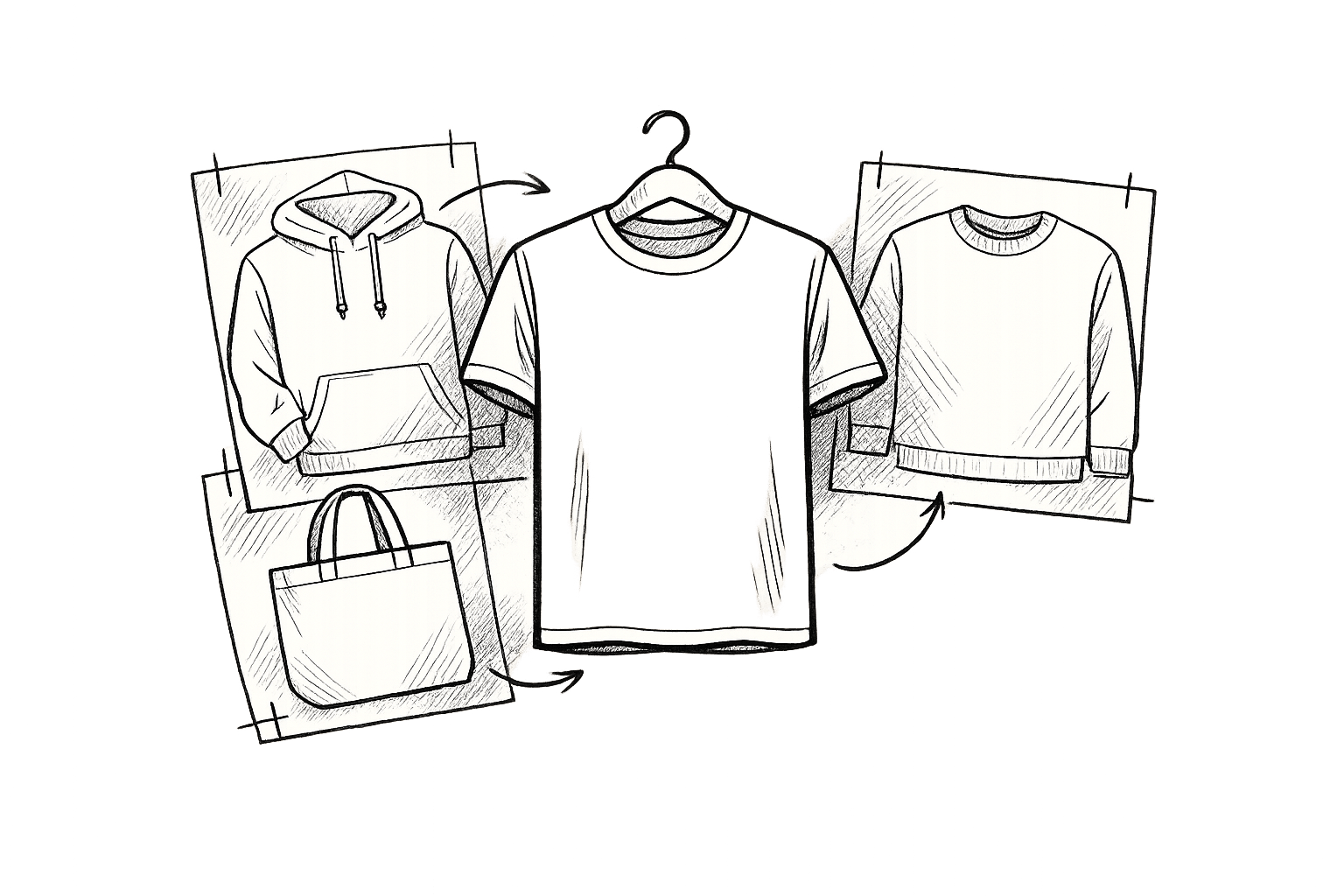
This technique works particularly well for everyday clothing items like t-shirts, hoodies, sweatshirts, and joggers, as well as smaller products and accessories. Platforms such as Mock It offer a wide range of flat lay mockup templates for various brands, making it simple for apparel sellers to create polished visuals quickly, without the need for a professional photoshoot. These features make flat lay mockups a practical choice for many businesses.
Benefits of Flat Lay Mockups
Flat lay mockups come with several practical perks. They’re cost-effective and quick to set up, making them ideal for producing visuals at scale. There’s no need to hire models, stylists, or secure extravagant locations – just the clothing, a flat surface, and basic lighting or a digital mockup template will do the job.
Maintaining consistency across a catalog is much easier with flat lay mockups. Uniform framing, angles, and backgrounds can be achieved effortlessly, even for large collections with hundreds of SKUs. Designers can also work directly from digital mockup files, eliminating the need for physical samples in every color variation, which is especially helpful for print-on-demand businesses. This streamlined process makes flat lay mockups a smart choice for testing new designs and conducting A/B tests on product images.
Professional studios often recommend flat lay setups for brands needing high volumes of consistent product shots for e-commerce or line sheets. The method is frequently described as a "fast production" option compared to more complex approaches like ghost mannequin or on-model photography, making it a reliable choice for bulk catalog work.
Best Uses for Flat Lay Mockups
Flat lay mockups shine when showcasing simple, stable items like t-shirts, hoodies, sweatshirts, joggers, and shorts – products where the fit is predictable, and the design or logo takes center stage. They’re perfect for creating clean, uniform product grids on platforms like Shopify, where a consistent top-down view allows shoppers to easily compare styles and colors. Flat lays also work well in wholesale or print catalogs, offering buyers a distraction-free look at each product.
For pieces with intricate designs or patterns, flat lays keep the focus on the artwork or details that influence buying decisions. They’re often more cost-effective and less distracting than on-model images, ensuring the product remains the star of the show.
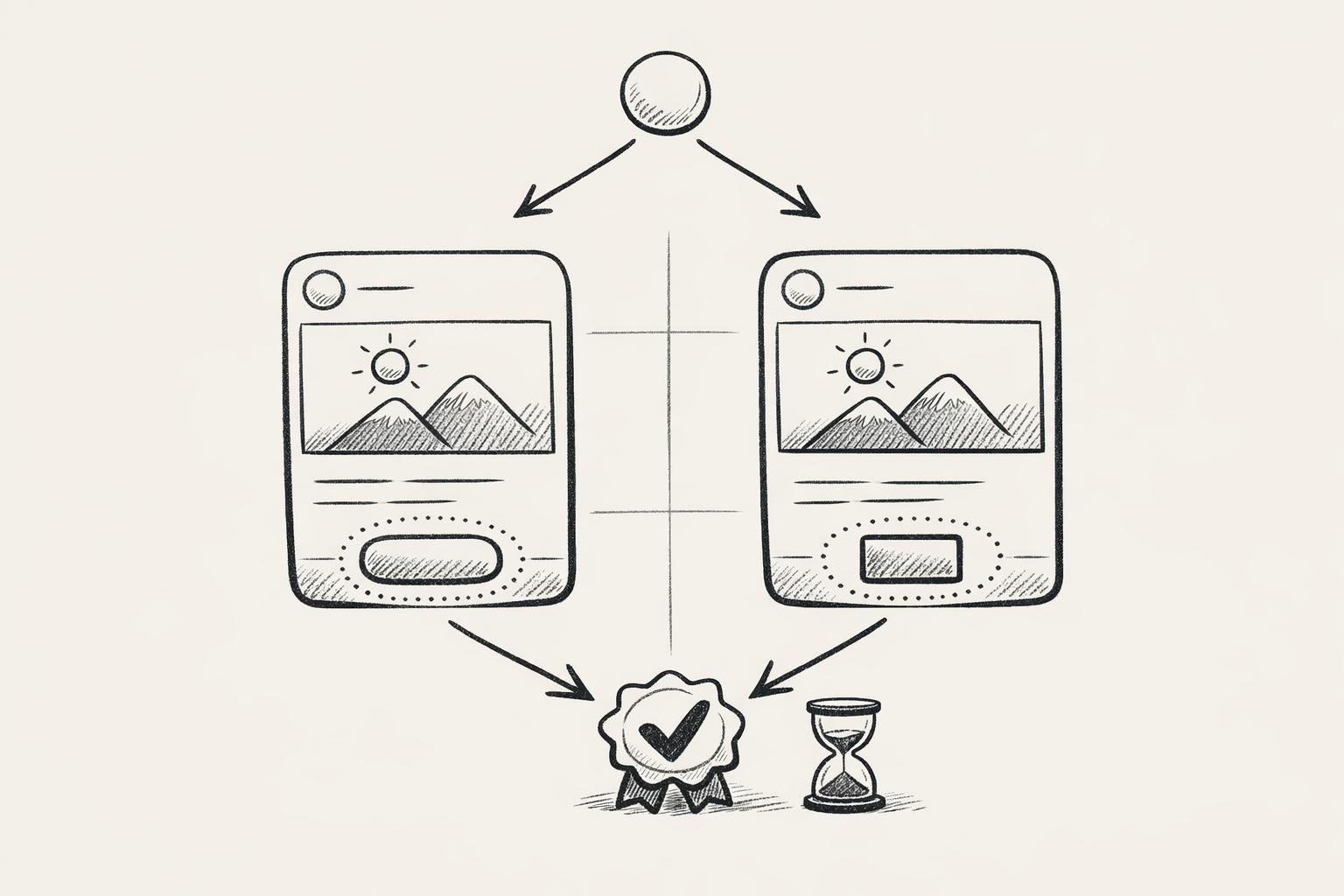
Footwear brands also benefit from this approach, as the bird’s-eye perspective mimics how customers naturally view shoes when looking down. This makes it easier to compare features and styles. Additionally, flat lay mockups are great for A/B testing product thumbnails in online stores, as the consistent angle allows for clear comparisons of subtle differences in design. These qualities highlight how flat lay mockups provide a distinct, efficient way to present products, especially when compared to on-model photography.
What Are On-Model Mockups?
On-model mockups showcase apparel on actual people, giving customers a realistic view of how clothing fits, moves, and drapes. Unlike flat lay photos that focus on design details from a static perspective, on-model photography highlights how garments sit on the body and move in everyday scenarios. This approach helps shoppers see beyond the fabric, offering a glimpse into how the clothing might feel and function in real life.
These mockups go a step further by creating an emotional connection with the shopper. They help people imagine themselves wearing the product, which builds confidence and eases concerns about fit. Professional studios often refer to this as "bringing garments to life", as it showcases not just the look of a piece, but its movement and feel in real-world situations.
On-model images also serve as a storytelling tool, communicating a brand’s identity and target audience through thoughtful choices in model selection, styling, and settings. For instance, a streetwear brand might feature models in urban backdrops with relaxed poses, while an activewear line could display athletes in motion to emphasize performance. These visual cues do more than sell clothes – they help shoppers decide if the product fits their personal style and needs. This makes on-model mockups especially important for industries like fashion, streetwear, and lifestyle brands, where context is just as important as design.
Platforms like Mock It make this process even more accessible. They offer over 5,000 customizable on-model mockup templates for items like t-shirts, hoodies, and sweatshirts. With tools like scene creators and AI generators, users can create professional-quality visuals without needing a physical photoshoot. These templates complement flat lay options, making it easier for small brands and print-on-demand sellers to benefit from the impact of on-model photography – without the hefty costs of hiring models, photographers, and stylists.
Benefits of On-Model Mockups
On-model mockups come with several perks that directly influence how customers view and purchase apparel. By showing how clothing fits across different body types, these visuals boost customer confidence and reduce returns due to sizing issues.
They also excel in creating lifestyle appeal. Instead of just displaying a product, on-model shots convey the experience of wearing it – whether it’s the confidence of a tailored blazer, the coziness of loungewear, or the energy of activewear in motion. This emotional connection often leads to higher conversion rates compared to flat lay photos, as shoppers can more easily picture the product as part of their daily lives.
From a branding standpoint, on-model photography enhances storytelling. Everything from the model’s posture and styling to the backdrop and expressions helps communicate who the product is for. For example, the model’s age, size, and style send subtle signals about the brand’s target audience. Many U.S. apparel brands are also incorporating diverse body types and skin tones in their on-model images to appeal to a broader audience, making more shoppers feel represented. This approach not only supports inclusivity but also drives sales by resonating with a wider customer base.
These advantages make on-model photography particularly effective for products where movement, fit, and lifestyle context are key selling points.
Best Uses for On-Model Mockups
On-model mockups shine when fit, movement, and lifestyle context are crucial to the customer’s decision-making process. Activewear – like leggings, joggers, and performance tees – benefits greatly from this style, as shoppers want to see how the fabric stretches, moves, and fits during activity. Similarly, dresses require on-model shots to highlight details like silhouette, flow, and length, which help customers determine if the piece flatters their body type and suits various occasions.
Layered clothing is another perfect fit for on-model photography. Showing how a hoodie looks over a graphic tee or how a jacket pairs with joggers helps shoppers visualize proportions and styling options in ways that flat lays simply can’t. This is especially important for fashion-forward brands and streetwear labels where the overall outfit often matters more than individual pieces.
On-model mockups also play a key role in brand storytelling and social media content. These images tend to perform well on platforms like Instagram, TikTok, and Facebook because they’re visually striking and relatable, helping brands stand out in crowded feeds. For Shopify lookbooks, Amazon product galleries, and Etsy listings, on-model shots add a lifestyle element that turns casual browsers into buyers. Fashion studios often recommend using on-model photography for premium products, seasonal campaigns, and any apparel where the shopping experience is about more than just the design – it’s about the story and feeling behind the garment.
sbb-itb-1e8f9ab
Flat Lay vs. On-Model: Main Differences
Flat lay mockups and on-model images serve distinct purposes in showcasing apparel, each with its own strengths. Flat lay mockups focus on design details by presenting garments laid flat and photographed from above. This style creates clean, symmetrical images that highlight prints, graphics, seams, and textures – perfect for emphasizing the fabric and design itself. On the other hand, on-model mockups bring clothing to life, showcasing fit, movement, and lifestyle through dynamic shots of a person wearing the garment. These images add emotional depth through poses, expressions, and settings.
Flat lays are a cost-effective and quick option, making them popular among U.S. print-on-demand sellers and smaller brands. In contrast, on-model shoots require a greater upfront investment in models, photographers, styling, and possibly studio rentals. However, the payoff is often higher conversion rates, as these images resonate more effectively across marketing channels like social media, ads, and lookbooks.
On-model shots excel at demonstrating fit and lifestyle, which can significantly reduce fit-related returns. Flat lays, while excellent for clarity and design-focused presentations, may lack the emotional connection needed to drive impulse purchases. Many experts suggest combining both styles: use flat lays for detail shots and catalog consistency, and on-model images for hero shots and lifestyle storytelling. This balanced approach gives U.S. shoppers a well-rounded view, boosting their confidence to buy.
Platforms like Mock It simplify this process by offering over 5,000 customizable templates for both flat lay and on-model mockups. This lets brands create professional visuals for their entire product line without the need for repeated, costly photoshoots. Below is a comparison table summarizing the key differences between these two styles.
Comparison Table
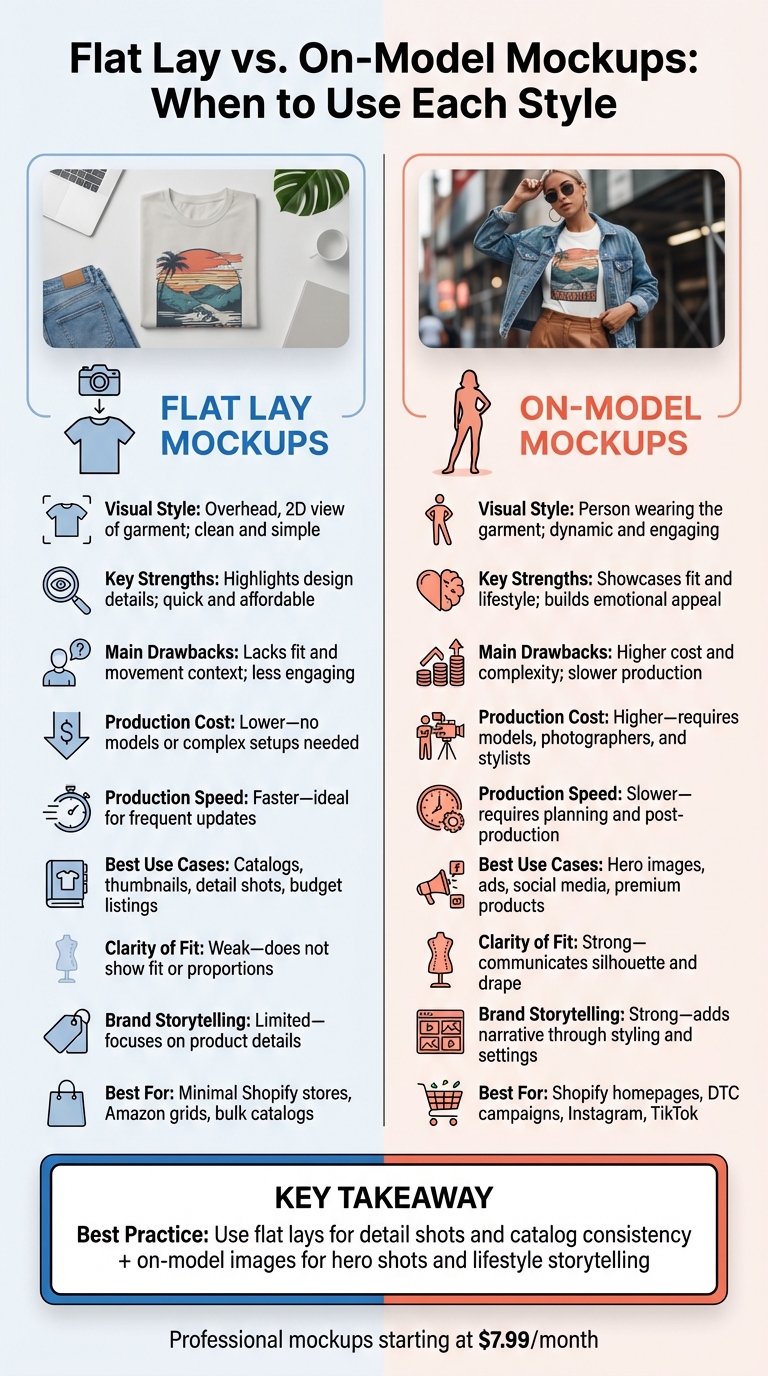
| Criteria | Flat Lay Mockups | On-Model Mockups |
|---|---|---|
| Visual Style | Overhead, 2D view of garment; clean and simple | Person wearing the garment; dynamic and engaging |
| Key Strengths | Highlights design details; quick and affordable | Showcases fit and lifestyle; builds emotional appeal |
| Main Drawbacks | Lacks fit and movement context; less engaging | Higher cost and complexity; slower production |
| Production Cost | Lower – no models or complex setups needed | Higher – requires models, photographers, and stylists |
| Production Speed | Faster – ideal for frequent updates | Slower – requires planning and post-production |
| Best Use Cases | Catalogs, thumbnails, detail shots, budget listings | Hero images, ads, social media, premium products |
| Clarity of Fit | Weak – does not show fit or proportions | Strong – communicates silhouette and drape |
| Brand Storytelling | Limited – focuses on product details | Strong – adds narrative through styling and settings |
| Best For | Minimal Shopify stores, Amazon grids, bulk catalogs | Shopify homepages, DTC campaigns, Instagram, TikTok |
Using Both Flat Lay and On-Model Together
Pairing flat lay and on-model photography creates a well-rounded visual story for your products. Flat lay images are perfect for highlighting intricate details like prints, embroidery, fabric textures, and construction elements in a clean, distraction-free format. Meanwhile, on-model shots bring your products to life by showcasing their fit, drape, and how they look in real-world scenarios. Together, these approaches help reduce customer doubts, leading to fewer returns and better conversion rates .
E-commerce brands often use flat lay images for thumbnails and detailed close-ups, while reserving on-model shots for hero images on websites and social media. For instance, a t-shirt listing might start with a flat lay emphasizing the clarity of its print, followed by on-model photos showing the shirt in motion and how it fits on different body types.
To ensure a cohesive look, stick to consistent color palettes, lighting, and neutral backgrounds. Keep props minimal and organize your files efficiently to streamline the production process.
This dual approach works especially well for omni-channel marketing. It provides versatile assets that can enhance Instagram grids, website carousels, Amazon listings, and paid ads. By combining technical clarity with lifestyle appeal, this strategy helps bridge the gap between online shopping and the tactile experience of buying in-store, giving customers more confidence in their purchases.
How Mock It Supports Your Mockup Needs
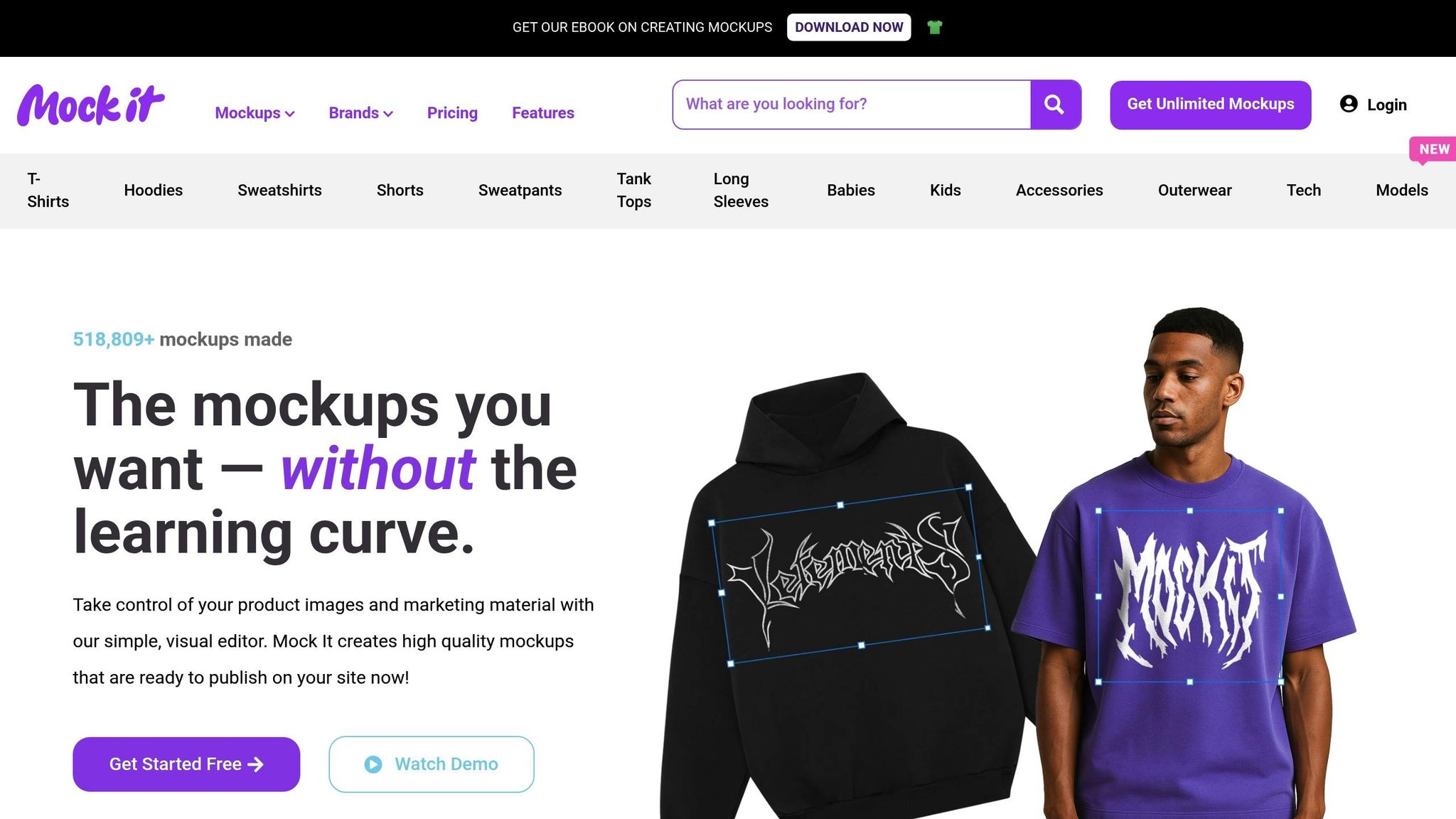
To make this strategy both effective and affordable, Mock It offers over 5,000 customizable templates for flat lay and on-model mockups. With AI-powered tools like scene creation and background removal, Mock It eliminates the need for expensive production setups. Their extensive library includes templates for t-shirts, hoodies, sweatshirts, and shorts from over 45 top brands like Bella + Canvas, Gildan, and Next Level. Plans start at just $7.99/month when billed annually.
Mock It’s platform stands out with its variety of templates and advanced tools. The Scene Creator allows you to add backgrounds, shadows, and styling elements, making it easy to create polished product presentations without any design skills. The Background Remover, included in the Pro plan at $14.99/month annually, simplifies isolating garments for clean catalog shots or seamless background replacements. Additionally, the AI Text-To-Image Generator saves time by automating scene creation and edits that would typically take hours in Photoshop.
Mock It delivers high-resolution mockups at 2,400 x 2,400 pixels, ensuring your visuals look sharp across all platforms, from Instagram posts to Shopify product pages. Each mockup set includes six templates with front and back views, providing multiple angles to showcase your designs. With a complete library of colors and fabric textures, you can achieve highly accurate product representations. Plus, unlimited downloads on paid plans let you scale your content production without worrying about extra costs or usage limits.
Conclusion
Deciding between flat lay and on-model mockups comes down to what you want to communicate. Flat lays are great for showcasing details, colors, and textures without breaking the bank – perfect for catalog shots, social media grids, or bulk listings. On the other hand, on-model mockups highlight fit, drape, and how the product looks in real life, helping customers imagine themselves wearing your designs. This often leads to better conversion rates and fewer returns.
By combining the strengths of both styles, you can create a balanced strategy that works across different marketing channels. For example, using on-model images as hero shots for emotional appeal and flat lays for design specifics offers a well-rounded presentation. This approach boosts buyer confidence and improves conversions, whether you’re posting on Instagram, building Shopify product pages, or listing on Amazon.
Fortunately, creating both types of mockups has never been easier thanks to tools like Mock It. U.S. designers can now produce professional-quality mockups without the hefty price tag. With over 5,000 customizable templates for t-shirts, hoodies, sweatshirts, and more from 45+ brands, Mock It covers both flat lay and on-model styles. Features like the Scene Creator, Background Remover, and AI Text-To-Image Generator streamline your workflow, saving you hours of editing time. Plus, with plans starting at just $7.99/month (billed annually), it’s an affordable solution for designers at any budget.
The right mix of mockup styles can elevate your visual storytelling. Whether you’re unveiling a new collection, enhancing product pages, or scaling up your social media content, Mock It’s high-resolution templates (2,400 x 2,400 pixels) and unlimited downloads ensure your visuals look polished and professional. With its wide range of brand options, advanced editing tools, and budget-friendly pricing, Mock It is the ultimate tool for apparel designers seeking studio-quality results without the studio costs.
FAQs
When is it better to use flat lay mockups instead of on-model images?
Flat lay mockups are a fantastic way to highlight multiple items, showcase intricate product details, or achieve a sleek, polished presentation. These are particularly useful for e-commerce listings, social media content, or branding materials where the spotlight is on the product design rather than how it looks in use or on a person.
In contrast, on-model images excel at demonstrating how clothing fits, moves, and appears in real-world settings. For those in search of high-quality, customizable flat lay mockups, Mock It offers an impressive library of over 5,000 templates tailored for professional apparel visuals, making it a standout option compared to other platforms.
What are the benefits of using both flat lay and on-model mockups for my brand?
Using flat lay mockups and on-model mockups together gives your brand a chance to connect with a broader audience by presenting your products in diverse and engaging ways. Flat lay mockups are ideal for showcasing intricate design elements and emphasizing branding details. On the other hand, on-model mockups add a dynamic touch, showing how your products look and fit in everyday scenarios.
Mock It makes this process effortless with its library of over 5,000 high-quality templates. You can seamlessly create professional visuals that combine both styles, offering a level of customization and quality that sets you apart in a crowded market.
What’s the difference in cost between flat lay and on-model mockups?
Flat lay mockups are often easier on the budget since they skip the need for models, professional photographers, or intricate setups. They’re perfect for creating quick, affordable visuals without much hassle. In contrast, on-model mockups tend to come with higher costs, factoring in expenses for hiring models, photographers, and stylists.
If you’re looking for a cost-effective way to maintain polished visuals, platforms like Mock It are worth exploring. They offer customizable, high-quality mockups, cutting out the need for pricey photo shoots. It’s a smart choice for producing professional-looking apparel visuals without breaking the bank.