

Clothing mockups are a fast, cost-effective way for apparel brands to showcase designs without needing physical samples or expensive photoshoots. They offer lifelike visuals with features like realistic textures, shadows, and customizable backgrounds, making them ideal for eCommerce, social media, and product testing.
Key takeaways:
- Affordable: Platforms like Mock It start at $7.99/month, compared to thousands for professional photography.
- Fast production: Mockups can be created in seconds, perfect for testing designs or launching products quickly.
- High-quality visuals: Resolutions up to 2,400 x 2,400 pixels with realistic details like wrinkles and folds.
- Consistency: Maintain a uniform look across your product lineup with standardized templates.
While professional photography excels in detail and authenticity, mockups offer a quick, budget-friendly alternative for most marketing needs. Tools like Mock It provide over 5,000 templates from popular brands, making it easy to create polished, professional visuals in minutes.
1. Clothing Mockups
Cost Efficiency
Clothing mockups are a game-changer when it comes to cutting down on traditional marketing expenses. Think about it: no need to shell out for photographers, models, studio rentals, or even physical samples. For instance, Mock It offers unlimited downloads starting at just $7.99 per month (when billed annually), while individual PSD templates on platforms like Creative Market can cost as little as $2. Compare that to the thousands of dollars you’d spend on a professional photoshoot, covering photographer fees, model rates, and studio time – it’s a no-brainer.
On top of that, mockups let you experiment with and market hundreds of design ideas without having to manufacture a single garment. This not only saves money but also reduces the risk of overproducing items that may not sell. As Madara Zalcmane, Content Marketer at Printful, puts it:
"If your budget is limited, you’ll be able to cut back on the costs since you won’t have to hire photographers and models".
By saving here, brands can redirect their budgets toward other vital marketing efforts.
Production Speed
Speed is where mockups truly shine. In just seconds or minutes, you can create professional-quality product images. Compare that to traditional photography, which can take days – or even weeks – of planning, shooting, and editing. This quick turnaround is a huge advantage when testing new designs or reacting to ever-changing market trends. And the best part? You don’t have to compromise on quality to keep up with the pace.
Visual Realism and Context
Today’s mockup tools deliver visuals so lifelike, they can rival traditional photography. High-resolution outputs – up to 2,400 x 2,400 pixels – capture the natural details like wrinkles, folds, and shadows that make a design feel authentic. Joe Hitchcock from Shopify highlights this advantage:
"Mockups provide a realistic depiction of your shirts without the need to photograph them or even have samples on hand".
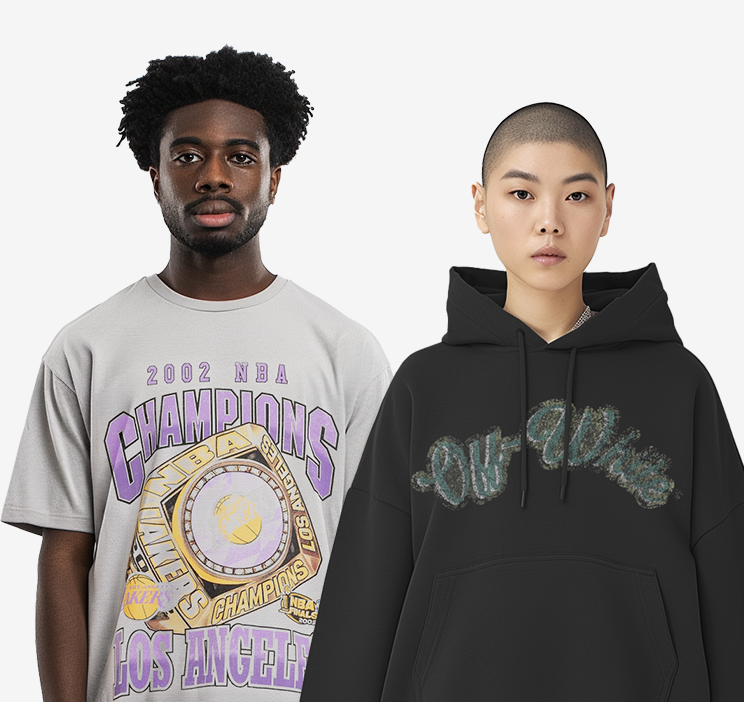
Mock It takes this a step further with features like a scene creator and background remover. These tools help you place your products in relatable settings, whether it’s a cozy coffee shop or a rugged hiking trail. This kind of visual storytelling allows customers to picture themselves wearing your designs, creating a stronger emotional connection.
Brand Consistency
Mockups make it easier to maintain a polished, cohesive brand image across your entire product lineup. By using consistent lighting, angles, and styling across all designs, your eCommerce store and social media channels will have a unified look. Mock It provides access to over 5,000 templates from top apparel brands, complete with accurate color libraries that mirror the actual products customers will receive.
This attention to detail ensures that the digital previews closely match the real-life garments in terms of fit, weight, and drape. Such consistency not only enhances your brand’s professionalism but also builds trust with your customers – something that’s essential in today’s competitive online marketplace.
sbb-itb-1e8f9ab
2. Professional Product Photography
Cost Efficiency
Hiring professional photographers, models, and editing teams, along with creating physical product samples, can easily rack up costs in the thousands for a single photoshoot. On the other hand, mockup platforms like Mock It (https://mock-it.co) offer unlimited access to tools and templates for as little as $7.47 per month when billed annually. These platforms provide an extensive library of high-quality clothing mockup templates and advanced creative options, making them an affordable alternative for apparel brands. The cost savings also translate into quicker, more flexible production workflows.
Production Speed
Traditional photography involves a lengthy process – creating product samples, shipping them, scheduling photographers and models, conducting the shoot, and finally, completing post-production edits. This can take days or even weeks. Clothing mockups, however, can be created in minutes, cutting out the logistical hurdles of physical shoots. This speed allows brands to test new designs and respond to market trends swiftly, all while maintaining high-quality visuals that stay true to the brand’s image.
Visual Realism and Context
Professional photography excels at capturing the authentic textures, lighting, and movement of garments, showcasing products in their most realistic form. However, modern mockups are closing the gap. They now feature natural-looking details like wrinkles, shadows, and "ghost mannequin" effects, which replicate the structure and feel of real clothing. These advancements ensure mockups can rival professional photography in visual authenticity.
Brand Consistency
Achieving a uniform look across multiple photoshoots can be tricky. Variations in lighting, camera settings, and garment preparation can disrupt the cohesive presentation of a product line. Mockups eliminate these inconsistencies by offering standardized lighting, angles, and styling across all designs. This consistency is especially important for brands catering to mobile shoppers – who account for over 70% of online traffic. A clean, uniform visual style builds trust and helps drive conversions in this fast-paced, mobile-driven market.
3. User-Generated Content (UGC)
Cost Efficiency
At first glance, user-generated content (UGC) might seem like a budget-friendly option – after all, customers share photos of your products for free, giving you authentic marketing material. But there’s more to it than meets the eye. You’ll need to spend time curating submissions, securing usage rights, and ensuring the images meet quality standards. For comparison, sourcing styled content from independent creators on platforms like Etsy can cost between $5 and $15 per mockup. While that might not sound like much, the costs can pile up quickly if you’re showcasing multiple designs.
On the other hand, platforms like Mock It (https://mock-it.co) offer a more economical solution. For $11.99 per month, you get unlimited access to over 5,000 high-quality templates. Plus, tools like Bulk Mockup can save you hours by automating the creation process, producing 1,000 clothing mockups in about 10 minutes. These tools don’t just save money – they free up significant time, which is just as valuable.
Production Speed
One of the biggest challenges with UGC is timing. You’re completely dependent on your customers’ schedules. They need to receive the product, take photos, and then share them – a process that could take weeks. Even after you receive their submissions, you’ll need additional time to review the content and obtain permission to use it.
Mockups, by contrast, eliminate these delays. You can create and test new designs immediately, without waiting for customer participation or dealing with the logistics of physical production. This quick turnaround means you can respond to market trends and test ideas faster than ever. And while speed is important, the quality of the visuals matters just as much.
Visual Realism and Context
UGC brings a level of authenticity that’s hard to beat – real customers wearing your products in everyday settings can resonate deeply with potential buyers. In fact, listings with lifestyle content convert 30% better than those with plain flat mockups. But there’s a downside: UGC often suffers from inconsistent lighting, poor composition, and cluttered backgrounds, which can detract from a professional appearance.
Modern mockup platforms solve this issue by offering lifestyle templates that mimic real-world scenarios – think models in coffee shops, on hiking trails, or at airports. These templates provide the same relatable context as UGC but with professional quality and consistency. This allows customers to imagine themselves wearing your products while ensuring your visuals remain polished and on-brand.
Brand Consistency
Maintaining a cohesive look across your catalog is crucial, especially with over 70% of e-commerce traffic now coming from mobile devices. Mockups give you complete control over every element – colors, filters, backgrounds, and styling – ensuring a consistent, high-quality presentation for all your designs.
Platforms like Mock It take this a step further by offering standardized templates with professional lighting and realistic garment details like wrinkles and shadows. This level of detail builds customer trust and confidence in your brand. By using mockups, you can ensure every design in your catalog looks polished and professional, reinforcing the strong, cohesive branding your customers expect.
4. 3D and CAD Apparel Renders
Cost Efficiency
When it comes to cost, 3D and CAD rendering tools can be a hefty investment compared to standard mockup platforms. For example, CLO 3D starts at about $50 per month, and Browzwear offers freelancer plans at roughly $750 annually (around $75 per month). On the other hand, platforms like Mock It provide unlimited access to over 5,000 high-quality clothing mockup templates for just $11.99 per month. While 3D models can be reused to create multiple marketing assets from various perspectives, most apparel brands don’t require the intricate precision that CAD software delivers for their content marketing needs.
Production Speed
Speed is another area where digital mockup tools shine. Platforms like Mock It are designed for quick turnaround times, making them perfect for brands looking to respond swiftly to market trends or launch seasonal campaigns. In contrast, creating 3D models involves building garments from scratch, adding textures, and dealing with lengthy setup and rendering processes. Mock It’s drag-and-drop interface allows users to produce professional visuals in minutes, eliminating the complexity and time investment associated with 3D rendering.
Visual Realism and Context
3D software excels in simulating precise lighting and fabric behavior, but mockup tools have come a long way in replicating these details. Mock It’s lifestyle templates, for example, effectively mimic fabric folds and shadows, delivering high-quality, realistic visuals without the need for advanced rendering techniques.
Brand Consistency
Consistency in branding is just as important as visual precision. While both 3D renders and mockup platforms can help maintain a cohesive brand image, mockup tools like Mock It achieve this more efficiently. With professional lighting and detailed garment visuals baked into the templates, you can ensure a polished and uniform look across your product catalog – without the steep learning curve of mastering 3D software. For most apparel brands, unless manufacturing requires CAD-level detail, mockup platforms offer a streamlined, cost-effective solution for creating consistent and professional visuals.
5. Stock Photos and Flat Design Graphics
Many apparel brands start with stock photos and flat graphics because they seem like a quick and affordable solution. However, their limitations become clear when compared to custom mockup tools.
Cost Efficiency
Stock photos and flat design graphics are undeniably budget-friendly. Platforms like Freepik and Behance offer thousands of free options, while Creative Market sells PSD templates for as little as $2. For unlimited downloads, Envato Elements charges $16.50 per month [8,12]. But while the upfront costs are low, there are hidden expenses. Using these assets often requires additional time and software for manual editing, especially when integrating your branding. For example, vector files need to be customized to reflect your designs, which can quickly eat up your time and resources.
Production Speed
When it comes to speed, stock photos and flat graphics fall short. Sure, downloading a stock image is quick, but customizing it – adding your design, adjusting colors, and ensuring everything fits correctly – takes significantly more time. On the other hand, tools like Mock It simplify the process with drag-and-drop functionality, allowing you to create polished visuals in seconds without tedious manual edits [8,9]. For brands that need to react swiftly to trends or roll out seasonal campaigns, this speed advantage can make all the difference. Using a fast mockup generator can help you move from concept to market instantly.
Visual Realism and Context
Another major drawback of stock photos and flat graphics is their lack of realism. They often fail to capture the textures, fabric folds, stitching, or natural shadows that make a product look authentic. As Global Reach points out:
"Stock images, often generic and detached, fail to convey a brand’s personality and values".
This can be a dealbreaker, especially since 67% of online shoppers prioritize high-quality images when deciding what to buy. Without realistic visuals, your brand risks losing potential customers to competitors who offer better imagery.
Brand Consistency
Maintaining a cohesive brand identity is tough with stock photos and flat graphics. Generic stock images rarely represent specific products in your inventory, like a particular Bella+Canvas or Gildan style, creating a gap between what customers see and what they receive. In contrast, Mock It offers over 5,000 templates with consistent lighting and detailed visuals, ensuring your marketing materials align perfectly with your actual products. Unless you’re prepared to spend hours editing stock assets to match your brand guidelines, mockup tools provide a far more efficient and reliable way to achieve visual consistency.
Pros and Cons
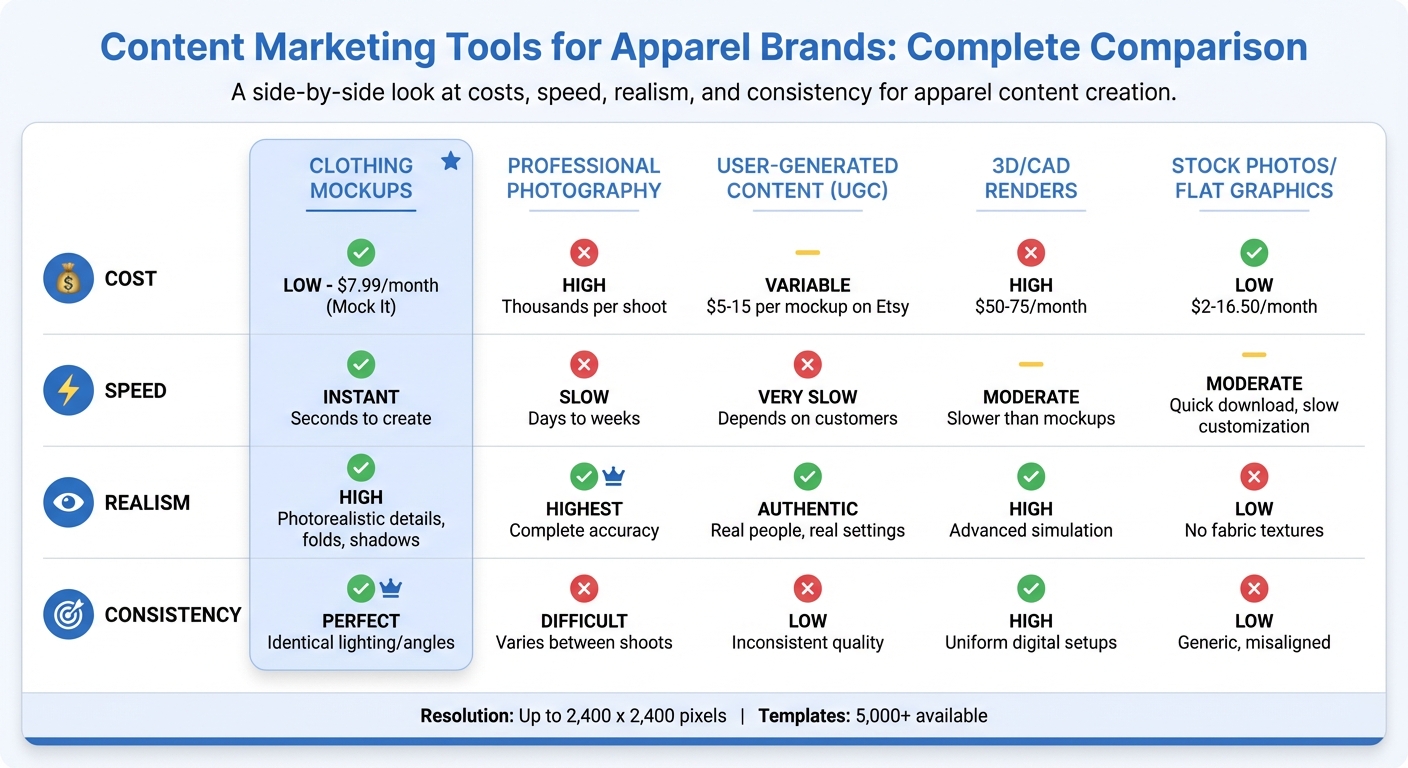
Clothing Mockups vs Professional Photography vs UGC: Cost, Speed & Quality Comparison
Here’s a breakdown of how different tools compare in terms of cost, speed, realism, and consistency:
| Tool | Cost | Speed | Realism | Consistency |
|---|---|---|---|---|
| Clothing Mockups | Low – Free options available; subscriptions like Mock It start at $7.99/month | Instant – Create visuals in seconds; bulk tools can generate 100 variations in under 10 seconds | High – Includes photorealistic details like fabric folds, shadows, and textures | Perfect – Maintains identical lighting and angles across products |
| Professional Photography | High – Requires investment in equipment, studios, photographers, and models | Slow – Can take days or weeks for planning, shooting, and editing | Highest – Captures fabric movement and texture with complete accuracy | Difficult – Quality may vary between shoots due to lighting and conditions |
| User-Generated Content (UGC) | Variable – Costs depend on product seeding and management efforts | Very slow – Relies on customer participation and timing | Authentic – Features real people in everyday settings | Low – Quality, lighting, and branding are often inconsistent |
| 3D/CAD Renders | High – Requires specialized software and expertise | Moderate – Faster than photography but slower than mockups | High – Simulates fabric texture and movement with advanced rendering | High – Digital setups ensure uniform visuals |
| Stock Photos/Flat Design Graphics | Low – Free options or subscriptions priced between $2 and $16.50/month | Moderate – Quick to download, though customization can take time | Low – Lacks fabric textures, folds, and realistic shadows | Low – Generic images that may not align with specific products |
This comparison highlights why clothing mockups, especially those from Mock It, are a go-to solution for content marketing in the apparel industry. Each tool has its strengths, but digital mockups stand out for their ability to deliver professional visuals quickly and affordably – perfect for fast-paced marketing needs.
Clothing mockups are particularly useful for creating polished visuals without needing physical samples, making them ideal for testing designs or launching new products. As Madara Zalcmane from Printful puts it:
"A product mockup can go a long way… you can create a new product photo in a matter of seconds."
While mockups excel in speed and consistency, professional photography remains the gold standard for capturing intricate fabric details and movement. For many apparel brands, Mock It’s extensive library of over 5,000 templates strikes a great balance, offering the realism of photography alongside the efficiency and cost savings of digital tools.
Ultimately, the best tool depends on your marketing goals. Use mockups for quick product launches and social media campaigns, professional photography for flagship images or major promotions, and user-generated content to foster a sense of community and authenticity.
Conclusion
As we’ve seen, clothing mockups provide an unbeatable combination of speed, affordability, and quality for apparel marketing. While professional photography delivers high-detail visuals, it often comes with a hefty price tag. User-generated content can feel relatable but tends to lack uniformity. Meanwhile, 3D renders offer versatility but require advanced skills and expensive tools, and stock photos, while budget-friendly, often feel too generic.
When comparing all these options, digital mockups stand out as the clear winner. Mock It emerges as the go-to solution for U.S. apparel brands, offering photorealistic results, quick turnaround times, and pricing that starts at just $7.99/month. With over 5,000 templates tailored to 45+ popular brands like Bella + Canvas, Gildan, Los Angeles Apparel, and Comfort Colors, it’s a tool designed to meet the specific needs of apparel businesses. Plus, its intuitive visual editor makes it easy to create professional-grade 2,400 x 2,400 pixel images in seconds – no Photoshop or design experience required.
Jeremy P., Founder and CEO of Mock It, highlights its simplicity and effectiveness:
"Mock-It is an easy-to-use generator for creating realistic product mockups in minutes”.
This speed is a game-changer for tasks like testing new designs, launching seasonal collections, or experimenting with A/B ads on social media – all without the need to invest in physical inventory upfront.
With features like the Scene Creator, extensive color libraries, and an AI-powered text-to-image generator available on the Pro plan ($14.99/month billed annually), Mock It offers creative freedom that rivals traditional photography – minus the time and cost.
For U.S. apparel brands looking to maintain professional visuals while maximizing ROI, Mock It is the smartest and most budget-friendly choice.
FAQs
How do clothing mockups compare to professional photography for apparel marketing?
Clothing mockups are a smart, efficient way to get high-quality visuals without the hefty price tag or time commitment of professional photography. Tools like Mock It let you create digital renderings that look just as polished as professional photos. Plus, these mockups are incredibly flexible – you can tweak designs, update details, and make adjustments in no time, all without the hassle of reshoots.
While professional photography does capture the real texture and finer details of garments, it often comes with higher costs, longer timelines, and less room for quick changes. That’s where Mock It shines. It offers over 5,000 premium templates, advanced lighting controls, and even an AI-powered background remover. Whether you’re working on a social media campaign, e-commerce visuals, or marketing materials, Mock It helps you get stunning results – minus the logistical headaches of traditional photo shoots.
What makes Mock It the best option for creating clothing mockups?
Mock It stands out as a go-to platform for clothing mockups, boasting a massive library of over 5,000 templates from more than 45 popular brands. Whether you need mockups for t-shirts, hoodies, sweatshirts, or other apparel, this tool offers high-quality, customizable options that save both time and money compared to traditional photoshoots. Its intuitive features – like the scene creator, background remover, and AI-powered text-to-image generator – make it simple to produce professional-grade visuals in no time.
What sets Mock It apart from tools like Photoshop is its speed, affordability, and ease of use. Starting at just $12/month, it’s a budget-friendly alternative to Photoshop’s $22.99/month subscription, all while delivering photorealistic results. For U.S.-based apparel brands aiming to enhance their content marketing, Mock It provides an efficient, cost-effective solution without compromising on quality.
How do clothing mockups help maintain consistent branding across marketing channels?
Clothing mockups play a key role in maintaining consistent branding across all marketing efforts. They help apparel brands ensure that every element – colors, logo placement, typography, and design – remains uniform across various platforms, from social media posts to product pages and email campaigns. By working with high-quality, customizable templates, brands can sidestep common issues like mismatched colors or off-brand visuals that often arise when assets are created manually.
Mock It simplifies this process with a massive library of over 5,000 mockup templates spanning 45+ brands. The platform offers advanced tools, including a scene creator, background remover, and AI-powered features, ensuring every visual – whether it’s a flat-lay or lifestyle shot – appears polished and professional. Unlike generic design tools, Mock It is specifically crafted for the apparel industry, featuring options like realistic fabric textures and instant color adjustments. This makes it a go-to solution for maintaining brand consistency without adding extra hassle or cost.